A practical, research-based deep dive into the ingredients used in soapmaking: base oils and fats, alkalis, additives, fragrances, and functional agents. This guide focuses on ingredient chemistry, performance, and transparent interpretation of INCI names so you can read labels and understand why a soap behaves the way it does.
Short Definition
Soap ingredients are the materials used to make soap: primary components (vegetable or animal fats, oils, or fatty acids), an alkali (sodium or potassium hydroxide) to perform saponification, water, and optional additives (glycerin, fragrances, preservatives, colorants, and functional agents). Each ingredient has a predictable chemical role-cleaning, lather, hardness, conditioning-and measurable properties that determine final performance.
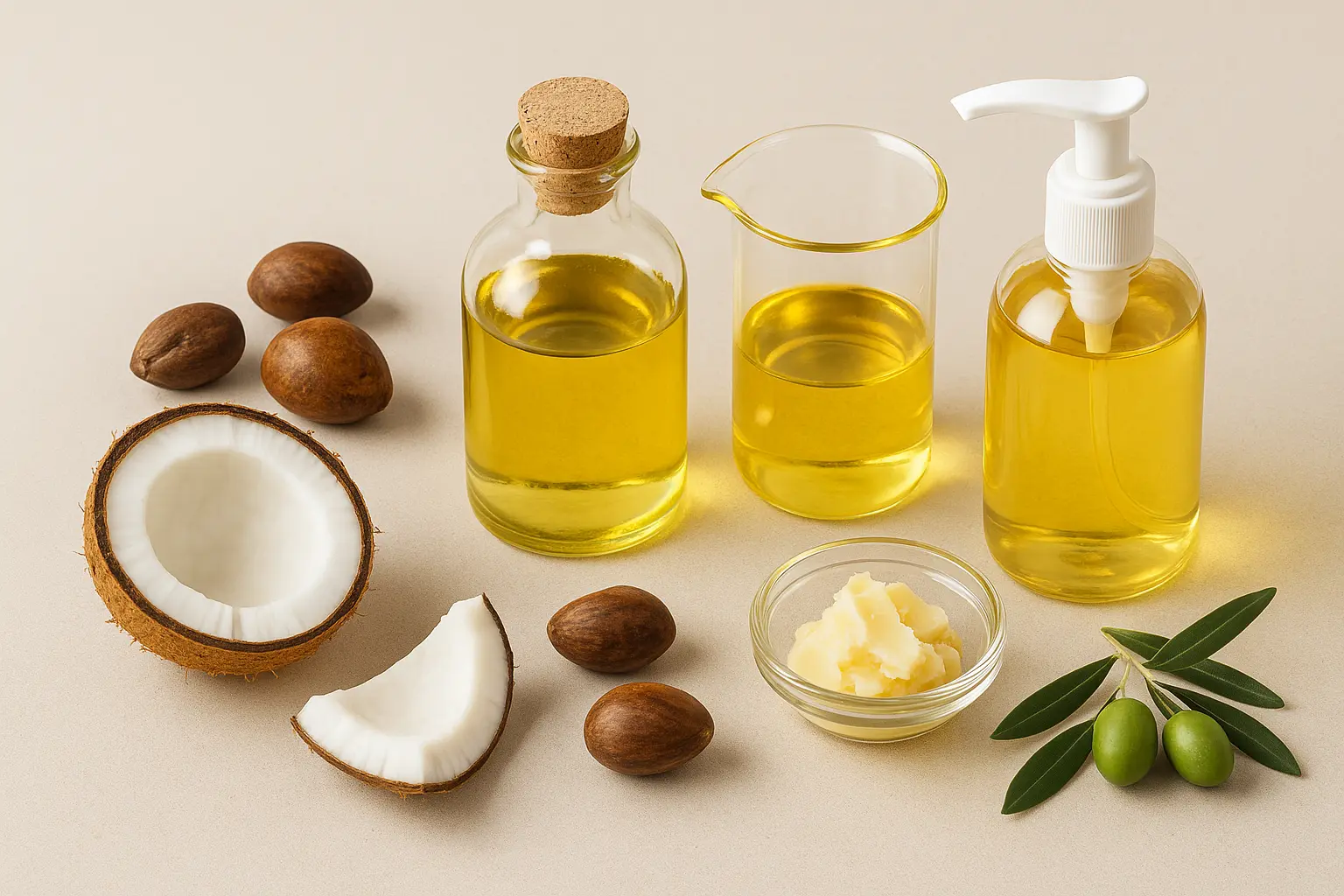
What do we Mean by 'Soap Ingredients'?
In plain terms: soap is made when fats or oils react with a strong alkali to produce soap molecules (fatty acid salts) and glycerin. The oils and fats you choose determine how the soap will clean, lather and feel. Additives adjust texture, scent, shelf life and safety. Reading ingredient lists with accurate INCI names helps you know exactly what’s inside.
Origins and a Brief History of Soap Ingredients
Soapmaking is ancient: early soaps were likely simple combinations of animal fat and alkaline wood ash. Mediterranean olive oil soaps became prominent in places like Castile (Spain) and the Levant. With industrial chemistry, producers gained access to many plant and processed oils, and eventually synthetic surfactants. Modern soapmakers choose from a broad palette of vegetable oils, butters and specialty additives to balance traditional performance with contemporary consumer needs. Modern soapmaking expanded into many formulation styles explained in traditional systems such as Castile soap ingredient composition and regional formulations like Aleppo soap ingredients.
How Soap is Made - The Chemistry of Saponification
The central chemical reaction in soapmaking is saponification. Triglycerides (the chemical form of fats and oils) react with a hydroxide (NaOH for solid bars, KOH for liquid soap) to yield glycerol (glycerin) and fatty acid salts (soap), as explained in the bar soap formulation basics guide. The overall simplified reaction is:
Triglyceride + Alkali → Glycerin + Fatty acid salts (soap)Fatty acids-such as oleic, lauric, palmitic and stearic acids-are the building blocks. Their relative abundance in a given oil governs the soap’s cleansing strength, lather, hardness and conditioning. Saponification also consumes the free alkali when correctly calculated; properly cured soap should not contain free caustic lye. Detailed ingredient conversion behavior is further examined in our cold process soap ingredient analysis.
Forms and Types of Ingredients you’ll Encounter
Common categories of ingredients in soapmaking:
- Base oils and fats: olive, coconut, palm, sunflower, canola, castor, shea butter, cocoa butter.
- Alkali: sodium hydroxide (NaOH) for bars, potassium hydroxide (KOH) for liquids, which follow different processing and stability considerations outlined in liquid soap formulation systems.
- Water and Solvents: Water is necessary to dissolve the alkali; some recipes use glycerin or small alcohol percentages.
- Humectants & emollients: glycerin, sorbitol, panthenol, fatty alcohols.
- Additives: clays, exfoliants, botanical powders, chelators, preservatives (where needed), pH adjusters, colorants, and fragrance elements.
Each class contains dozens of ingredients with distinct functional fingerprints.
Ingredient Transparency and How to Read INCI Names
Cosmetic and soap ingredient lists use INCI (International Nomenclature of Cosmetic Ingredients), which explains why ingredient names may sound unfamiliar or technical, as discussed in why ingredients sound chemical. INCI names are standardized; learning them lets you understand both origin and function, which becomes especially useful when interpreting mainstream formulations such as those detailed in Zest soap ingredient disclosures. Examples:
- Olea Europaea (Olive) Fruit Oil - listed as Olea Europaea Fruit Oil or its saponified form Sodium Olivate/Potassium Olivate.
- Cocos Nucifera (Coconut) Oil - appears as Cocos Nucifera Oil or saponified forms Sodium Cocoate/Potassium Cocoate.
- Glycerin - appears as Glycerin, either retained naturally after saponification or added.
Order matters: INCI lists ingredients by weight (highest to lowest). If "Water (Aqua)" is first, the product is a dilute liquid; if an oil appears first, it is the dominant component.
Key Ingredient Characteristics and pH Notes
When evaluating ingredients, consider these measurable properties:
- Fatty acid profile: Oleic (conditioning), Lauric & Myristic (bubbly lather, cleansing), Palmitic & Stearic (hardness and creaminess).
- Unsaponifiables: minor fractions of oils that do not convert to soap and contribute skin feel.
- Glycerin content: acts as a humectant and is beneficial for skin feel.
- pH: traditional soaps are alkaline (typically 8.5–10.5). This is a chemical property resulting from soap salts; it is not a medical claim.
Representative Fatty-Acid Composition of Common Soapmaking Oils
The table below shows typical ranges. These ranges vary with crop, processing and cultivar; they are practical guidelines for interpreting labels and predicting soap performance.
| Oil | Oleic acid (%) | Lauric acid (%) | Myristic acid (%) | Palmitic acid (%) | Typical effect in soap |
|---|---|---|---|---|---|
| Olive | 55–83 | ~0 | ~0 | 7–20 | Mild, conditioning; low bubbly lather |
| Coconut | ~5–10 | 45–52 | 16–21 | 8–11 | High lather and cleansing; can be drying at high use rates |
| Palm | 38–43 | ~0 | ~1 | 39–47 | Adds hardness and stable creamy lather (bars) |
| Shea butter | 40–55 | ~0 | ~0 | 3–6 | Conditioning, adds creamy richness |
| Sunflower | 14–35 | ~0 | ~0 | 4–9 | Light feel; supports mildness |
| Castor | ~15–20 (ricinoleic) | ~0 | ~0 | ~0 | Boosts lather viscosity and foam stability (small %) |
Ingredient Functions - What Each Component does in Soap
Below is a compact functional breakdown that helps interpret product behavior.
| Ingredient class | Function in soap | Common INCI examples | Typical usage guidance |
|---|---|---|---|
| Base oils/fats | Provide fatty acids for saponification; determine conditioning and hardness | Olea Europaea Fruit Oil, Cocos Nucifera Oil | Use as primary percentage of recipe (varies by desired feel) |
| Alkali | Reacts with oils to form soap; NaOH for bars, KOH for liquids | Sodium Hydroxide, Potassium Hydroxide | Must be calculated precisely; no free lye in cured soap |
| Glycerin & humectants | Attract/retain moisture; improve skin feel | Glycerin, Propylene Glycol (rare) | Often retained naturally; may be added |
| Surfactant boosters | Enhance foam, viscosity or cleansing in blends | Caprylyl/Capryl glucoside, Cocamidopropyl Betaine (if used) | Used sparingly; may change 'soap' label to surfactant blend |
| Additives | Color, exfoliation, texture, pH adjustment | Kaolin, Oat Flour, Titanium Dioxide | Include per recipe; test for stability |
| Fragrance / essential oils | Scent; may alter oxidation and sensitivity profile | Linalool, Limonene (components), various essential oil INCI | Respect usage limits; patch test for sensitivity |
Practical Ingredient Ranges and Common Recipe Ratios
Soap performance is strongly affected by the percentage of each oil in the recipe. Below are three example blend profiles (formulator-level guidance) and the expected consumer experience.
| Blend | Olive | Coconut | Palm / Hard fat | Specialty (sheа/castor, etc.) | Expected feel |
|---|---|---|---|---|---|
| Gentle / Conditioning | 70–85% | 5–10% | 5–10% | 0–5% (castor 3%) | Very mild, low-bubble, high conditioning |
| Balanced All-rounder | 50–65% | 20–30% | 10–15% | 0–5% | Good lather, reasonable conditioning, durable bar |
| High lather / cleaning | 30–45% | 40–55% | 10–20% | 0–5% | High bubble and cleaning power; can be drying |
Soapmaking note: Curing, superfatting and water content also change perceived mildness and lather. Superfatting (leaving a small percentage of unsaponified oils) increases conditioning.
Technical Comparison: Common Oils and their Soapmaking Roles
This quick comparison helps choose oils by property rather than marketing claims.
| Oil | Cleansing strength | Lather type | Bar hardness | Best when used for |
|---|---|---|---|---|
| Olive | Low | Creamy | Soft (unless blended) | Gentle facial/skin bars |
| Coconut | High | Very bubbly | Hard | Dish soap, shampoos, high-lather bars |
| Palm | Moderate | Creamy | Hard | Durable bar hardness and stable lather |
| Shea | Low | Rich, creamy | Soft to medium | Conditioning and luxury bars |
Manufacturing Transparency: Purity, Refinement and Sourcing
Ingredient quality depends on refinement level and supply chain practices. Key considerations:
- Refinement: unrefined oils retain more natural minor components (pigments, sterols, tocopherols) that affect color and oxidative stability.
- Palm and sustainability: palm oil sourcing has environmental implications; many manufacturers disclose RSPO certification or alternatives.
- Supply chain: transparent suppliers provide country of origin, extraction method (cold-pressed vs refined) and processing history.
- Analytical tests: GC (gas chromatography) fatty acid profiles and peroxide values are objective measures to evaluate oil quality.
For thorough ingredient evaluation, ask for fatty-acid reports, peroxide values, and traceability statements from suppliers.
Practical Guidance for Interpreting Ingredient Lists
Useful ways to evaluate a soap ingredient list without being a chemist:
- Identify the alkali: NaOH vs KOH indicates bar vs liquid soap chemistry.
- Spot the dominant oil: the first saponified oil listed is the primary oil and predicts feel.
- Look for glycerin: presence suggests retained humectant; absence may indicate refined removal.
- Watch for surfactant boosters: ingredients like amphoteric surfactants change the product class and performance.
- Note preservatives and chelators: these are necessary in some liquid formulas to ensure microbial stability and metal tolerance.
This practical literacy allows accurate expectations when using or formulating soaps.
Environmental Considerations for Soap Ingredients
Soaps based on fatty acid salts are generally biodegradable; however environmental footprint varies:
- Palm oil: major environmental concerns when unsustainably sourced; certified sustainable palm (RSPO) is preferable.
- Coconut: lower land-use intensity than palm but supply-chain impacts exist.
- Synthetic surfactants: some are less biodegradable or have different aquatic impacts than soap salts.
- Microbe safety: avoid unnecessary persistent microplastics and use biodegradable abrasives (oat, pumice).
Plant-oil sourcing differences are discussed further in vegan soap ingredient systems.
Transparent sourcing statements and certifications help reduce environmental uncertainty for ingredient choices.
Glossary of Important Soap Ingredient Terms
When people read soap labels, the words often feel technical. These short explanations make ingredient lists easier to understand.
Saponification: The chemical process where oils and an alkali react to form soap and glycerin.
INCI: A global naming system that lists cosmetic ingredients in a standard format.
Fatty acids: Natural building blocks found in oils that determine how a soap cleans, lathers, and feels.
Surfactant: A cleaning agent that lowers surface tension and helps remove dirt. Soap is one type of surfactant.
Humectant: An ingredient that attracts and holds moisture, such as glycerin.
Unsaponifiables: Portions of oils that do not convert into soap but add skin feel and conditioning.
What Ingredients Make the Best Soap?
The best soaps are usually made with a blend of oils that balance cleansing, lather, and conditioning. Olive oil brings mildness, coconut oil boosts bubbles, palm or other hard fats help the bar last longer, and small amounts of shea or castor oil improve richness. A well balanced recipe performs better than relying on any single oil alone. A practical illustration of how these ingredients appear in a finished formulation can be seen in the Pears soap ingredients formulation analysis.
Are Natural Soap Ingredients Always Better?
Natural ingredients sound reassuring, but they are not always gentler. Essential oils can irritate sensitive skin, and some botanical extracts oxidize quickly. A good soap depends more on balanced formulation, controlled processing, and careful ingredient selection rather than the natural or synthetic label.
Ingredients You May Want to Avoid in Soap
Most simple soaps contain safe ingredients when properly formulated. However, people with sensitive skin often react to strong fragrances, high levels of coconut oil, harsh synthetic dyes, or preservatives that are not suited for rinse off products. Checking the INCI list helps you understand what might cause irritation and whether the product matches your personal needs.
What Are Synthetic Soap Ingredients?
Some cleansers include synthetic surfactants that are not part of traditional soapmaking. These ingredients can create dense foam and work well in hard water. They appear in ingredient lists under names such as Cocamidopropyl Betaine or Sodium Lauryl Sulfate. These products clean differently from true soaps and may feel milder or stronger depending on the formulation. Synthetic cleansing systems are examined in more detail in the Zest soap ingredient analysis.
Traditional Soap Compared with Syndet Bars
Many people wonder how traditional soap differs from modern cleansing bars. The comparison below highlights the main distinctions so readers know what they are using. Comparable syndet structures appear in commercial antibacterial systems discussed in Dial antibacterial soap ingredients.
| Type | What it is made from | Typical feel | Best suited for |
|---|---|---|---|
| Traditional soap | Oils and an alkali that react to form soap and glycerin | Firm bar, creamy to bubbly lather | General body cleansing and simple ingredient preferences |
| Syndet bar | Synthetic surfactants crafted to clean in a wide pH range | Smooth bar, dense foam | Sensitive skin products, specialized cleansers |
Understanding Sensitivity and Reactions to Ingredients
Reactions to soap usually relate to personal skin sensitivity rather than the ingredient being unsafe. High cleansing oils like coconut can feel drying on some skin types, while rich butters may feel heavy on others. Fragrances, both natural and synthetic, are the most common triggers. Reading the ingredient list and knowing your own tolerance helps you choose a soap that suits you without trial and error. Fragrance-related formulation differences can also be observed in Dr Squatch soap ingredient disclosures.
Sustainable Sourcing of Soap Ingredients
Ingredient sourcing plays a growing role in how consumers judge a soap. Many makers look for responsibly produced palm oil, traceable coconut oil, and suppliers who publish quality reports. These details show how ingredients are grown, processed, and transported. Choosing suppliers with clear sourcing practices supports both quality and environmental responsibility.
How to Choose a Soap Based on Ingredients
A quick way to choose a soap is to look at the first two or three oils listed on the label. They tell you what the soap is built from. If olive or sunflower appears first, the bar will usually feel gentle. If coconut is at the top, expect stronger cleaning and larger bubbles. Hard fats increase durability, and small additions of specialty oils refine the overall feel.
Myths vs Reality
Myth: All "natural" ingredients are safe and gentle.
Reality: Natural ingredients can be irritants (e.g., certain essential oils, nut oils). Safety depends on concentration and formulation.
Myth: Soap contains dangerous leftover lye.
Reality: Correctly calculated and cured soap consumes lye in saponification; finished soap does not contain free caustic alkali when made properly.
Myth: More lather equals better cleaning.
Reality: Lather is correlated with certain fatty acids but cleaning efficacy depends on surfactant concentration, water temperature and mechanical action.
Quick Answers
What are the Most Important Ingredients in Soap?
The most important are the base oils/fats and the alkali (NaOH or KOH); these define how the soap cleans and feels.
Are Essential Oils Safe in Soap?
Essential oils add scent but can irritate sensitive skin; use low concentrations and patch test when possible.
Does Glycerin come from Soap?
Glycerin is a natural by-product of saponification and is often kept in artisan soaps; industrial processes sometimes remove it.
Summary - Core Ideas to Remember
Soap ingredients are purposeful: base oils supply fatty acids that determine cleansing, lather and conditioning; alkali transforms those oils into soap; additives tune texture, stability and appearance. Understanding INCI names, fatty-acid profiles and typical usage ranges gives practical insight into why a soap behaves the way it does. Thoughtful formulation and transparent sourcing deliver reliable performance without marketing confusion.
The most useful approach is data-first: check fatty-acid tables, look for glycerin and the dominant saponified oil in the INCI list, and prioritize transparent sourcing statements for sustainability-sensitive ingredients.
Why This Guide Can Be Trusted
The research for this page is based on practical soap formulation experience, ingredient testing, and long term study of fatty acid behavior in cleansing products. The explanations reflect hands on knowledge from examining oil profiles, formulating test batches, and reviewing supplier documentation. The goal is to help readers understand real ingredient functions without confusion or marketing exaggeration.
References & Further Reading
- Rosen, M. J. Surfactants and Interfacial Phenomena. Wiley Online Library
- European Commission Cosmetic Regulation Guidance. EU Cosmetic Regulation
- International Nomenclature of Cosmetic Ingredients (INCI). INCI Reference Database
- Roundtable on Sustainable Palm Oil (RSPO). RSPO Certification Framework
- Journal of Surfactants and Detergents. Journal Archive