Definition
Sodium hydroxide is an alkaline inorganic compound widely used in cleansing formulation systems where it functions as a chemical base capable of initiating saponification reactions. The sodium hydroxide formula is NaOH, indicating a compound composed of sodium, oxygen and hydrogen arranged in a strongly basic ionic structure. Within soap manufacturing this alkaline substance reacts with triglyceride oils or free fatty acids to produce fatty acid salts commonly recognized as soap.
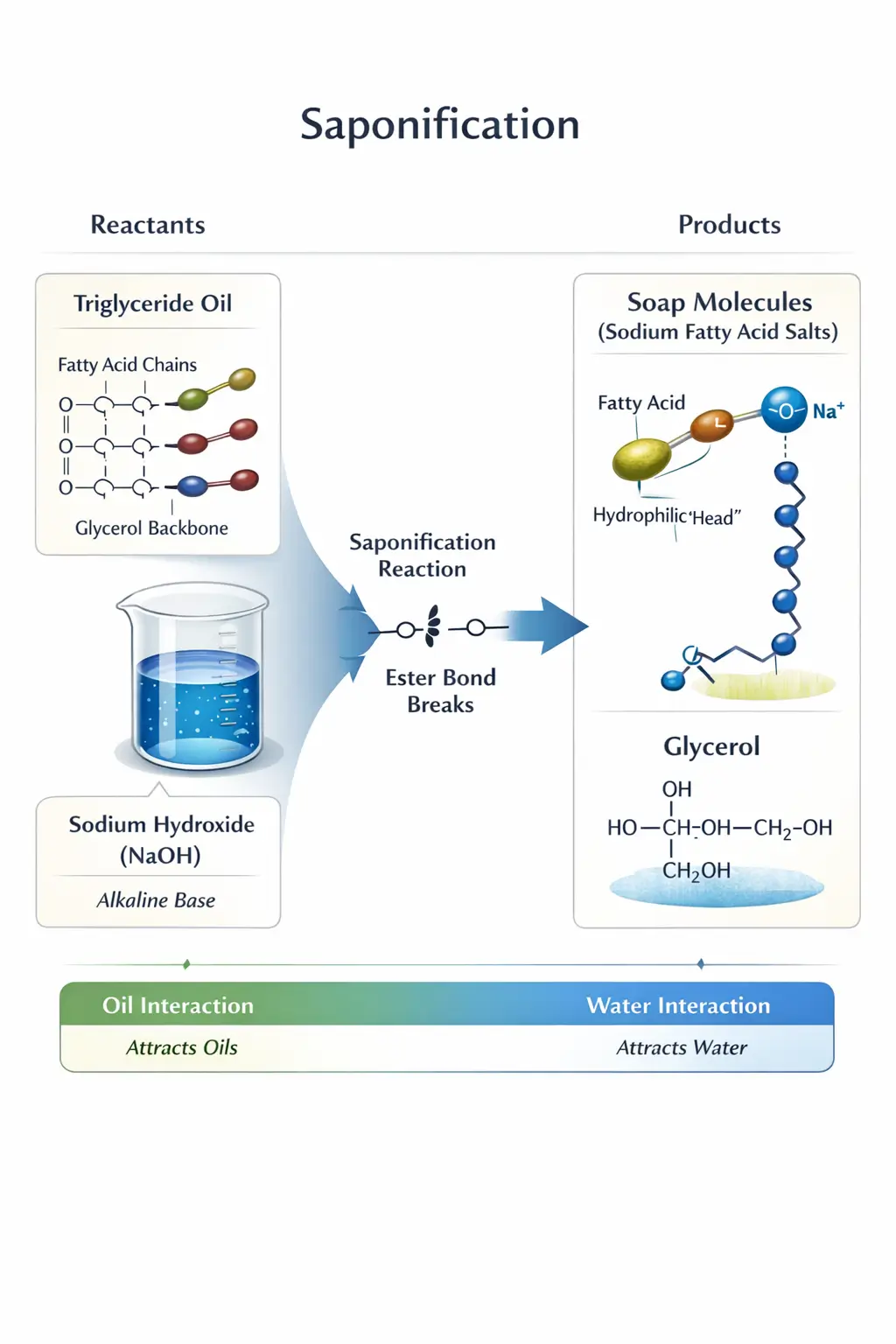
In practical formulation work sodium hydroxide serves as the alkaline component that drives the chemical transformation of oils into soap molecules. When combined with vegetable oils or animal fats under controlled conditions, the base cleaves the ester bonds within triglyceride molecules. The reaction releases glycerol and converts fatty acids into sodium salts that possess the amphiphilic structure required for cleansing activity.
Outside traditional bar soap production the compound may appear in small quantities in certain cleansing products where controlled alkalinity influences formulation stability or neutralizes acidic ingredients. References to sodium hydroxide in shampoo ingredient lists occasionally arise for this reason, although the concentration and functional purpose differ significantly from its role in soap manufacture.
This page belongs to the CleanFormulation Ingredient Library, a research project examining how ingredients behave inside real cleansing formulations rather than evaluating finished products.
Quick Facts
| Property | Description |
|---|---|
| Ingredient Type | Alkaline formulation agent |
| Chemical Class | Inorganic strong base |
| Common Name | Sodium hydroxide, often referred to as lye |
| Chemical Formula | NaOH, representing sodium, oxygen and hydrogen ions forming a strong alkaline compound |
| Ionic Behavior | Dissociates in water into sodium ions and hydroxide ions |
| Typical Use Context | Soap production, pH adjustment in cleansing formulations |
Ingredient Interaction Logic
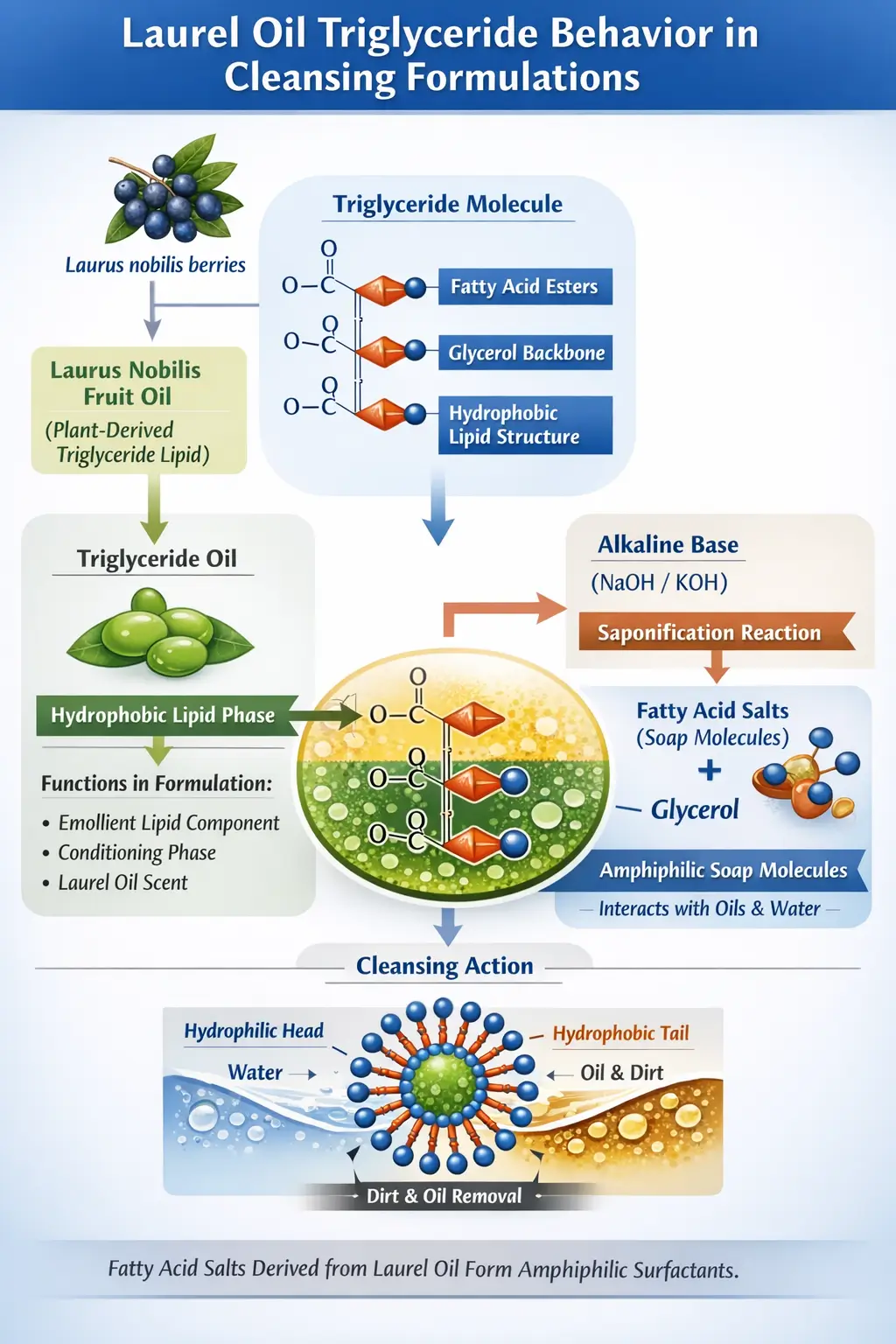
Inside cleansing formulations sodium hydroxide rarely functions in isolation. Its behavior emerges through interaction with other formulation components, particularly triglyceride oils, fatty acids and the surrounding water phase. When the compound dissolves in water it produces hydroxide ions that create the alkaline environment required for saponification. These ions initiate the breakdown of triglyceride structures present in oils used for soap manufacturing.
The interaction between sodium hydroxide and triglyceride oils represents the defining chemical process of traditional soap systems. As hydroxide ions attack ester bonds within triglycerides, fatty acid chains separate from the glycerol backbone. The liberated fatty acids then associate with sodium ions, producing sodium salts that function as soap molecules. These newly formed salts assemble into structures capable of interacting with oily soil during washing.
Other formulation components also influence how sodium hydroxide behaves in the system. Water functions as the reaction medium allowing the compound to dissociate into ions. Humectants such as glycerol may remain in the system after saponification occurs, affecting the moisture behavior of the final soap structure. Chelating agents can interact with mineral ions present in water, helping stabilize soap systems that might otherwise react with calcium or magnesium.
Fragrance materials and color additives typically enter the formulation after the primary saponification reaction has progressed. At this stage the alkaline environment created by sodium hydroxide may influence how these substances behave, particularly with respect to stability or color change during curing.
Why This Ingredient Appears On Cosmetic Labels
Consumers frequently encounter sodium hydroxide in soap ingredient lists and occasionally within other cleansing formulations. The presence of this ingredient in labeling reflects its role as a reactive component during manufacturing rather than a standalone cleansing agent. In soap production the base reacts with oils to generate soap salts, meaning the compound participates in the chemical transformation that produces the final cleansing structure.
When sodium hydroxide appears in shampoo or similar formulations the functional role is different. In these systems the compound may be used in controlled quantities to adjust formulation pH or neutralize acidic ingredients during the manufacturing process. The compound therefore functions as a formulation tool rather than a primary cleansing ingredient in those products.
Ingredient labeling regulations require manufacturers to declare substances used during formulation even when their primary role occurs during processing reactions. This regulatory framework explains why sodium hydroxide in soap ingredient declarations may appear alongside oils that ultimately become soap molecules through the saponification process.
Chemical Identity And Classification
Sodium hydroxide belongs to the class of inorganic alkaline compounds commonly referred to as strong bases. The sodium hydroxide formula, NaOH, reflects a simple ionic structure consisting of sodium cations paired with hydroxide anions. When dissolved in water the compound dissociates readily into these ions, producing a highly alkaline solution.
The hydroxide ion generated in this dissociation is responsible for the compound's chemical reactivity. Hydroxide ions readily interact with ester bonds found in triglyceride oils. This property explains why sodium hydroxide is capable of initiating the saponification reaction central to traditional soap chemistry.
In physical form sodium hydroxide typically appears as white crystalline pellets, flakes or granules. The compound readily absorbs moisture from the surrounding environment, a property known as hygroscopic behavior. When placed in water the solid dissolves rapidly, generating heat as hydration occurs. This sodium hydroxide in water reaction illustrates the compound's strong affinity for water molecules and its capacity to produce highly alkaline aqueous solutions.
Functional Role In Soap Systems
Within soap production sodium hydroxide functions as the chemical base required to convert oils into soap molecules. The reaction occurs when triglyceride oils encounter the alkaline environment created by dissolved hydroxide ions. These ions break the ester bonds linking fatty acids to the glycerol backbone of the triglyceride molecule.
Once liberated, the fatty acids interact with sodium ions present in the solution. This interaction produces sodium salts of fatty acids. These salts represent the fundamental structure of traditional bar soap. Because these molecules possess a hydrophilic head and hydrophobic tail, they are capable of interacting simultaneously with water and oily substances during washing.
The choice of alkaline compound influences the physical character of the resulting soap. Sodium based soaps typically produce firm bar structures due to the relatively low solubility of sodium fatty acid salts. In contrast, potassium based alkalis generate soaps that remain softer or liquid in form. This difference explains why sodium hydroxide is most commonly associated with bar soap production while potassium hydroxide is frequently used in liquid soap systems.
Phase Behavior
The behavior of sodium hydroxide in formulation systems is strongly influenced by its interaction with water. In solid form the compound exists as crystalline material composed of sodium and hydroxide ions held together in a lattice structure. When introduced into water the lattice breaks apart and the ions disperse into solution. This dissolution process releases heat, a characteristic feature of the sodium hydroxide in water reaction.
Once dissolved the compound exists entirely within the aqueous phase of the formulation. The hydroxide ions produced in this phase drive the chemical reactions required for soap formation. Oils and fats introduced into the system remain in a separate lipid phase until the reaction converts their fatty acids into soap salts capable of interacting with water.
As the saponification reaction progresses the system gradually shifts from a mixture of oil and alkaline water into a matrix dominated by soap salts, glycerol and remaining water. During curing or drying the water content decreases, allowing the soap salts to organize into a solid structure characteristic of bar soap.
Regulatory Context
Sodium hydroxide appears in cosmetic ingredient declarations under its standardized International Nomenclature of Cosmetic Ingredients name, Sodium Hydroxide. Regulatory databases such as the European Commission CosIng database classify the compound as a pH adjusting agent and buffering substance within cosmetic formulations.
Cosmetic ingredient labeling rules require manufacturers to declare substances used during the formulation process. Even when sodium hydroxide participates primarily in chemical reactions such as saponification, the ingredient may still appear within the declared ingredient list of finished products.
The regulatory classification focuses on the functional role of the ingredient within cosmetic manufacturing rather than describing the detailed chemistry of soap formation. As a result the compound may appear in ingredient declarations across multiple product categories including soap and other cleansing formulations.
Common Misunderstanding
One common source of confusion arises from the presence of sodium hydroxide in soap ingredient lists. Because the compound functions as a strong alkaline base, readers sometimes assume that the finished soap contains the same material in its original form. In practice the compound participates in a chemical reaction during soap production rather than remaining unchanged.
During saponification the hydroxide ions generated by sodium hydroxide react with fatty acids present in oils. This reaction converts the fatty acids into soap salts while producing glycerol as a secondary product. The resulting soap molecules differ chemically from the original triglyceride oils and the alkaline compound that initiated the reaction.
Ingredient labeling conventions nevertheless include sodium hydroxide because the compound participates in the manufacturing process that produces the final cleansing structure.
Structural Limitations In Formulation Systems
Although sodium hydroxide plays a central role in soap chemistry, the compound also introduces formulation constraints that must be managed during product design. One limitation relates to pH conditions created by strong alkaline solutions. Because hydroxide ions create a highly basic environment, formulation steps involving sodium hydroxide must be carefully controlled during the manufacturing process.
Another limitation arises from the interaction between soap salts and mineral ions present in water. Calcium and magnesium ions found in hard water can react with fatty acid salts generated during saponification. This interaction produces insoluble mineral soaps that may influence lather behavior and residue formation during washing.
The compound's strong affinity for water also means that solid sodium hydroxide must be handled carefully in manufacturing environments. Its hygroscopic nature allows it to absorb moisture from surrounding air, which can gradually alter the physical condition of stored material.
Formulation References Using This Ingredient
- Defense Soap Ingredients Analysis
- Cold Process Dish Soap & Detergent Systems
- Lava Soap Ingredients Analysis
- Homemade Laundry Soap Recipe
- What Is Pacha Soap Made Of
- ABC Reen Naturals Soap
- What Is Castile Soap
- Cold Process Soap Making Supplies
- Cold Process Soap vs Hot Process Soap
- Cold Process Soap vs Melt & Pour Soap
- Goat Milk Cold Process Soap
- Lye Soap for Poison Ivy
- ABC Soap
Summary of Findings
Sodium hydroxide is an inorganic alkaline compound identified by the chemical formula NaOH. Within cleansing formulations the substance functions primarily as the base responsible for initiating saponification reactions that convert triglyceride oils into soap salts.
- Chemical Classification: Sodium hydroxide is a strong inorganic base that dissociates into sodium and hydroxide ions when dissolved in water.
- Formulation Role: The compound drives the chemical transformation of oils into soap molecules through saponification.
- System Interaction: Sodium hydroxide interacts with triglyceride oils, water and fatty acids during soap formation while influencing the chemical environment of the formulation.
- Product Structure: Sodium based soap salts typically produce firm bar soap structures compared with potassium based soap systems.
- System Constraints: Strong alkalinity and interactions with mineral ions represent formulation boundaries that influence soap performance.