Cold Process Soap Safety Basics
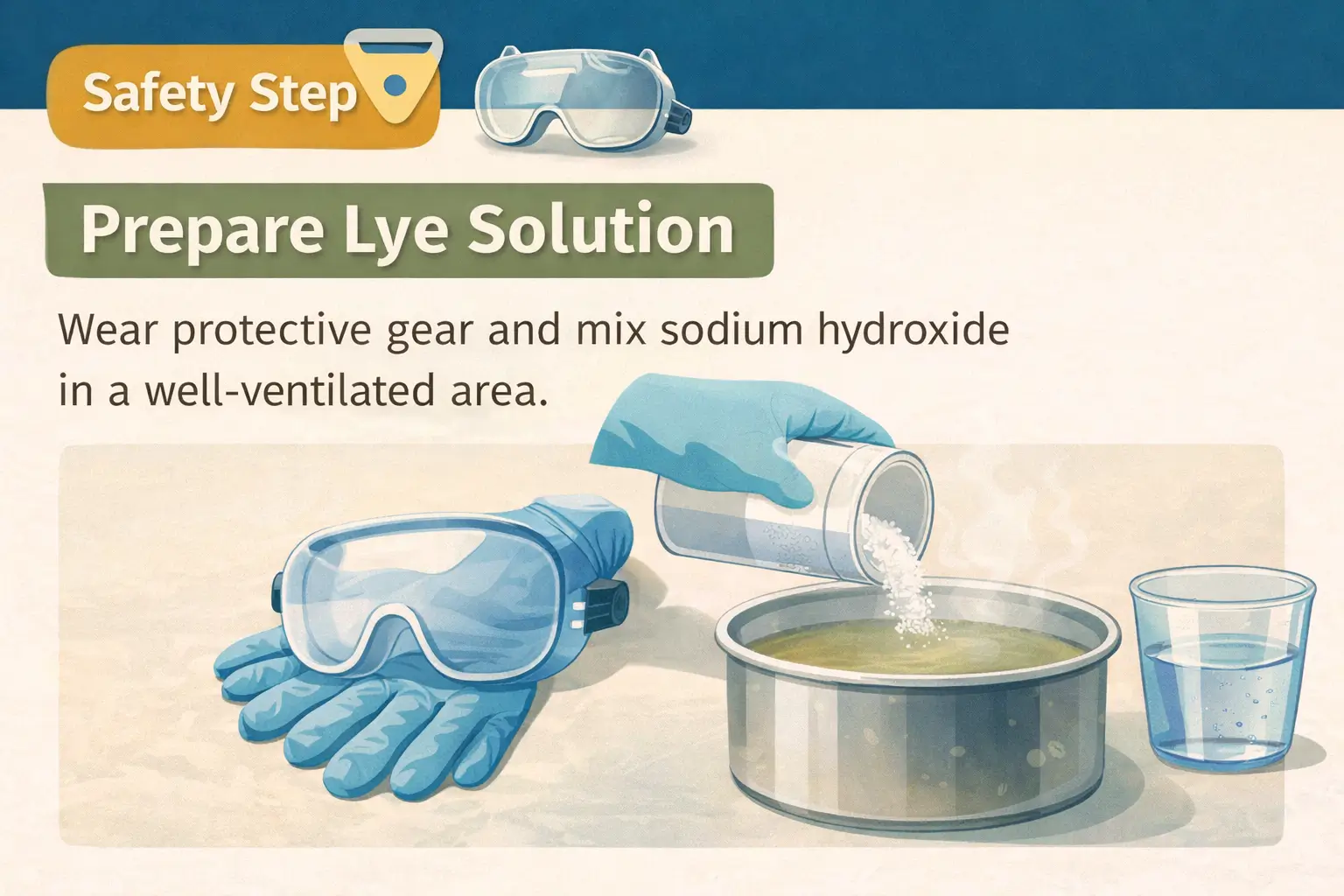
Cold process soap making requires handling sodium hydroxide (lye), a highly alkaline material. Safety practices are not optional; they are fundamental to the process itself.
- Protective gear: Gloves, eye protection, long sleeves
- Ventilation: Required when mixing lye solution
- Material choice: Heat-safe containers only (no aluminum)
For foundational chemistry context, see our Cold Process Soap Making Supplies guide.
General legal and non-medical context is outlined in our Disclaimers page.
Basic Cold Process Soap Recipe Ingredients
All cold process soap recipes rely on four functional ingredient groups. Variations adjust ratios, not the underlying chemistry.
| Ingredient Group | Examples | Purpose |
|---|---|---|
| Base Oils | Olive oil, coconut oil, shea butter | Provide fatty acids for soap structure |
| Alkali | Sodium hydroxide (lye) | Triggers saponification |
| Liquid Phase | Water, goat milk, aloe vera juice | Dissolves lye & controls reaction |
| Additives | Essential oils, honey, clay | Modify scent, appearance, texture |
Oil Ratios & Common Recipe Structures
Oil ratios define hardness, lather, and cure time. Below is a balanced beginner structure adaptable for multiple variations.
- Olive oil (40–60%): Mildness & longevity
- Coconut oil (15–25%): Cleansing & lather
- Shea butter (5–15%): Creaminess & hardness
Cold process soap recipes without coconut oil typically increase shea butter, cocoa butter, or palm oil to maintain hardness.
Fatty acid contribution and cleansing balance are detailed in the Ingredient Library.
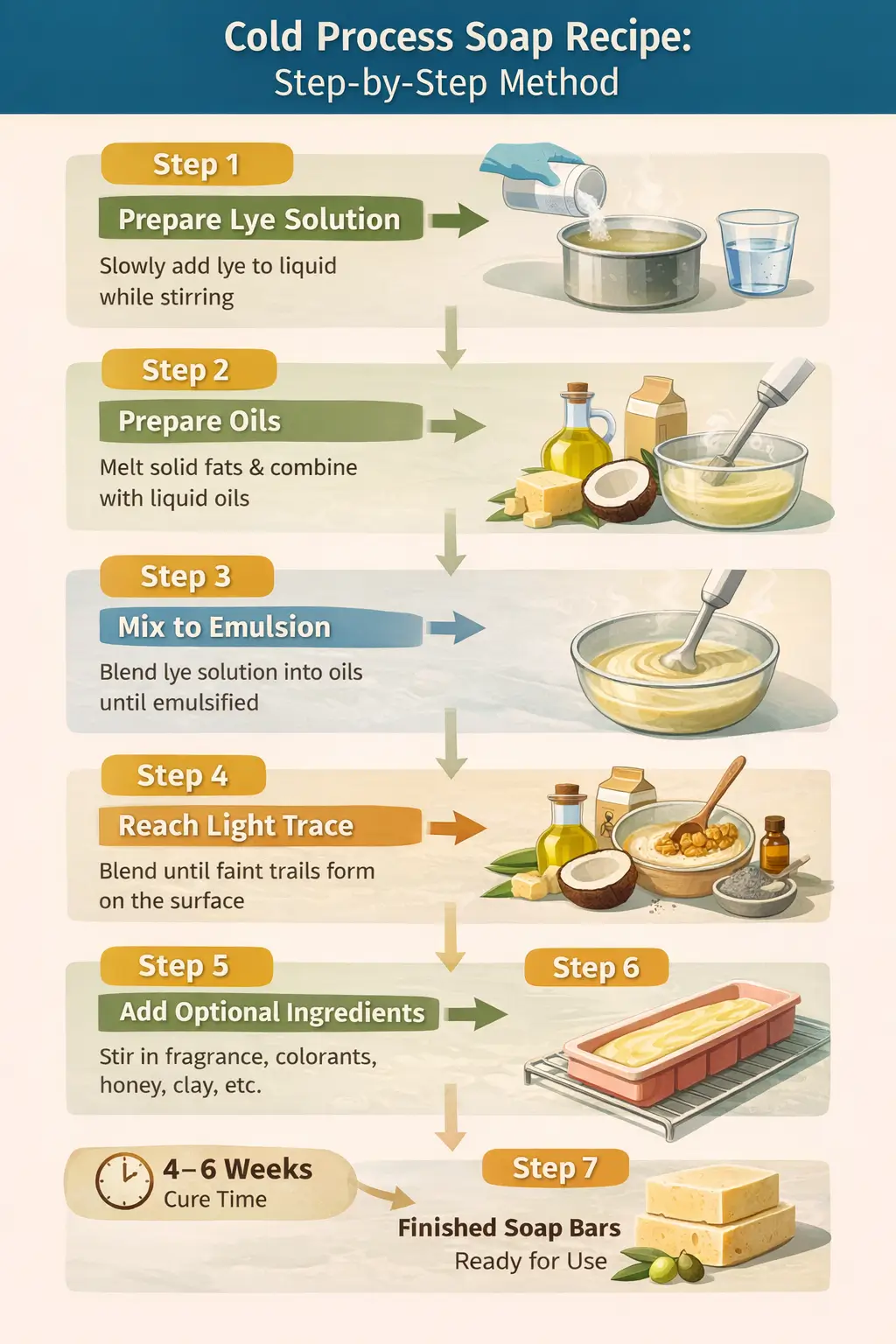
Cold Process Soap Recipe: Step-by-Step Method
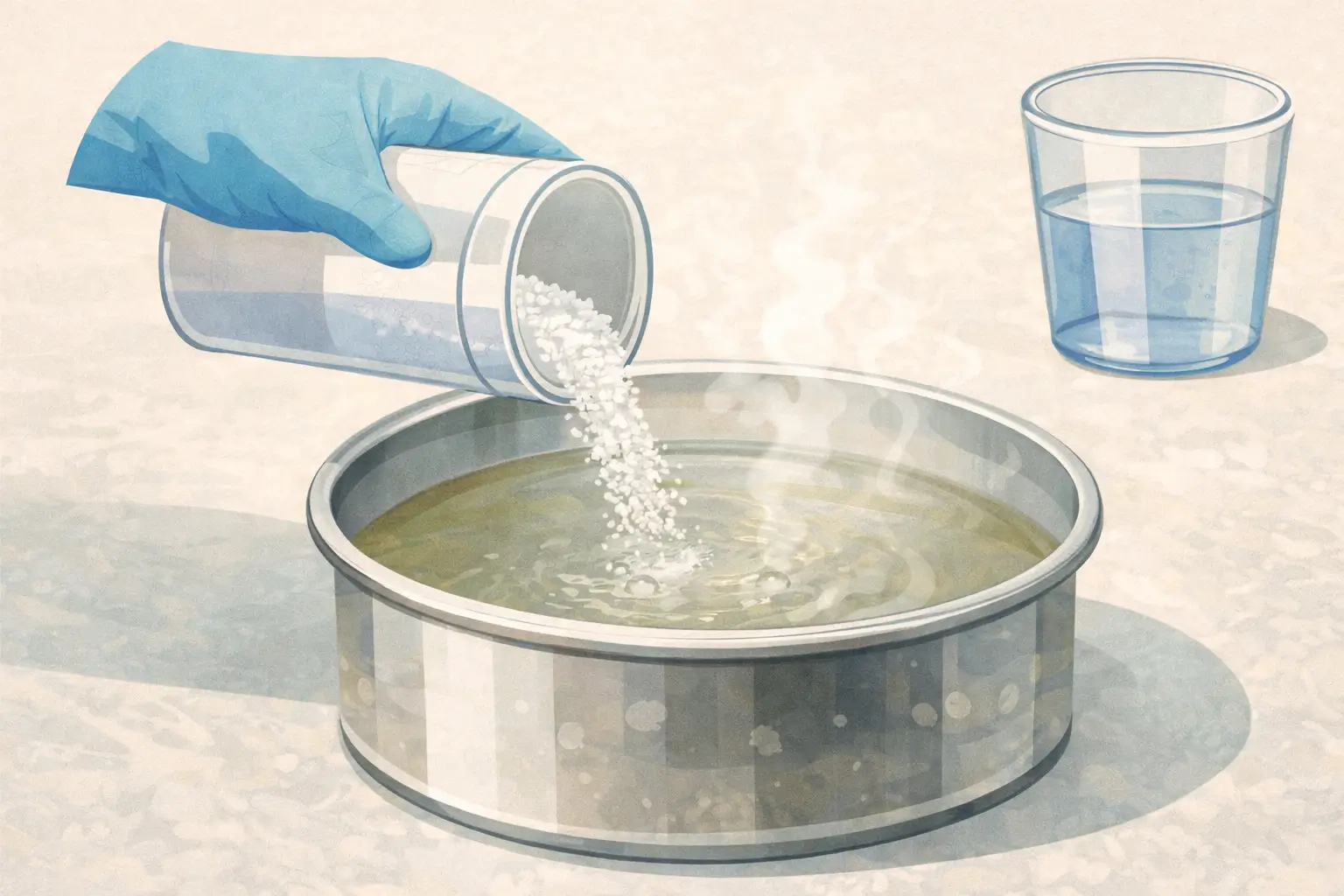
Step 1: Prepare the Lye Solution
Slowly add lye to liquid (never liquid to lye), stirring until dissolved. The solution will heat rapidly and release fumes.
Step 2: Melt & Combine Oils
Solid fats are gently melted and combined with liquid oils. Oils and lye solution should be within a similar temperature range before mixing.
Step 3: Bring Soap Batter to Emulsion
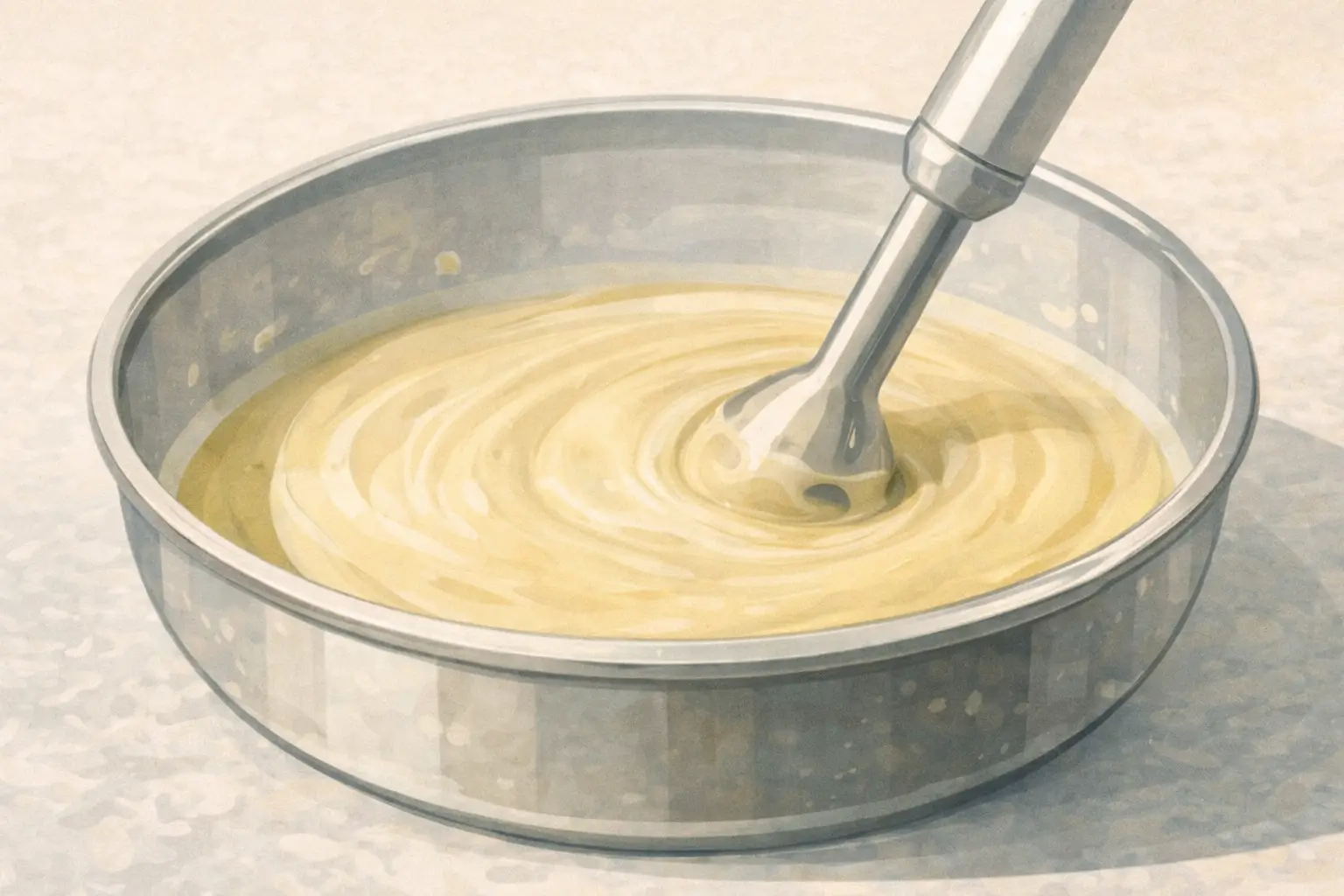
Blending begins when lye solution is added to oils. Emulsion occurs when oil and liquid no longer separate.
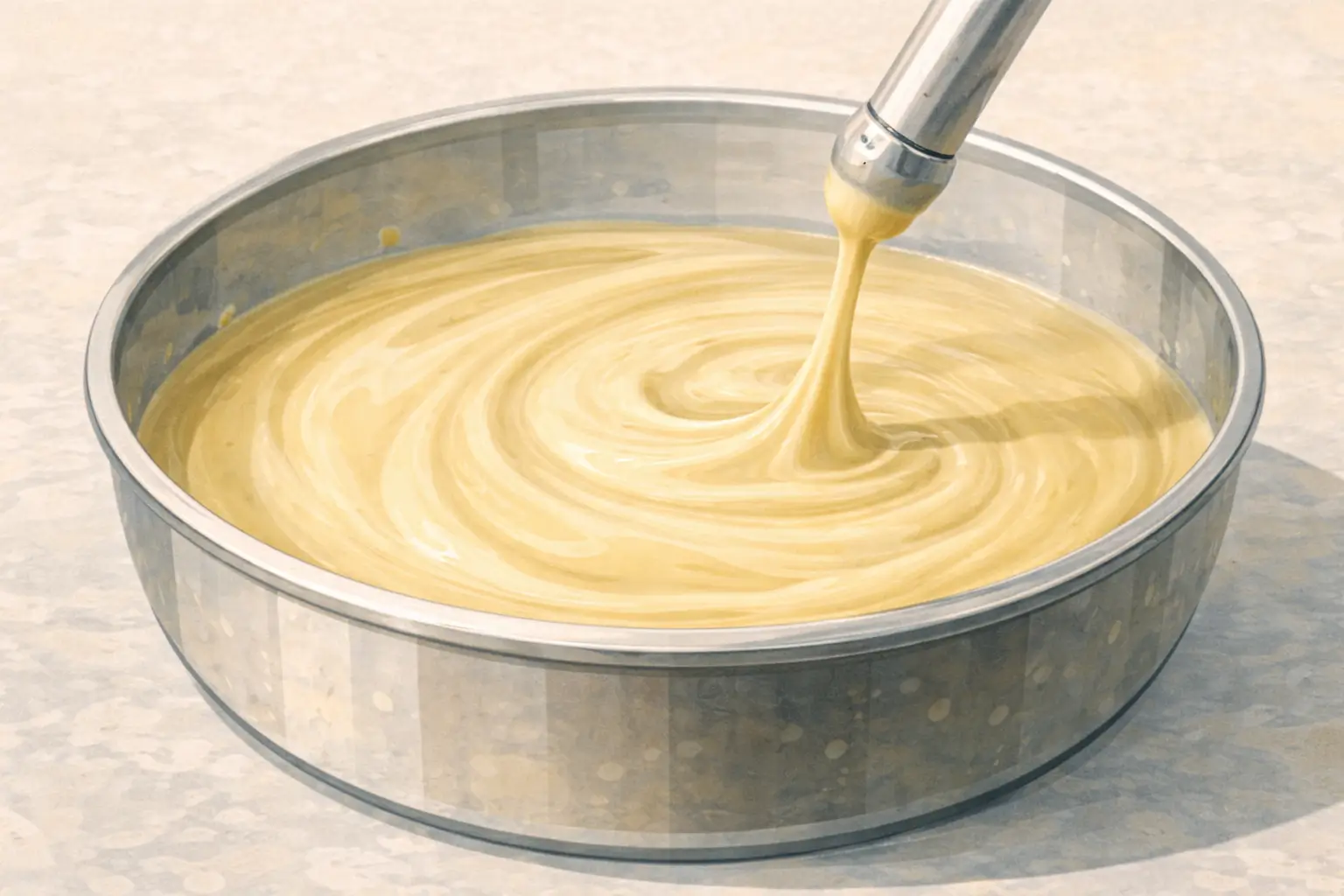
Step 4: Reach Light Trace
Light trace is identified when batter leaves faint trails on the surface. This is the ideal stage for adding fragrance, honey, oatmeal, or charcoal.
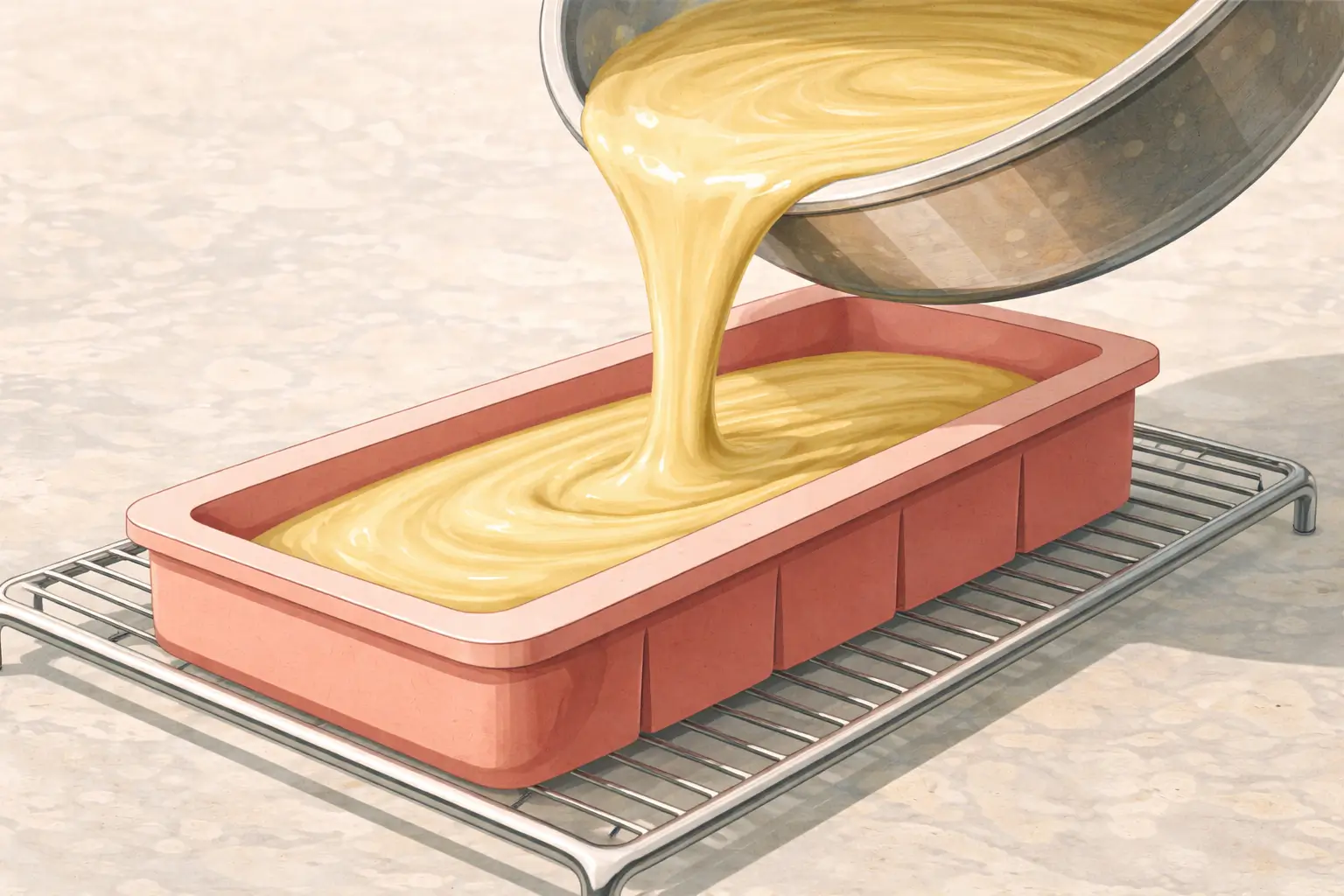
Step 5: Pour Into Mold
Soap is poured into molds and insulated to retain heat during the first 24 hours.
How Long Does Cold Process Soap Take to Cure? (quick answer)
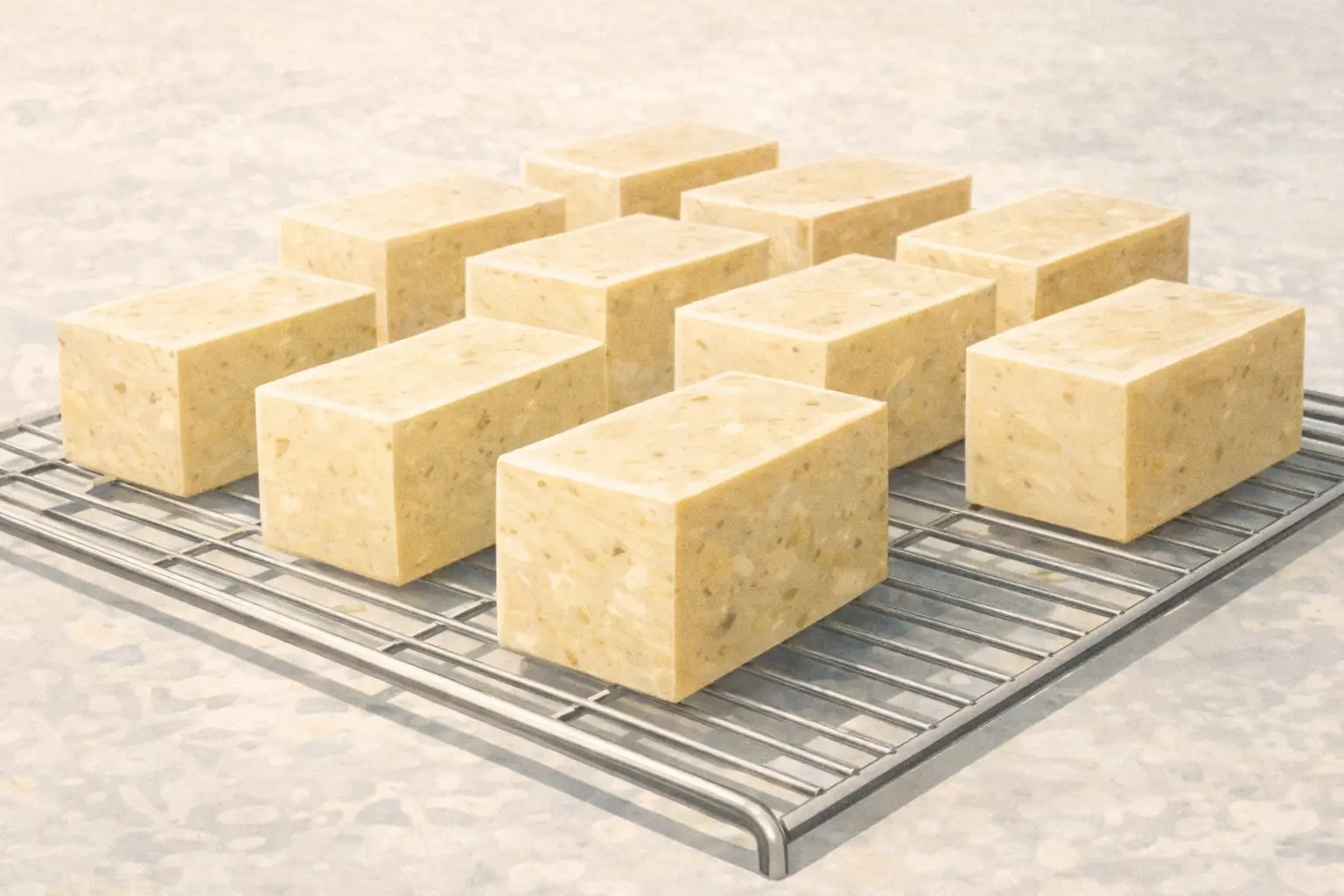
Cold process soap typically cures for 4–6 weeks. During this time, excess water evaporates and the soap hardens.
- High olive oil recipes may cure longer
- Milk soaps benefit from extended airflow
- Bars last longer when fully cured
Why Cold Process Soap Requires Curing (chemistry explanation)
Although cold process soap may appear solid within 24 to 48 hours, it remains chemically immature at that stage. Curing allows excess water to evaporate, crystalline soap structures to stabilize, and bar hardness to increase over time.
Skipping or shortening cure time does not automatically make soap unsafe, but it reduces longevity, firmness, and overall performance. For this reason, curing is considered a core part of formulation rather than an optional waiting period.
Questions about alternative alkali systems are examined in our analysis of soap chemistry and lye requirements.
Experimental validation methods are outlined in our Data & Methodology framework.
How Long Cold Process Soap Lasts After Curing (chemistry explanation)
Properly cured and stored cold process soap typically remains usable for 12 to 24 months. Longevity depends on oil composition, fragrance stability, and environmental exposure.
- High-oleic recipes: Often exceed 18 months
- Milk or honey soaps: May shorten shelf life slightly
- Essential oil–heavy recipes: Aroma fades before soap degrades
Visual changes such as light color shifts or scent reduction do not necessarily indicate spoilage, but structural softness or rancid odor may suggest oxidative breakdown.
How Performance Changes as Soap Ages (experience over time)
Cold process soap performance often improves during early aging. Lather becomes more stable, bars harden further, and usage rate slows as excess water evaporates.
Over extended periods, fragrance volatility rather than soap structure is usually the first noticeable change. This is particularly true for citrus and herbal essential oils.
In many observations, well-formulated bars continue performing effectively long after their scent profile diminishes.
Popular Cold Process Soap Recipe Variations
- Shea butter soap: Increased hardness & creaminess
- Goat milk soap: Sugar-rich liquid phase
- Breast milk soap: Milk substituted for water (handled frozen)
- Castile soap: 100% olive oil recipe
- Honey oatmeal soap: Added sugars & texture
- Activated charcoal soap: Mineral colorant addition
- Lavender soap: Essential oil fragrance
- Aloe vera juice soap: Liquid phase substitution
Cold process liquid soap recipes differ fundamentally and require potassium hydroxide rather than sodium hydroxide.
Understanding Cold Process Soap Chemistry
Cold process soap making is fundamentally a controlled chemical transformation rather than a simple mixing procedure, a distinction that becomes clearer when contrasted with heat-driven methods explained in the cold process vs hot process soap comparison. When sodium hydroxide dissolves in a liquid and is combined with fats, a reaction known as saponification begins. During this process, triglycerides present in oils are chemically altered, forming soap molecules and naturally occurring glycerin as a byproduct.
What determines the final character of a cold process soap recipe is not the oil names themselves, but the balance of fatty acids produced during saponification. Oils do not remain intact in finished soap. Instead, their fatty acids define hardness, lather quality, longevity, and curing behavior.
This chemical reality explains why cold process soap recipes can be adapted safely when formulation logic is understood, while blindly copying ingredient lists often leads to inconsistent results.
Fatty Acid Profiles & Oil Selection Logic
Every oil used in cold process soap contributes a distinct fatty acid profile. These fatty acids determine how the finished bar behaves during use and over time. Recipe performance is therefore a result of fatty acid balance rather than individual oil reputation.
| Fatty Acid | Typical Sources | Functional Role in Soap |
|---|---|---|
| Oleic Acid | Olive oil, high-oleic sunflower | Mildness, longevity, slower trace |
| Coconut oil | Cleansing strength, bubbly lather | |
| Shea butter, cocoa butter | Hardness, stable creamy lather | |
| Linoleic & Linolenic | Grapeseed oil, hemp oil | Conditioning feel, reduced shelf life |
Cold process soap recipes described as "gentle," "hard," or "long-lasting" reflect these fatty acid proportions rather than marketing claims or cosmetic positioning a distinction that becomes clear in real-world evaluations such as those discussed in the SallyeAnder soap reviews guide.
Liquid Phase Selection & Reaction Control
The liquid phase in a cold process soap recipe serves more than a dissolving function. While its primary role is to dissolve sodium hydroxide, the liquid also influences reaction speed, heat generation, and batter fluidity.
- Water: Predictable behavior and moderate trace speed
- Milk (goat or breast milk): Sugars and proteins increase heat and risk of acceleration
- Aloe vera juice: Alters viscosity and can thicken batter sooner
- Reduced-water recipes: Faster trace and harder bars after cure
For milk-based cold process soap recipes, freezing the liquid and controlling temperatures is often necessary to manage heat and prevent scorching during the initial reaction.
Trace as a Spectrum, Not a Single Stage
Trace in cold process soap making is often described as a single moment, but in practice it exists along a continuum. Understanding this progression helps prevent separation, over-thickening, and uneven additive distribution.
- Emulsion: Oils and lye solution are fully combined with no separation
- Light trace: Faint surface trails briefly visible
- Medium trace: Batter thickens and pours more slowly
- Heavy trace: Batter holds shape and flows minimally
Most additives such as fragrance, honey, oatmeal, and charcoal are introduced at light trace to balance fluidity with structural stability.
Designing Oil Ratios in Cold Process Soap Recipes
Oil ratios in a cold process soap recipe are not aesthetic choices. They define the internal fatty acid structure of the finished bar and directly influence hardness, cleansing strength, lather quality, and cure duration. Changing even a single oil percentage alters how the soap behaves during use and storage.
While many recipes are described by oil names, experienced formulation focuses on the fatty acids those oils contribute. Two recipes with different oil lists can perform nearly identically if their fatty acid balance is similar.
Balanced Cold Process Soap Recipe Ranges
The following percentage ranges represent a commonly used structural balance for beginner to intermediate cold process soap recipes. These ranges are adaptable across variations such as shea butter soap, goat milk soap, honey oatmeal soap, and essential oil blends.
| Oil Type | Typical Percentage Range | Primary Contribution |
|---|---|---|
| Olive Oil | 40–60% | Mildness, longevity, slow trace |
| Coconut Oil | 15–25% | Cleansing power, bubbly lather |
| Shea Butter | 5–15% | Creamy lather, hardness |
| Liquid Conditioning Oils | 5–15% | Slip, skin feel, reduced hardness |
Recipes exceeding these ranges may still function, but they often introduce trade-offs such as extended cure time, faster rancidity, or reduced bar longevity.
Cold Process Soap Recipes Without Coconut Oil
Cold process soap recipes formulated without coconut oil reduce cleansing strength but also remove one of the primary sources of bubbly lather. To compensate, formulators adjust hardness and lather stability using other fats.
- Increase shea or cocoa butter: Improves hardness and creaminess
- Use palm oil or lard: Replaces palmitic and stearic acids
- Accept reduced bubbles: Softer lather is expected
Coconut-free cold process soap recipes often require a longer cure period to reach optimal firmness and performance.
Olive Oil–Dominant & Castile Soap Structures
Castile soap recipes use olive oil as the primary or sole fat source. These recipes rely heavily on oleic acid, producing exceptionally mild but initially soft bars.
Traditional cold process Castile soap recipes often require curing times of six months or longer. During this period, bar hardness increases significantly, and lather quality improves with age.
Partial Castile formulations blend olive oil with small amounts of coconut oil or butters to reduce cure time while preserving mildness.
Milk, Honey & Sugar Effects on Formulation
Additives such as goat milk, breast milk, honey, and oatmeal introduce sugars into cold process soap recipes. These sugars increase heat during saponification and can accelerate trace.
- Milk soaps: Increased heat and browning risk
- Honey: Boosts lather but raises temperature
- Oatmeal: Adds texture without affecting chemistry
Frozen liquids and lower mixing temperatures are commonly used to control heat when formulating sugar-rich recipes.
Cold Process Liquid Soap Is a Different System
Despite similar naming, cold process liquid soap recipes do not share the same chemistry as bar soap recipes. Liquid soap uses potassium hydroxide instead of sodium hydroxide, resulting in a fundamentally different soap structure.
Bar soap recipes cannot be directly converted into liquid soap without recalculating alkali type, ratios, and dilution stages.
Natural Glycerin Formation in Cold Process Soap
One defining characteristic of cold process soap is the presence of naturally produced glycerin. During saponification, triglycerides split into soap molecules and glycerin, which remains within the finished bar rather than being removed.
Glycerin contributes to water attraction, surface slip, and a softer feel during use. Its presence also explains why cold process soap can feel different from many commercial bars that remove glycerin during manufacturing.
Because glycerin is hygroscopic, cold process soap may attract moisture from humid environments. This behavior is normal and reflects formulation chemistry rather than product instability.
Oxidation, Rancidity & Oil Stability
The long-term stability of cold process soap is influenced by the oxidative stability of the oils used in formulation. Oils high in polyunsaturated fatty acids are more prone to oxidation over time, which can lead to discoloration or off-odors.
| Oil Type | Dominant Fatty Acids | Stability Tendency |
|---|---|---|
| Olive Oil | Oleic | High stability |
| Coconut Oil | Lauric, Myristic | Very high stability |
| Shea Butter | Stearic, Oleic | High stability |
| Grapeseed Oil | Linoleic | Lower stability |
Formulations that rely heavily on polyunsaturated oils may benefit from shorter recommended shelf life expectations or reduced inclusion percentages.
Ingredient stability and oxidation behavior are explained further in Evidence & Sources.
Storage Conditions That Preserve Soap Quality
Storage environment plays a measurable role in preserving cold process soap performance. Airflow, humidity, and light exposure all influence long-term behavior.
- Dry airflow: Prevents moisture buildup and softening
- Low humidity: Reduces glycerin dew formation
- Minimal light exposure: Slows oxidation and discoloration
Bars stored tightly sealed immediately after curing may retain scent longer but can soften if residual moisture is trapped.
Common Cold Process Soap Failures & Why They Occur
Most cold process soap failures are not caused by incorrect ingredients, but by imbalance in ratios, temperature control, or reaction timing. Understanding why failures occur allows recipes to be adjusted without restarting from scratch.
| Issue Observed | Likely Cause | Formulation or Process Adjustment |
|---|---|---|
| Soap Seizes Suddenly | Fast-accelerating fragrance or excess heat | Lower temperatures, reduce fragrance load |
| Separation After Pour | False trace or insufficient blending | Blend to stable emulsion before additives |
| Soft or Sticky Bars | High water content or soft oil dominance | Extend cure time or adjust oil ratios |
| Crumbly Texture | Excess hard fats or low water | Increase liquid phase or reduce stearic fats |
False Trace vs True Trace
False trace occurs when fats solidify due to temperature rather than chemical progression. This can visually resemble light trace but lacks stable emulsification.
Recipes high in shea butter, cocoa butter, or beeswax are particularly susceptible if oils cool too rapidly. Soap poured at false trace may separate or develop uneven texture during saponification.
Maintaining oil and lye solution temperatures within a compatible range reduces the likelihood of false trace.
Temperature Management During Soap Making
Temperature influences reaction speed, trace behavior, and additive stability. Cold process soap does not require exact temperatures, but extreme differences between oil and lye solution can disrupt emulsification.
- Too hot: Accelerated trace, risk of overheating
- Too cold: False trace, uneven saponification
- Balanced range: Stable emulsion and controlled trace
Milk-based and honey-containing recipes benefit from lower working temperatures to manage sugar-driven heat increase.
Additive Limits & Interaction Effects
Additives in cold process soap serve functional or sensory roles, but they do not behave independently of base chemistry. Overuse or incompatible combinations can disrupt structure.
- Essential oils: May accelerate trace or fade during cure
- Clays: Thicken batter and absorb free liquid
- Honey & sugars: Increase heat and darkening risk
- Botanicals: Can discolor or bleed during cure
Additives should be viewed as modifiers rather than primary structural components of the recipe.
System-level differences between soap and syndet formats are examined in Bar Soap vs Liquid Soap.
Adjusting Existing Recipes Without Starting Over
Cold process soap recipes can often be corrected by incremental adjustments rather than complete reformulation. Small changes in oil ratios, water content, or additive timing frequently resolve performance issues.
In practice, experienced soap makers adjust one variable at a time, observing how trace, pour behavior, and curing respond before making further changes.
Cold Process Soap Recipe Variations Explained by Formulation Logic
Cold process soap recipe variations are best understood as controlled adjustments to oil ratios, liquid phase selection, and additive timing rather than entirely new methods. The underlying saponification chemistry remains constant across all variations.
The sections below explain how common variations alter formulation behavior, cure characteristics, and long-term performance without redefining the base process.
Shea Butter Cold Process Soap Recipes
Shea butter is commonly used to increase bar hardness and contribute a dense, creamy lather. In cold process soap recipes, shea butter typically replaces a portion of liquid oils rather than being added on top of an existing formulation.
- Typical inclusion range: 5–15%
- Primary effect: Increased hardness and lather stability
- Trade-off: Faster trace at higher percentages
Recipes exceeding moderate shea butter levels often require closer temperature control to avoid premature thickening.
Goat Milk & Milk-Based Soap Recipes
Goat milk cold process soap recipes replace water with milk in the liquid phase. Milk introduces sugars, proteins, and fats that influence reaction speed and heat generation.
- Common technique: Frozen milk cubes added slowly to lye
- Observed behavior: Darkening during cure
- Adjustment: Lower working temperatures
Milk soaps often benefit from extended curing to allow residual moisture to dissipate evenly.
Castile Soap (Olive Oil–Dominant) Recipes
Castile soap recipes rely primarily on olive oil, producing a mild but initially soft bar. These recipes highlight the relationship between oleic acid content and cure duration.
- Oil composition: 90–100% olive oil
- Cure time: Often 6 months or longer
- Performance change: Lather improves with age
Partial Castile variations introduce small amounts of hard fats to reduce cure time while maintaining mildness.
Honey & Oatmeal Cold Process Soap Recipes
Honey oatmeal recipes combine sugar-driven lather enhancement with physical texture. Honey increases heat and accelerates trace, while oatmeal remains chemically inert.
- Honey: Dissolved in warm liquid before trace
- Oatmeal: Added at light trace
- Key consideration: Heat management
These recipes often darken slightly during cure due to sugar caramelization.
Activated Charcoal Soap Recipes
Activated charcoal functions as a mineral colorant in cold process soap. It does not participate in saponification and is added for appearance rather than structural effect.
- Usage: Dispersed in oil before adding
- Effect: Dark coloration
- Trade-off: Slight batter thickening
Lavender & Essential Oil Soap Recipes
Essential oils provide fragrance but may influence trace speed depending on chemical composition. Lavender is generally considered stable, while citrus oils fade more quickly.
- Addition stage: Light trace
- Longevity: Aroma fades before soap degrades
- Observation: Fragrance behavior varies by oil source
Reminder on Cold Process Liquid Soap
Cold process liquid soap recipes require potassium hydroxide and follow a paste-dilution system rather than bar soap curing. They are not interchangeable with sodium hydroxide recipes.
Summary of Findings
- Cold process soap is a true chemical reaction: Oils and lye transform into soap and glycerin.
- Oil ratios define performance: Hardness, lather, and cure time are formulation-driven.
- Trace stage matters: Most additives are added at light trace.
- Cure time is essential: Fully cured soap lasts longer and performs better.
References
-
Gunstone, F. D. (2011). Vegetable Oils in Food Technology. Wiley.
Publisher Reference -
Rosen, M. J., & Kunjappu, J. T. (2012). Surfactants and Interfacial Phenomena.
Wiley Online Library -
OECD Chemical Safety and Handling Resources.
OECD Resource