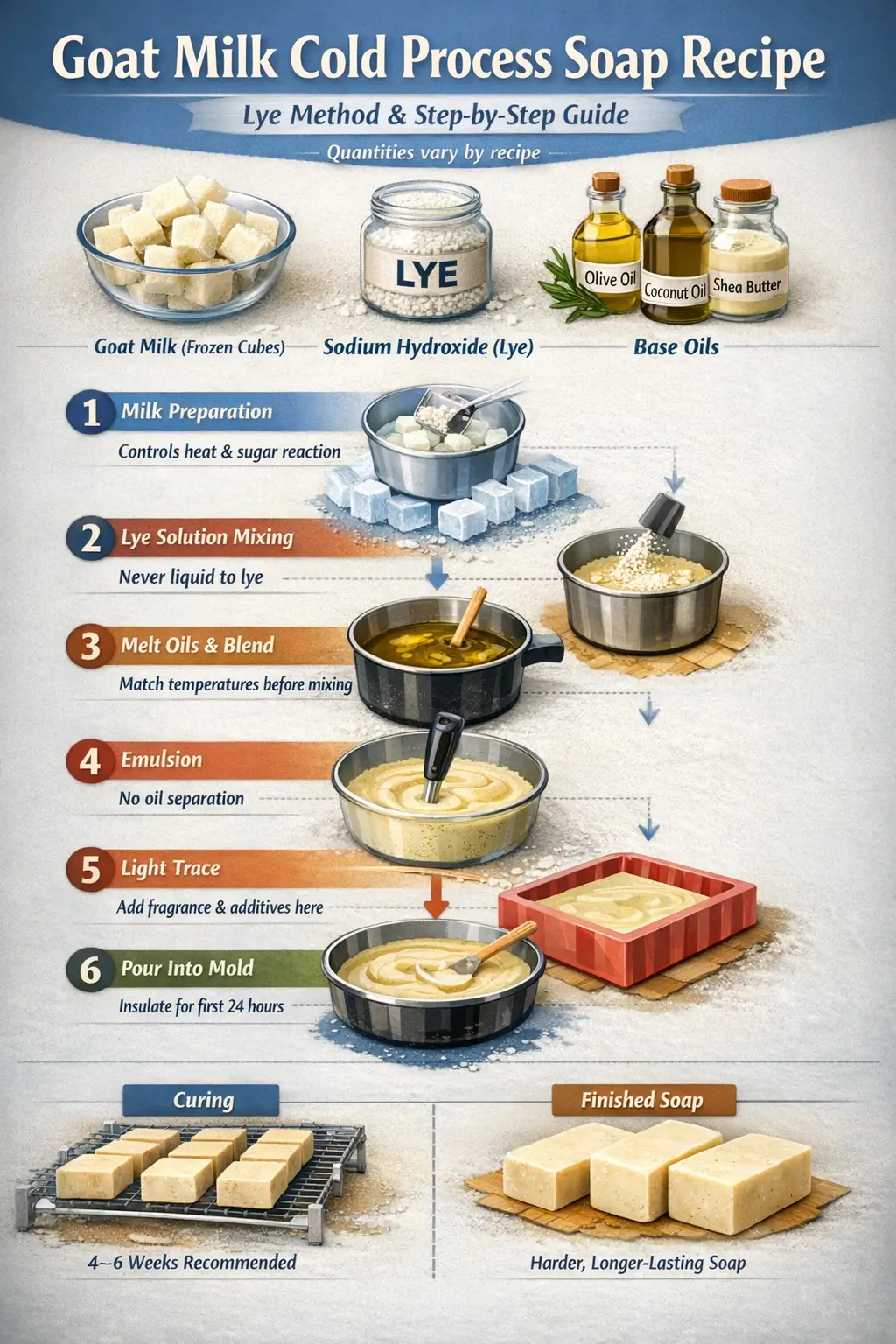
Goat Milk Cold Process Soap Recipe Overview
This goat milk cold process soap recipe explains the complete formulation method using sodium hydroxide (lye), building on the same core workflow outlined in a standard cold process soap recipe while addressing milk-specific handling, heat control, and cure behavior. Goat milk introduces sugars, proteins, and fats that change how cold process soap behaves compared to water-based recipes.
Unlike standard cold process soap, goat milk formulations require additional temperature management and liquid preparation steps to prevent scorching, discoloration, and accelerated trace. When handled correctly, the underlying saponification chemistry remains the same, but the reaction environment is more sensitive.
The method described here forms a base structure that can be adapted into variations such as honey oatmeal goat milk soap, lavender goat milk soap, and recipes using goat milk powder instead of fresh milk.
Safety Basics for Goat Milk Cold Process Soap
Goat milk cold process soap making involves handling sodium hydroxide while also managing heat-sensitive organic liquids. Safety practices are mandatory and become more critical when milk replaces water.
- Protective equipment: Gloves, eye protection, long sleeves
- Ventilation: Required when preparing lye solution
- Container selection: Heat-safe plastic or stainless steel only
Lye must always be added slowly to the liquid phase. Adding liquid to lye can cause a violent reaction and splashing. This rule applies equally to water, fresh goat milk, and reconstituted goat milk powder.
Goat milk cold process soap follows the same curing principles as standard cold process soap described in foundational cold process soap recipes, though milk solids and sugars slightly influence moisture retention and bar hardness rather than altering the final pH range explained in soap pH behavior after cure.
How To Make Goat Milk Soap (Cold Process Method)
Why Goat Milk Behaves Differently Than Water
Goat milk is not a neutral liquid. It contains lactose (sugar), proteins, and milk fats that interact with heat during the saponification process. When sodium hydroxide dissolves, heat is released immediately, and the presence of sugars intensifies this effect.
In practical terms, goat milk cold process soap recipes:
- Heat more rapidly during lye preparation
- Darken in color if temperatures rise too high
- Reach trace faster than water-based recipes
These behaviors do not indicate failure. They reflect the organic composition of milk and can be managed through temperature control and adjusted mixing techniques.
Basic Goat Milk Cold Process Soap Ingredients
Goat milk cold process soap recipes rely on the same four functional ingredient groups as standard cold process soap, each performing the roles described in cold process soap ingredient composition, with milk altering the reaction environment rather than the chemistry itself. The difference lies in how the liquid phase is prepared and introduced.
| Ingredient Group | Examples | Functional Role |
|---|---|---|
| Base Oils | Olive oil, coconut oil, shea butter | Provide fatty acids for soap structure |
| Alkali | Sodium hydroxide (lye) | Triggers saponification |
| Liquid Phase | Fresh goat milk or reconstituted milk powder | Dissolves lye and controls reaction |
| Additives | Honey, oatmeal, essential oils | Modify scent, appearance, texture |
Fresh Goat Milk vs Goat Milk Powder
Goat milk cold process soap can be made using either fresh milk or powdered goat milk reconstituted with distilled water. Each option behaves slightly differently during lye preparation.
- Fresh goat milk: Contains natural fats and sugars, higher heat sensitivity
- Goat milk powder: More consistent composition, easier temperature control
Many formulators prefer goat milk powder for repeatability, while others use fresh milk for formulation preference. Both require temperature management to prevent scorching.
Lye Method for Goat Milk Cold Process Soap
Goat milk cold process soap recipes require a modified lye preparation method to account for the heat sensitivity of milk sugars and proteins. Unlike water-based recipes, uncontrolled heat during lye dissolution can scorch milk, causing discoloration and odor.
The fundamental rule remains unchanged: sodium hydroxide is always added to the liquid phase. What differs is how the liquid is prepared and how quickly heat is allowed to build.
Frozen Goat Milk Technique Explained
The frozen milk method is the most commonly used approach for goat milk cold process soap. Freezing slows heat buildup as sodium hydroxide dissolves, reducing the risk of milk scorching.
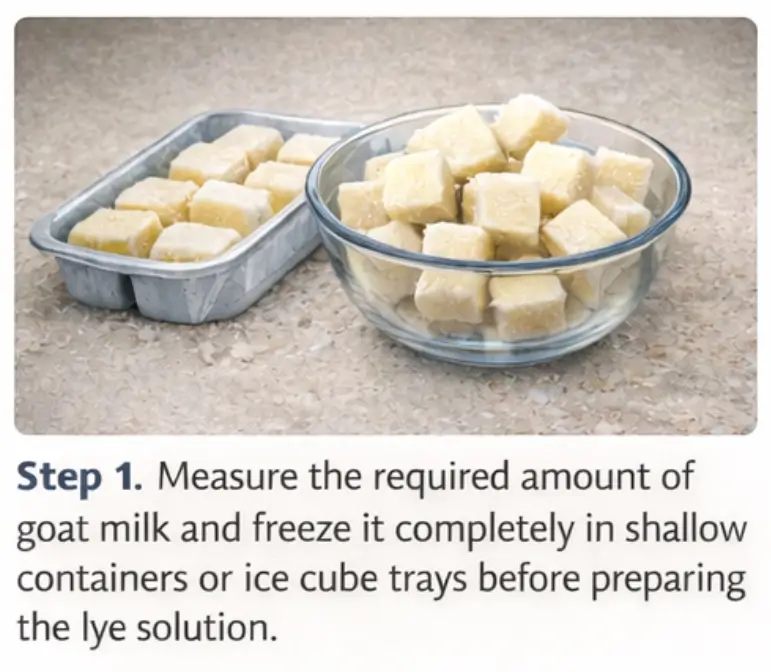
- Measure goat milk: Use the full liquid amount required by the recipe.
- Freeze completely: Pour into ice cube trays or shallow containers.
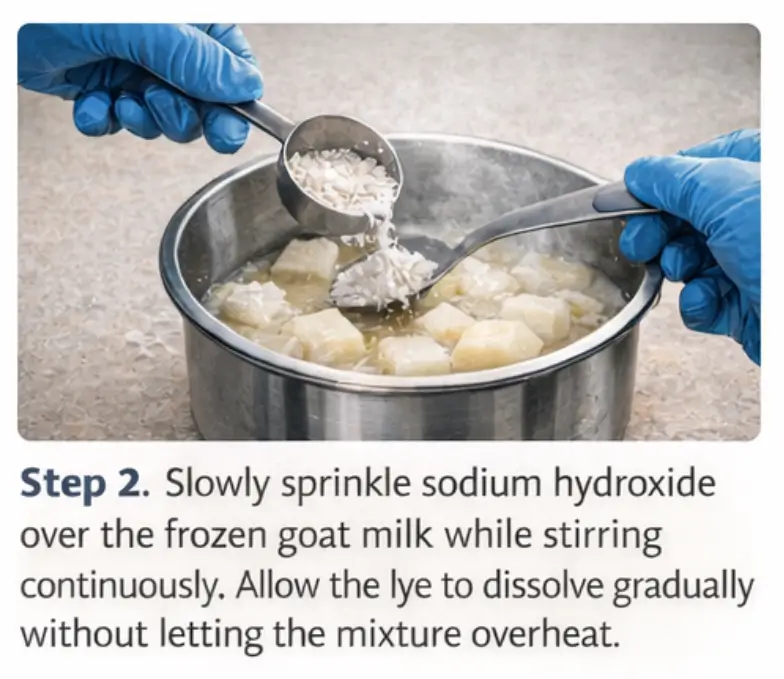
- Add lye slowly: Sprinkle sodium hydroxide over frozen milk while stirring.
- Control temperature: Keep mixture below excessive heat during dissolution.
During this stage, the milk may shift from white to pale yellow or tan. Mild color change is normal and reflects sugar interaction rather than failure.
Alternative Milk Handling Methods
Some formulations divide the liquid phase to reduce thermal stress on milk. This method replaces part of the liquid with water and introduces milk later in the process.
- Split liquid method: Dissolve lye in water, add milk at trace
- Milk powder method: Add reconstituted or dry powder at emulsion
While these approaches reduce scorching risk, they slightly alter trace behavior and may increase batter thickness during mixing.
Preparing Oils for Goat Milk Soap Recipes
Oils for goat milk cold process soap are prepared similarly to standard recipes, but temperature alignment becomes more important due to accelerated trace tendencies.
Solid fats such as coconut oil or shea butter are gently melted and combined with liquid oils. Oils are then allowed to cool to a moderate range before mixing with the lye solution.
Keeping oil and lye solution temperatures relatively close helps prevent false trace and uneven emulsification.
Emulsion and Trace Behavior in Goat Milk Soap
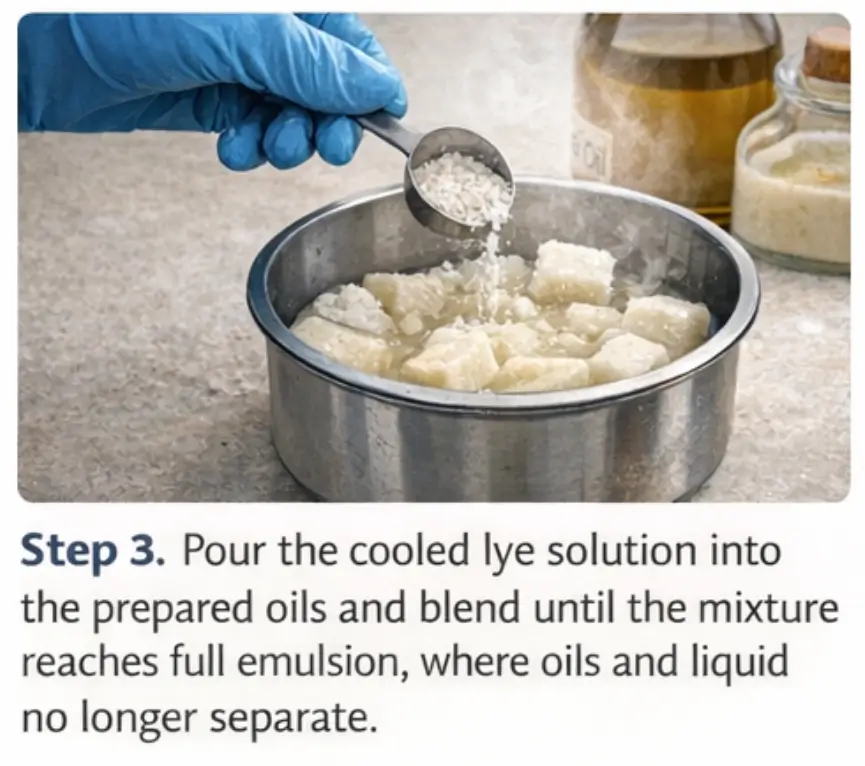
Goat milk accelerates trace compared to water-based recipes due to sugar content and added solids. Emulsion occurs when oils and lye solution remain fully combined without separation.
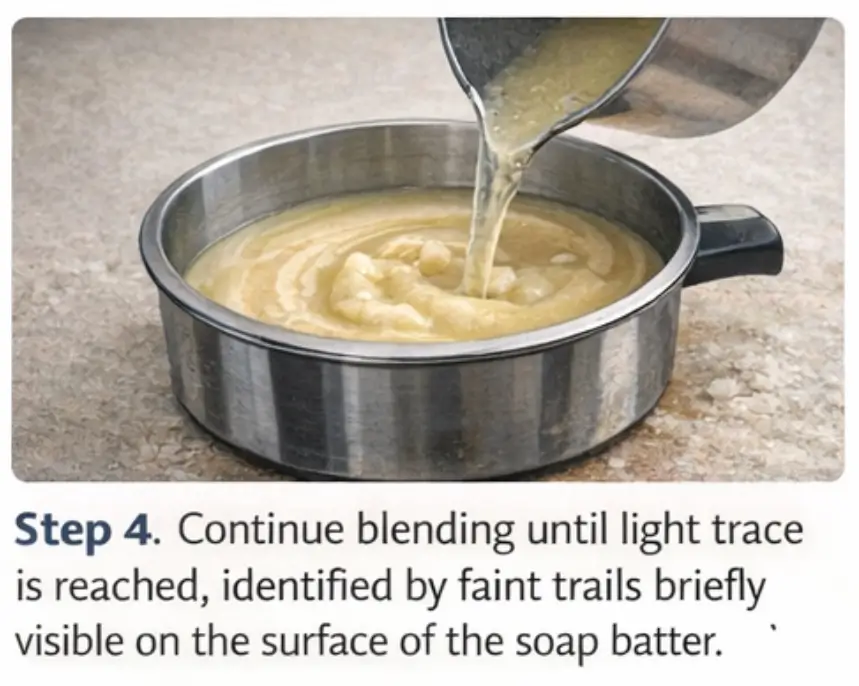
Light trace is reached sooner in many goat milk recipes, making additive timing more critical. Over-blending can push batter into medium or heavy trace quickly.
- Emulsion: Stable blending without surface trails
- Light trace: Ideal stage for fragrance, honey, or oatmeal
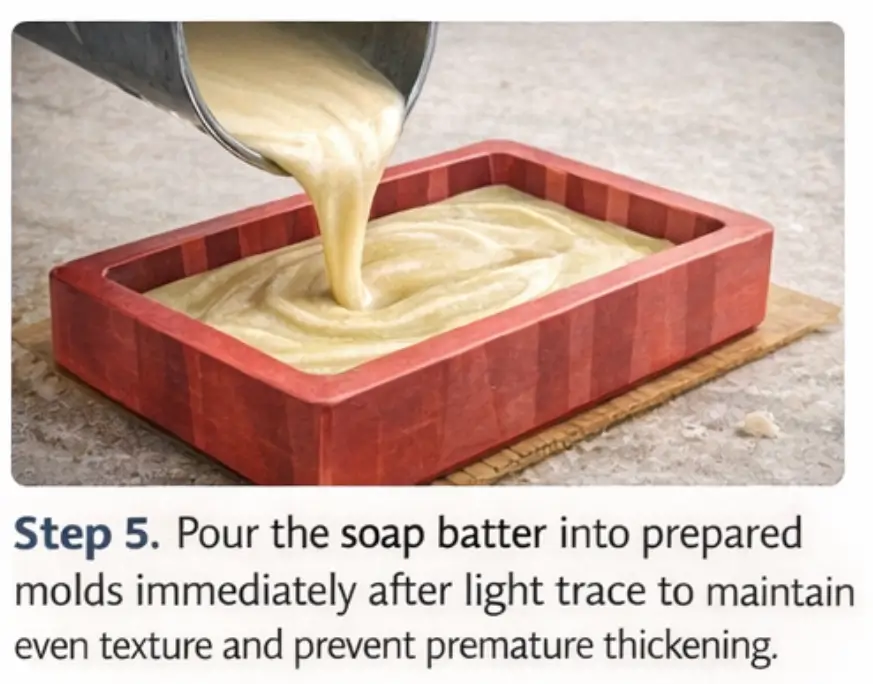
- Heavy trace: Increased risk of uneven pour
The chemistry behind oil and alkali interaction during saponification is explained in our mechanism of how soap cleans guide.
Pouring, Insulation & Early Gel Phase
Once light trace is achieved, goat milk soap batter is poured into molds and leveled. Insulation practices influence heat retention and final color.
Many goat milk soap makers choose minimal insulation or room-temperature rest to reduce overheating and excessive browning during gel phase.
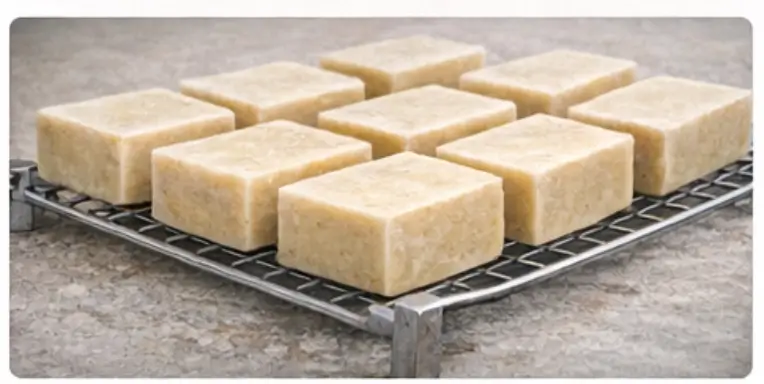
The soap is typically left undisturbed for 24 to 48 hours before unmolding, depending on oil composition and water content.
How Long It Takes to Make Goat Milk Soap
Active preparation time for a goat milk cold process soap generally ranges from 60 to 90 minutes. This includes milk preparation, lye dissolution, oil melting, mixing, and pouring.
Additional time is required for freezing milk, cooling oils, and post-pour rest, which should be considered when planning the process.
How Long Goat Milk Soap Needs to Cure
Goat milk cold process soap follows the same curing principles as standard cold process soap, but milk solids and sugars slightly influence moisture retention and bar hardness development.
In most formulations, goat milk soap requires a minimum cure time of four to six weeks. During this period, excess water evaporates, crystalline soap structures stabilize, and the bar becomes harder and longer-lasting.
- 4 weeks: Functional but still soft in high-olive recipes
- 6 weeks: Improved hardness and reduced water content
- 8+ weeks: Noticeably longer-lasting bars
Recipes with higher olive oil percentages or reduced coconut oil often benefit from extended curing beyond six weeks.
Color & Odor Changes During Cure
Goat milk soap commonly changes color during curing. Freshly poured soap may appear cream-colored, tan, or light caramel depending on milk handling and heat exposure.
Mild darkening is expected and reflects sugar interaction during saponification. Strong ammonia-like odors may appear briefly during early cure stages but typically dissipate as the soap fully cures.
Persistent strong odor or sticky texture usually indicates insufficient cure time rather than formulation failure, as properly cured cold process soap stabilizes within a predictable alkaline range discussed in soap pH after saponification.
How Long Goat Milk Cold Process Soap Lasts
Properly cured goat milk soap typically remains usable for 12 to 18 months. Shelf life depends on oil stability, fragrance choice, and storage conditions.
- High-oleic recipes: Longer shelf stability
- Milk and honey recipes: Slightly reduced longevity
- Essential oil soaps: Scent fades before soap degrades
Refrigeration is unnecessary. Dry airflow and low humidity are the most important factors for preserving bar quality.
Storage Conditions for Goat Milk Soap
Goat milk soap benefits from the same storage principles as other cold process soaps, with additional sensitivity to humidity due to natural glycerin content.
- Store in open-air racks during curing
- Avoid sealed containers until fully cured
- Keep away from direct sunlight
Finished bars stored in breathable packaging tend to retain firmness and reduce surface moisture accumulation.
How Much It Costs to Make Goat Milk Soap
The cost of making goat milk cold process soap varies by ingredient sourcing, batch size, and formulation complexity.
For small batches, ingredient costs typically fall within a moderate range, with goat milk contributing more to cost than water-based recipes.
| Component | Cost Influence |
|---|---|
| Goat Milk | Moderate, varies by fresh vs powdered |
| Base Oils | Primary cost driver |
| Essential Oils | Optional but increases cost |
| Additives | Low to moderate impact |
Common Goat Milk Soap Variations
Goat milk cold process soap variations are best understood as controlled adjustments to additives, oil ratios, and fragrance timing rather than changes to the base process.
- Honey oatmeal goat milk soap: Added sugars and texture
- Lavender goat milk soap: Essential oil fragrance at light trace
- Goat milk powder: Milk added dry or reconstituted
- Easy beginner recipes: Simplified oil lists
Each variation introduces predictable trade-offs in trace speed, heat behavior, and curing characteristics.
Common Goat Milk Soap Failures & Why They Occur
Most issues in goat milk cold process soap are caused by heat management, liquid handling, or trace misinterpretation rather than incorrect ingredients. Understanding failure patterns allows correction without abandoning the recipe.
| Issue Observed | Likely Cause | Adjustment |
|---|---|---|
| Dark brown soap | Milk sugars overheated | Freeze milk & reduce mixing temperature |
| Ammonia-like odor | Early cure stage reaction | Extend curing time with airflow |
| Soap separates | False trace | Blend to stable emulsion |
| Sticky or soft bars | High liquid or olive oil | Increase cure duration |
False Trace vs True Trace in Goat Milk Soap
Goat milk recipes are more prone to false trace due to solid fats, chilled liquids, and temperature imbalance.
False trace occurs when fats begin to solidify before saponification has progressed. The batter thickens visually but lacks chemical stability, leading to separation during cure.
True trace is achieved only after stable emulsification, where oils and lye solution remain fully integrated.
Temperature Management in Goat Milk Soap Making
Temperature does not need to be precise, but extreme differences between oils and lye solution increase failure risk.
- Too hot: Accelerated trace, darkening, overheating
- Too cold: False trace, uneven saponification
- Moderate range: Stable emulsion and controlled trace
Milk-based recipes generally perform best at lower working temperatures than water-based cold process soap.
Additive Limits & Interaction Effects
Additives do not behave independently of base soap chemistry. In goat milk soap, sugars, clays, and essential oils interact with milk solids and influence trace speed.
- Honey: Raises heat and darkening risk
- Clays: Thicken batter and absorb moisture
- Essential oils: May accelerate or fade
- Botanicals: Can bleed or discolor over time
Additives should be introduced conservatively and viewed as modifiers, not structural components.
Summary of Findings
- Goat milk soap is still cold process soap: The chemistry remains the same, but milk alters heat and trace behavior.
- Milk handling matters: Freezing and temperature control reduce scorching and discoloration.
- Cure time is essential: Four to six weeks minimum improves hardness, longevity, and odor stability.
- Oil ratios define performance: Oil ratios define performance: fatty acid balance matters more than oil names, a principle rooted in how base oils and alkali interact as explained in cold process soap ingredient behavior.
- Most failures are correctable: Small process adjustments often resolve issues.
References
- Gunstone, F. D. Vegetable Oils in Food Technology. Wiley-Blackwell.
- Dunn, K. M. Scientific Soapmaking. Clavicula Press.
- U.S. FDA. Soap & Detergent Chemical Definitions.
- Cavitch, S. The Soapmaker’s Companion.