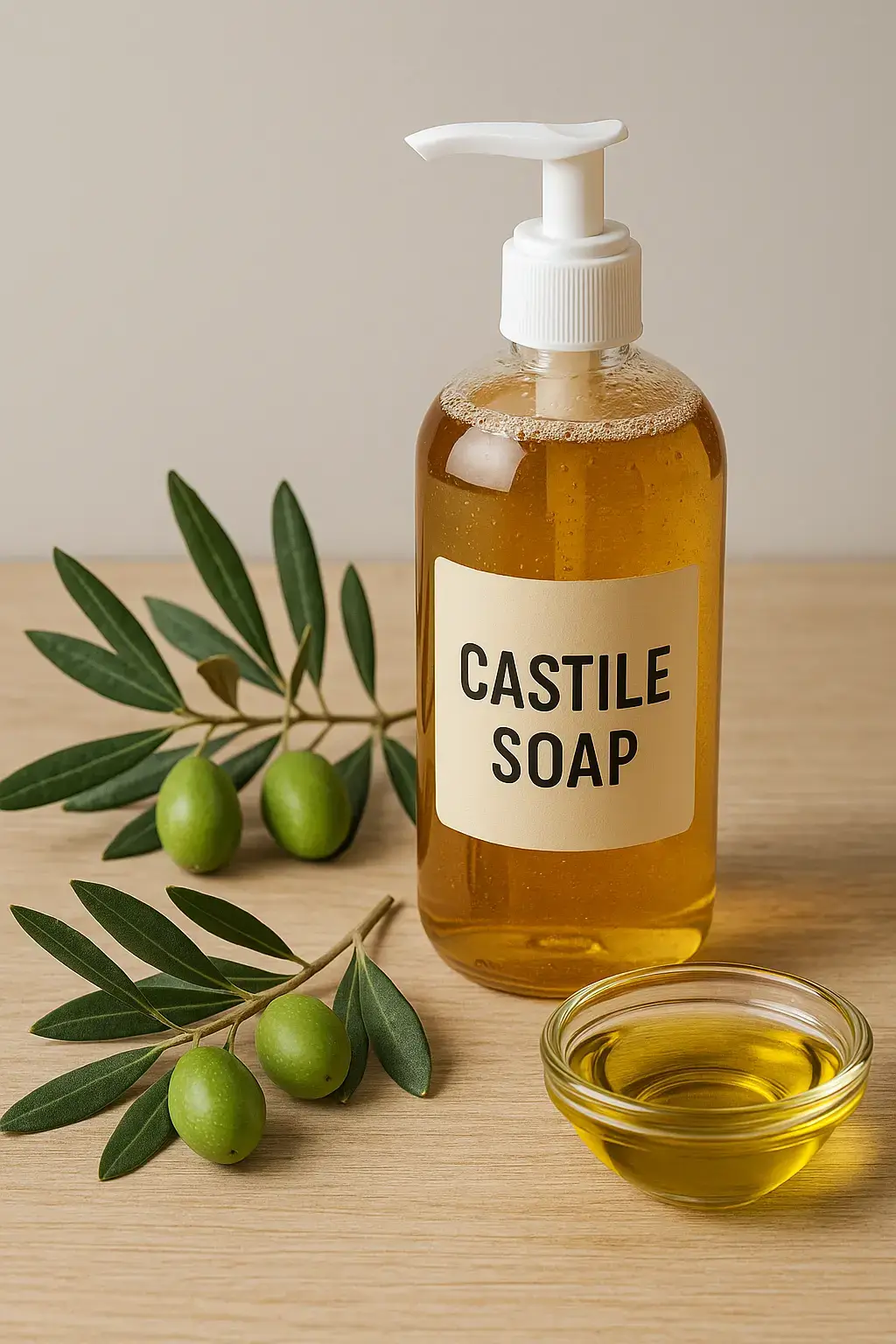
What is Castile Soap?
Castile soap is a traditional style of true soap that uses vegetable oils rather than animal fats or synthetic detergents. Originally made in the Castile region of Spain from olive oil, the modern term indicates a plant-oil-based soap (bar or liquid) produced by saponification. Key identifiers on a label are saponified oil names (e.g., Potassium Olivate, Sodium Olivate) rather than generic "cleanser" or surfactant trade names, a distinction that aligns with broader principles in natural versus synthetic ingredient labeling.
For a broader explanation of what legally defines true soap, see our analysis of soap and lye chemistry.
Origins & Historical Context
Castile soap’s lineage traces to Mediterranean olive oil soap traditions. These soaps were prized for milder skin feel than tallow-based soaps. Over time, makers introduced other vegetable oils (coconut, sunflower, palm kernel) to tune lather, hardness, and cleansing strength while retaining the plant-based identity.
How Castile Soap is Made (Saponification Explained)
Saponification is the base chemical reaction: triglyceride oils react with an alkali (lye) to form soap (fatty acid salts) and glycerin, following the same cold-process principles outlined in the cold-process dish and detergent soap guide. Two common production paths:
- NaOH (sodium hydroxide) - produces solid bar soap (sodium salts).
- KOH(Potassium Hydroxide) - produces liquid soap (potassium salts).
In well-executed saponification, residual free alkali is neutralized or fully reacted; finished soap should not contain active lye. Liquid Castile often requires dilution and stabilizers for shelf life, reflecting the structural differences described in liquid soap formulation systems.
Forms: Liquid, Bar, and Concentrated bases
Liquid Castile
A concentrated potassium salt solution intended for dilution. It’s versatile for personal care and household cleaning, and often the preferred consumer form due to convenience.
Bar Castile
Sodium-based bars are made from NaOH. A 100% olive oil bar tends to be softer and creamier with less bubbly lather; coconut or palm additions create a harder, bubblier bar.
Concentrated Soap Base
Used by formulators and small brands to avoid lye handling. These bases are diluted and customized (scented, preserved) before retail.
INCI Interpretation & Reading Castile Soap Labels
Castile soap labels follow standard INCI naming conventions, which describe ingredients based on their chemical identity after processing rather than their raw starting materials. Understanding these names helps interpret oil composition, soap format, and expected performance without requiring formulation expertise, a process examined in detail in Castile soap ingredient analysis.
In Castile soaps, oils are listed as their saponified forms, meaning the fatty acids have already reacted with an alkali to create soap salts. These names indicate both the oil source and the soap chemistry used in the product.
- Potassium Olivate / Sodium Olivate: soap salts derived from olive oil, typically associated with milder cleansing behavior
- Potassium Cocoate / Sodium Cocoate: coconut oil–derived soap salts that contribute stronger cleansing and higher foam
- Glycerin: a natural byproduct of saponification that may be retained or supplemented depending on formulation
- Water: functions as the reaction medium and, in liquid soaps, indicates overall dilution level
Ingredient order provides useful structural clues. When water appears first, the product is typically a liquid Castile soap with higher dilution. When specific soap salts appear before water, the formulation is usually more concentrated or solid. Likewise, the first-listed saponified oil generally represents the dominant oil in the formula and helps predict lather character, residue behavior, and rinse feel.
Some well-known Castile soap brands present ingredient lists using this post-saponification naming style, a structure that can be clearly observed in traditional formulations such as those documented in Kirk’s soap ingredient disclosures. While labels may vary in wording or order, the underlying chemistry remains consistent across traditional Castile formulations: vegetable oils converted into fatty-acid soap salts through alkali saponification. For ingredient-by-ingredient transparency, consult the Ingredient Library.
Fatty acid Composition - Practical Table (What each Oil Contributes)
The fatty acid profile determines cleansing strength, conditioning properties, and lather. Ranges below are representative and useful for consumer interpretation.
| Oil | Oleic (%) | Lauric (%) | Myristic (%) | Palmitic (%) | Effect in soap |
|---|---|---|---|---|---|
| Olive | 55–83 | ~0 | ~0 | 7–20 | Mild, conditioning; low bubbly lather |
| Coconut | ~5–10 | 45–52 | 16–21 | 8–11 | High lather & cleansing; can be drying at high % |
| Sunflower | 14–35 | ~0 | ~0 | 4–9 | Light feel; supports mildness |
| Palm | 38–43 | ~0 | ~1 | 39–47 | Adds hardness & creamy lather (bars) |
Consumer rule of thumb: olive-first = gentler; coconut-first = more foamy/cleaning power.
Properties & pH - How Castile Behaves
Typical finished properties:
- pH: most liquid Castile 8.5–10.5 (alkaline)
- Glycerin: natural humectant present in many soaps
- Lather & feel: driven by fatty acid content
- Biodegradability: generally high for plant-oil soaps
| Cleanser type | Typical pH | Consumer note |
|---|---|---|
| Castile soap | 8.5–10.5 | Alkaline - effective cleansing yet potentially drying if undiluted |
| Syndet bars | 5.5–7 | Closer to skin pH → often gentler for barrier-compromised skin |
| Liquid body washes | 5–6 | Formulated to minimize disruption to skin surface |
A deeper breakdown of soap versus detergent systems is available in Bar Soap vs Liquid Soap.
Common Uses - Realistic Expectations
Castile is a multipurpose product: personal cleansing, all-purpose household cleaning, dishwashing, laundry pre-wash, pet bathing (with vet guidance), and occasional plant pest control (very dilute). It is not a disinfectant and should not be used where sanitation is required.
Recommended Dilutions - Practical Starting Points
Dilutions below are commonly used and safe starting points. Adjust to task intensity and personal tolerance.
| Use | Dilution | Example measurement | Notes |
|---|---|---|---|
| Hand soap | 1:3 | 1 part Castile : 3 parts water | Good balance between economy and gentleness |
| Body wash | 1:2 | 50 ml Castile : 100 ml water | Use with moisturizer if skin dries |
| All-purpose cleaner | 1:20 | 1 tbsp Castile : 300 ml water | Effective for routine cleaning; not disinfecting |
| Floor cleaning | 1:40 | 1 tbsp Castile : 600 ml water | Non-residue on most sealed floors |
| Plant spray | ≥1:100 | ¼ tsp Castile : 1 L water | Spot test first; avoid essential oil formulas |
Ingredient Ratio Examples (Formulator-Friendly)
Below are three example oleochemical blends and expected consumer outcomes. Use for label interpretation, not manufacturing instructions.
| Blend name | Olive | Coconut | Palm | Expected feel |
|---|---|---|---|---|
| Gentle (olive-forward) | 80% | 10% | 10% | Very mild, conditioning, low-bubble |
| Balanced (all-rounder) | 60% | 25% | 15% | Good lather + decent conditioning |
| High-lather (cleaning focus) | 40% | 45% | 15% | Strong foam, higher cleansing - can be drying |
Practical note: formulas with >30–40% coconut will clean strongly but may necessitate extra conditioning for hair or dry skin.
Comparison: Castile vs Syndet vs other Soaps
| Feature | Castile (plant soap) | Syndet | Tallow/animal-fat soap | Liquid body wash |
|---|---|---|---|---|
| Main actives | Saponified vegetable oils | Synthetic surfactants | Saponified Animal Fats | Surfactants + additives |
| pH | Alkaline | Closer to neutral | Alkaline | Formulated neutral |
| Biodegradability | High | Variable | High | Moderate |
| Best uses | Multipurpose cleaning + body | Personal cleansing (sensitive skin) | Traditional soap users | Convenience & tailored skin benefits |
Common Uses and Realistic Expectations
Castile soap is versatile-when diluted correctly it cleans hands, bodies, dishes, floors, and many surfaces. It is sometimes used for hair and plant pest control, but those uses require specific attention to dilution and follow up care.
Personal Care
Diluted Castile can be a gentle hand or body wash for many people. Because of the alkaline pH, frequent undiluted use can feel drying to those with sensitive or very dry skin. Consumers who use Castile for personal cleansing often follow with a moisturizer or use a conditioning rinse for hair.
Household Cleaning
Castile is suitable as an all-purpose cleaner at higher dilutions. It is not an EPA registered disinfectant and should not be relied upon when sanitization is required.
Pets and Plants
Castile may be used on pets at very mild dilutions recommended by a veterinarian. For plants, extremely weak soap solutions can be used as a contact spray for soft-bodied insects, but always spot test first; essential oils or salts can harm some species.
Practical Guidance for Choosing & using Castile Soap
- Try unscented first. Fragrance-free products reveal base behavior without essential-oil effects.
- Match oil profile to needs. Olive-forward blends favor sensitived skin; coconut-forward blends favor cleaning tasks.
- Always dilute for skin use. Undiluted concentrate can be irritating if used frequently.
- Condition hair post-wash. Use conditioner or slightly acidic rinse after using Castile on hair.
- Patch test for pets & plants. Professional guidance for pets; very dilute, essential-oil-free mixes for plants only.
Safety Considerations & Common Warnings
Important consumer safety points-this is educational information, not medical or veterinary advice:
- Not a disinfectant - use registered disinfectants where required.
- Essential oils can trigger allergic reactions in some people.
- Hard water may form soap scum; rinse well.
- Avoid frequent undiluted use on delicate skin or color-treated hair.
Environmental Considerations
Castile soap is generally favorable environmentally because fatty acid salts biodegrade more readily than many synthetic surfactants. However, sustainability depends on the source of oils - palm oil and some coconut supply chains have notable environmental impacts; prefer certified sustainable sources if this matters to you.
Our full sustainability evaluation framework is documented in Sustainability Commitment.
Quick Answers
Is Castile Soap better than Regular Soap?
"Better" depends on needs. Castile offers plant-based transparency and biodegradability; regular (syndet) cleansers may be gentler for compromised skin due to lower pH.
Can I Use Castile Soap Every Day?
Many people use diluted Castile daily without issues, but those with dry or sensitive skin should monitor for dryness and use moisturizing steps as needed.
Will Castile Soap Remove Grease?
Yes - especially coconut-forward blends. For heavy grease, combine with warm water and agitation; it is not a solvent disinfectant.
Pros & Cons - Quick Comparison for Shoppers
| Pros | Cons |
|---|---|
| Plant-based; usually biodegradable | Alkaline pH can be drying if misused |
| Multi-use (body, home, laundry) | Not a disinfectant |
| Transparent INCI in many products | Essential oils may irritate sensitive users |
References & Further Reading
-
Food & Agriculture Organization (FAO). Fatty Acid Composition Data.
FAO – Oil and Fat Composition Resources -
Journal of Surfactants and Detergents – Soap Chemistry Reviews.
Wiley – Journal of Surfactants and Detergents -
Cosmetic Ingredient Review (CIR) Safety Assessments.
CIR Safety Database -
OECD – Biodegradability of Surfactants.
OECD Biodegradability Guidance -
International Nomenclature of Cosmetic Ingredients (INCI) Directory.
INCI Reference Directory