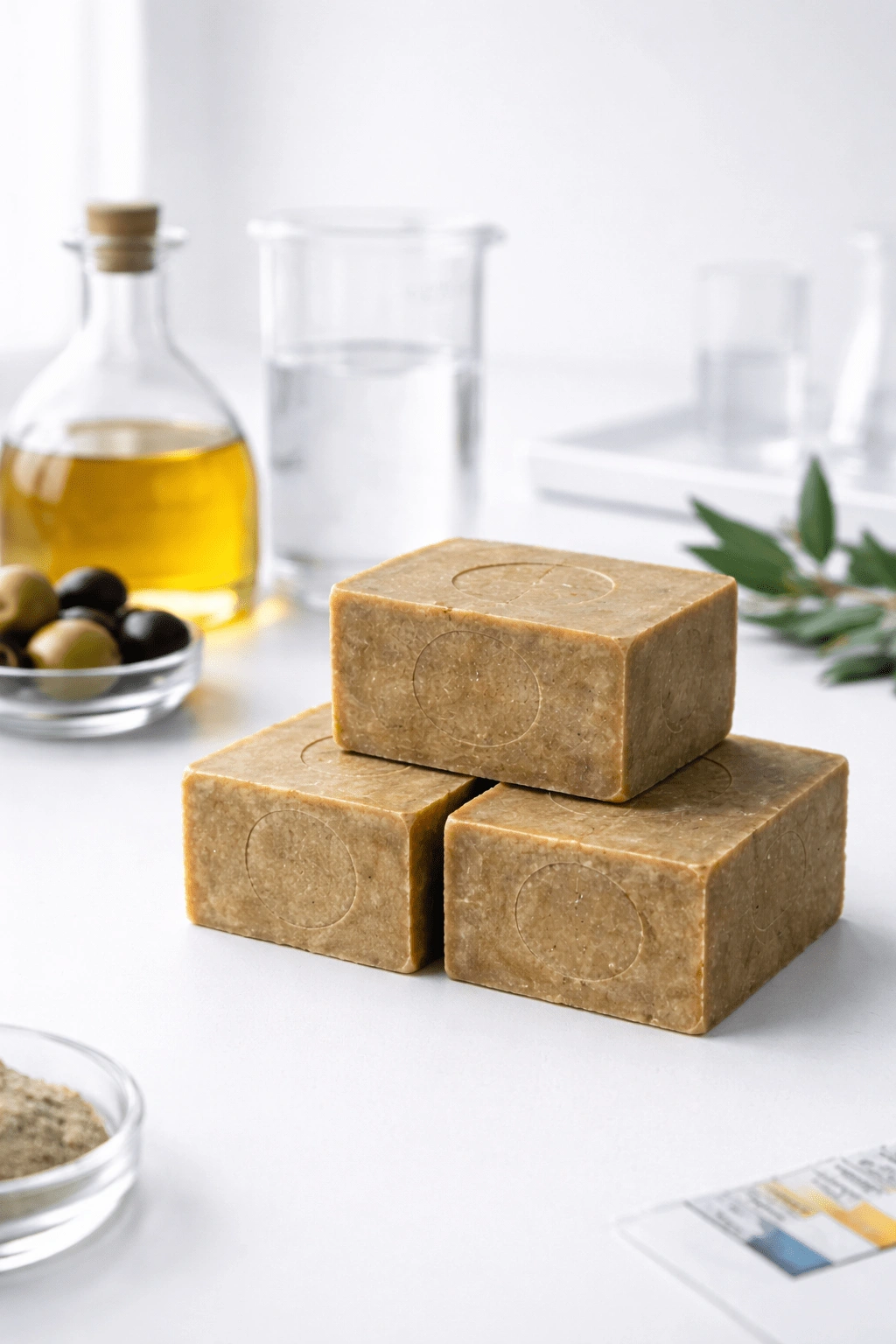
Role Of Olive Oil In Aleppo Soap Formulation
In Aleppo soap, olive oil is not a secondary emollient or conditioning additive. It is the structural backbone of the bar. When laurel oil content is reduced toward zero, olive oil determines nearly every observable property: hardness, lather density, dissolution rate, and post-rinse feel.
Olive oil soaps saponify into a relatively mild, low-lather matrix. This results in slower oil removal compared to higher-laurel Aleppo soaps, but also produces a more forgiving cleansing profile during repeated use, with implications discussed in the benefits and side effects analysis.
| Property | Olive Oil Influence | Practical Outcome |
|---|---|---|
| Bar Density | High when fully cured | Long-lasting soap bar |
| Lather Volume | Low to moderate | Controlled cleansing feel |
| Cleansing Force | Mild | Lower dryness risk |
A real-use observation: fully olive-oil-based Aleppo soaps feel unimpressive on first use, yet tend to become more comfortable after several days as users adjust technique and contact time.
Aleppo Olive Oil Soap Ingredients: What "100% Olive Oil" Means
The phrase "Aleppo soap 100 olive oil" is commonly misunderstood. In formulation terms, it usually means that olive oil is the sole fatty input, not that the finished bar contains free olive oil. During saponification, the oil is chemically transformed into soap.
A traditional olive-oil-only Aleppo soap typically contains: olive oil, water, and an alkaline agent fully consumed during the process. No laurel oil is present in this configuration.
| Component | Presence | Functional Role |
|---|---|---|
| Olive Oil | Primary oil (100%) | Soap base formation |
| Water | Temporary | Reaction medium |
| Alkaline Agent | Consumed | Saponification |
One limitation worth stating: olive-oil-only Aleppo soaps clean less aggressively, which some users misinterpret as poor performance rather than mildness.
Extra Virgin Olive Oil vs Standard Olive Oil In Aleppo Soap
Aleppo soap extra virgin olive oil claims are common, but olive oil grade affects soap behavior less than many assume. During saponification, most aromatic and antioxidant compounds are altered or lost.
What olive oil grade does influence indirectly is impurity load and initial fatty acid consistency, which can affect curing stability and bar uniformity.
| Olive Oil Type | Soap Stability | Sensory Difference |
|---|---|---|
| Extra Virgin | High | Minimal post-cure difference |
| Refined / Pomace | Variable | Sometimes harsher feel |
In practical evaluation, curing duration outweighs oil grade in determining final soap comfort.
Aleppo Soap Recipe Using Olive Oil: Process Logic (Not DIY)
When people ask for an "aleppo soap recipe olive oil," they are usually trying to understand how olive oil alone can form a stable cleansing bar. Traditional Aleppo soapmaking relies on a hot-process method designed to fully saponify large volumes of olive oil with minimal variability.
In olive-oil–only Aleppo soap, the process emphasizes completion rather than finesse. The oil is cooked with an alkaline solution until saponification is uniform, then poured, cut, and cured for extended periods. The absence of laurel oil simplifies the formulation but increases reliance on curing time for stability.
| Process Stage | Olive Oil Focus | Functional Outcome |
|---|---|---|
| Extended Cooking | Ensures full saponification | Uniform soap matrix |
| Slow Cooling | Reduces internal stress | Fewer cracks |
| Long Curing | Critical for olive oil soaps | Hardness & mildness |
A practical observation from handling cured bars: olive-oil-only Aleppo soap often feels under-hardened at three months, acceptable at six months, and noticeably more refined after nine months or longer.
Fatty Acid Profile Of Olive Oil In Aleppo Soap
The behavior of olive oil soap is largely explained by its fatty acid composition. Olive oil is dominated by oleic acid, which produces a mild, low-lather soap with slow wear characteristics.
Unlike soaps rich in lauric or myristic acids, olive oil soaps cleanse through gradual oil emulsification rather than rapid surfactant action. This accounts for both their gentle feel and their comparatively restrained lather.
| Fatty Acid | Approx. Percentage | Effect In Soap |
|---|---|---|
| Oleic Acid | 55–80% | Mild cleansing, conditioning feel |
| Palmitic Acid | 7–20% | Bar hardness |
| Linoleic Acid | 3–15% | Softness, quicker wear |
One limitation inherent to this profile: olive oil soaps rarely produce the immediate "squeaky clean" sensation that users accustomed to high-lather products expect.
pH Range & Cleansing Dynamics Of Olive Oil Aleppo Soap
Olive oil–based Aleppo soap operates within the typical pH range of traditional soaps, as explained in the soap pH behavior guide. While exact values vary by curing duration and residual alkalinity, most well-cured bars stabilize within a predictable alkaline window.
This pH contributes to effective cleansing while also explaining why contact time matters. Short exposure cleans efficiently; prolonged exposure increases the chance of surface dryness.
| Cure Stage | Approx. pH Range | User-Perceived Effect |
|---|---|---|
| Early Cure (≤3 months) | 9.5–10.5 | Harsher feel possible |
| Mid Cure (6 months) | 9–10 | More balanced cleansing |
| Long Cure (9–12 months) | 8.5–9.5 | Smoother, milder feel |
A small but consistent observation: users who dislike olive oil soap early often change their opinion after trying a longer-cured bar.
Aleppo Soap vs Olive Oil Soap: Where They Actually Differ
Aleppo soap vs olive oil soap comparisons can be confusing, because olive oil soap exists in multiple traditions. What distinguishes olive-oil-based Aleppo soap is not the oil itself, but the process and curing discipline.
Many modern olive oil soaps are cold-processed and quickly released. Traditional Aleppo-style olive oil soaps rely on extended cooking and long air curing, which alters hardness and tolerance.
| Aspect | Aleppo Olive Oil Soap | Generic Olive Oil Soap |
|---|---|---|
| Process | Hot process | Often cold process |
| Curing Time | 6–12 months | 4–8 weeks typical |
| Bar Density | High | Variable |
A measured conclusion: olive oil alone does not define Aleppo soap. Method and patience do.
Aleppo Olive Oil Soap Benefits In Daily Use
Aleppo olive oil soap benefits emerge most clearly during repeated, routine use rather than from immediate sensory impact. Because olive oil soap cleans gradually, its advantages are cumulative and become more noticeable over time.
Users often describe a more predictable skin response after several days, with fewer abrupt swings between over-clean and residue-heavy states. This stability is one of the less obvious but more meaningful benefits of olive-oil–dominant Aleppo soap.
| Benefit Area | Observed Effect | Usage Condition |
|---|---|---|
| Skin Feel | More even, less reactive | Moderate frequency |
| Cleansing Control | Reduced over-stripping | Short contact time |
| Bar Longevity | Slow, consistent wear | Proper drying between uses |
A small experiential note: olive oil Aleppo soap often feels unremarkable on the first wash, yet becomes preferable after users adapt technique and expectations.
Face & Body Performance Of Olive Oil Aleppo Soap
On the face, olive-oil–only Aleppo soap tends to perform best when treated as a light cleanser rather than a deep-clean product, a distinction further explored in the soap versus syndet cleanser comparison. Its lower cleansing force reduces the likelihood of immediate tightness, provided contact time remains brief.
On the body, the same soap offers consistent cleansing with minimal sensory shock. Areas with thicker skin generally tolerate longer contact, while thinner areas respond better to quick lather-and-rinse use.
| Use Area | Observed Strength | Primary Limitation |
|---|---|---|
| Face | Gentle, predictable cleansing | May feel under-cleansing for oily skin |
| Body | Stable, residue-free feel | Less immediate freshness sensation |
In practice, users who expect low-lather performance report higher satisfaction than those seeking strong sensory feedback.
Suitability For Sensitive Skin & Reactive Conditions
Olive-oil–dominant Aleppo soap is often selected for sensitive skin because of its limited ingredient profile. While this simplicity reduces exposure to additives, soap alkalinity remains a factor that requires moderation.
In observed use, sensitive skin tolerates olive oil Aleppo soap best when frequency is adjusted before dryness appears. Unlike stronger soaps, discomfort tends to build gradually, offering an opportunity for early adjustment.
| Usage Pattern | Typical Response | Adjustment Needed |
|---|---|---|
| Daily short use | Generally well tolerated | Maintain brief contact |
| Long contact | Gradual dryness | Reduce duration |
| High frequency | Cumulative tightness | Alternate days |
A practical limitation: even mild olive oil soaps can overwhelm very reactive skin if used without recovery time.
Limitations Of Olive Oil Aleppo Soap & How Users Adapt
Olive oil Aleppo soap has predictable limitations. It produces low lather, removes oil gradually, and offers limited sensory cues during washing. These traits are inherent to olive oil soap chemistry.
users who adapt technique shorter contact, thorough rinsing, and proper bar drying-tend to report better outcomes than those who increase usage to compensate.
| Limitation | Why It Occurs | User Adaptation |
|---|---|---|
| Low lather | Oleic-acid dominance | Adjust expectations |
| Slower cleansing | Mild soap matrix | Allow routine consistency |
| Soft bar early | Short cure time | Use longer-cured bars |
A light author judgement: olive oil Aleppo soap rewards patience more than experimentation.
Safety Notes & Handling Precautions For Olive Oil Aleppo Soap
Olive oil–dominant Aleppo soap is generally straightforward to use, yet its alkaline nature means technique matters. Safety in this context is not about hazards, but about avoiding cumulative over-cleansing.
The most reliable way to prevent discomfort is to control contact time. Olive oil soap cleans progressively; extended lathering rarely improves results and often increases dryness.
| Aspect | Guideline | Reasoning |
|---|---|---|
| Contact Time | 10–30 seconds | Limits alkaline exposure |
| Eye Area | Avoid direct use | Higher sensitivity |
| Frequency | Adjust to tolerance | Prevents cumulative dryness |
A consistent real-use pattern: discomfort usually reflects technique rather than formulation defects.
Handling, Storage & Stability Characteristics
Olive oil Aleppo soap continues to change subtly after purchase. Because olive oil soaps retain moisture longer, proper drying between uses has a noticeable effect, similar to longevity patterns discussed in the Aleppo soap complete guide.
In humid environments, bars that remain wet soften quickly and may feel slimy during use. Ventilated storage reverses this behavior within days.
| Storage Practice | Observed Effect | Recommendation |
|---|---|---|
| Ventilated dish | Harder bar, slower wear | Preferred |
| Standing water | Softening, faster loss | Avoid |
| Dry storage between uses | Improved stability | Ideal |
A micro observation: olive oil Aleppo soap often feels milder after several weeks of home storage, even if already cured at purchase.
Product Label Interpretation For Olive Oil Aleppo Soap
Labels for olive oil Aleppo soap frequently emphasize purity claims, such as "100% olive oil" or "extra virgin." These cues are helpful, but incomplete without context.
The most meaningful indicators for buyers are oil composition and curing discipline. Marketing descriptors rarely predict real-world performance on their own.
| Label Term | What It Suggests | What Actually Matters |
|---|---|---|
| 100% Olive Oil | No laurel oil added | Cure length |
| Extra Virgin | Oil grade used | Final soap matrix |
| Traditional | Method reference | Consistency & age |
A measured judgement: when choosing olive oil Aleppo soap, time spent curing outweighs most label claims.
Functional Comparison: Olive Oil Aleppo Soap vs Other Olive Oil Soaps
Olive oil Aleppo soap competes not only with laurel-containing Aleppo variants, but also with modern olive oil soaps from other traditions. The differences lie primarily in process maturity and aging.
| Feature | Olive Oil Aleppo Soap | Modern Olive Oil Soap |
|---|---|---|
| Process | Hot process | Often cold process |
| Cure Duration | 6–12 months | 4–8 weeks |
| User Adaptation | High patience required | Immediate usability |
A practical conclusion: olive oil Aleppo soap suits users willing to trade immediacy for consistency.
Summary of Findings
- Olive Oil Is The Backbone: In olive-oil–dominant Aleppo soap, olive oil determines hardness, lather restraint, and long-term tolerance.
- "100% Olive Oil" Is Structural: The term refers to the sole fatty input before saponification, not free olive oil in the finished bar.
- Cure Time Matters More Than Oil Grade: Longer curing (6–12 months) improves mildness and stability more reliably than extra virgin claims.
- Mildness Is Gradual: Benefits become clearer with routine use and short contact times rather than immediate sensory impact.
- Technique Prevents Side Effects: Brief lathering, proper drying, and adjusted frequency reduce dryness and extend bar life.
References
- Journal of Surfactants and Detergents – Oleic-Acid–Dominant Soap Behavior
- International Journal of Cosmetic Science – Soap pH & Skin Interaction
- European Commission CosIng Database – Olive Oil Ingredient Profile
- Regulation (EC) No 1223/2009 – Cosmetic Product Framework