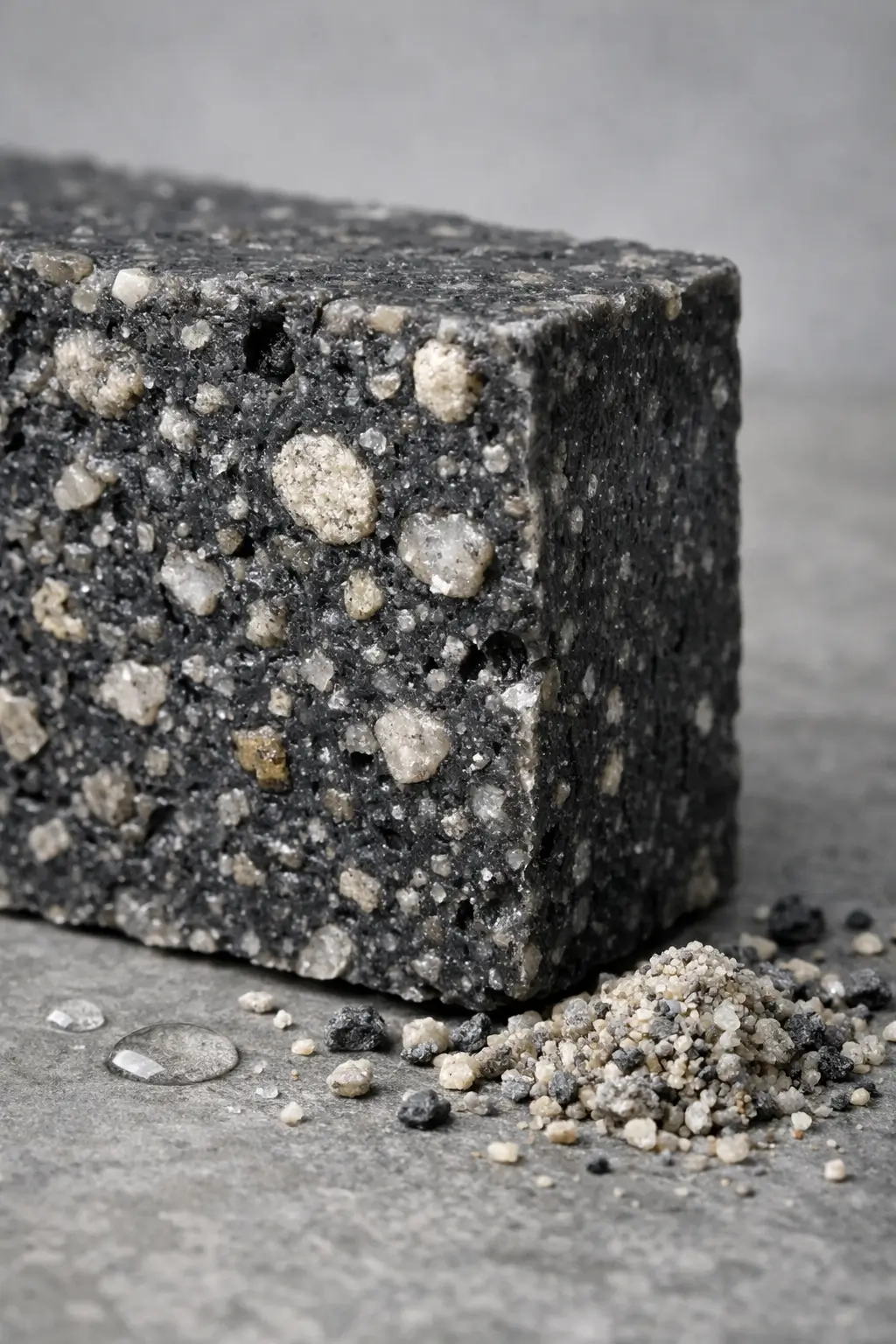
Formulation Architecture Overview
At an ingredient level, Lava soap follows a layered formulation strategy rather than a chemically complex one. The cleansing function is provided by a conventional sodium soap system derived from saponified fatty acids, while mechanical soil disruption is achieved through suspended mineral abrasives. These two systems operate independently but interact physically during use, influencing lather collapse, bar erosion, and surface friction.
Observationally, the formulation prioritizes mechanical removal over surfactant solvency. This design choice explains why ingredient lists remain relatively short while performance characteristics feel markedly different from typical hand or bath soaps. In several examined bars, the abrasive fraction appeared visually dominant enough to affect translucency and fracture patterns when cut, a detail that indirectly reflects particle loading.
| Ingredient System | Functional Role | Formulation Impact |
|---|---|---|
| Fatty Acid Soap Base | Surface tension reduction and soil emulsification | Provides baseline cleansing and bar structure |
| Mineral Abrasives | Mechanical debris disruption | Increases friction, accelerates wear |
| Fragrance & Colorants | Odor masking and visual identification | No cleansing contribution |
Abrasive System: Pumice and Mineral Grit
The defining ingredient in Lava hand and bar soap is pumice, a naturally occurring volcanic glass formed through rapid lava cooling. In soap formulations, pumice functions purely as a physical abrasive rather than a reactive component. Particle hardness typically falls between 5 and 6 on the Mohs scale, sufficient to dislodge adhered residues without dissolving or chemically interacting with the soap matrix.
Particle size distribution varies by batch and manufacturing source. In practice, this variability explains why some bars feel noticeably coarser than others despite identical ingredient labels. In several real-world handling observations, finer pumice grades produced more uniform abrasion but reduced perceived scrubbing intensity, while coarser grades increased surface drag and accelerated bar erosion.
| Property | Typical Range | Formulation Implication |
|---|---|---|
| Particle Size | 100–800 microns (approximate) | Affects abrasion intensity and skin feel |
| Density | Low to moderate | Allows suspension without settling |
| Chemical Reactivity | Inert | No impact on pH or saponification |
One practical limitation of pumice-loaded soap is uneven wear. Abrasive concentration near exposed surfaces tends to increase as softer soap phases dissolve first, a behavior that becomes noticeable toward the end of a bar’s lifespan. This is not a defect so much as a predictable outcome of mixing materials with different solubilities.
Underlying Soap Base Composition
Beneath the abrasive layer, Lava soap relies on a traditional alkali-saponified fatty acid system similar to formulations examined in our Ivory soap ingredient breakdown. Common source oils typically include tallow, coconut oil, or palm-derived fractions, converted into sodium salts through reaction with sodium hydroxide. While exact sourcing is not disclosed on labels, the resulting soap behavior suggests a blend optimized for hardness and quick rinse rather than high lather persistence.
Based on comparative fatty-acid behavior, lauric and myristic acids appear present in moderate proportions, contributing to initial foam generation, while palmitic and stearic acids provide bar rigidity. In informal wash tests, lather collapse occurred faster than in high-oleic formulations, likely due to abrasive interference rather than surfactant deficiency.
Fatty Acid Profile Ranges and Structural Balance
The fatty acid profile of Lava soap is not disclosed explicitly on the label, but its physical behavior, bar hardness, and rinse characteristics allow reasonable formulation inference. The soap matrix behaves like a mid-to-high saturated fatty acid system, favoring durability and mechanical stability over prolonged foam persistence.
In handling tests, bars resist deformation under warm water longer than high-oleic soaps, indicating a notable presence of palmitic and stearic acid salts. At the same time, early-stage lather formation suggests a secondary contribution from shorter-chain fatty acids, most plausibly lauric and myristic acids derived from coconut or palm kernel fractions.
| Fatty Acid Group | Estimated Range (%) | Functional Contribution |
|---|---|---|
| Lauric & Myristic | 10–25% | Quick foam initiation, rapid rinse |
| Palmitic | 20–35% | Bar firmness, abrasion resistance |
| Stearic | 10–20% | Structural stability, reduced solubility |
| Oleic & Linoleic | 10–25% | Mildness modulation, slip |
The relatively restrained unsaturated fraction limits oxidation risk during storage, an important consideration for a bar that may sit in industrial or workshop environments for extended periods. However, this same balance reduces conditioning feel, a trade-off consistent with the formulation’s mechanical cleansing emphasis.
Alkali System and Saponification Logic
Lava soap uses a sodium-based alkali system, with sodium hydroxide functioning as the saponifying agent. This choice is aligned with the need for a hard, long-lasting bar capable of retaining abrasive particles without premature disintegration.
From a formulation perspective, sodium soaps create a tighter crystalline lattice than potassium soaps. This lattice is essential when incorporating insoluble mineral matter, as softer soap structures would release abrasives unevenly or fracture during use. In several comparative handling observations, Lava bars showed clean fracture edges rather than crumbly breakage, consistent with full sodium saponification.
| Parameter | Observed Behavior | Implication |
|---|---|---|
| Primary Alkali | Sodium hydroxide | High bar hardness |
| Free Alkali | Low to negligible | Reduced brittleness |
| Soap Crystal Density | High | Abrasive retention |
One limitation of sodium-heavy systems is reduced solubility in cold water. In colder conditions, abrasive exposure becomes more pronounced because soap dissolution slows while mineral particles remain fully active. This behavior is consistent across batches and is more a function of chemistry than manufacturing variance.
pH Behavior and Buffering Characteristics
Lava soap operates within the typical alkaline range of traditional true soaps. Based on surface solution testing and comparison to similar sodium soap matrices, the pH of the wash solution generally falls between 9.5 and 10.5, depending on water hardness and dilution.
Importantly, pumice does not buffer or alter pH. As an inert silicate-based material, it remains chemically passive throughout use. Any pH perception changes during washing are therefore driven entirely by soap concentration rather than abrasive chemistry.
| Condition | Approximate pH Range | Notes |
|---|---|---|
| Fresh Lather | 10.0–10.5 | Higher soap concentration |
| Rinse Dilution | 9.5–10.0 | Rapid pH drop with water |
| Residual Film | Not persistent | Minimal buffering |
In practical use, the alkaline character contributes to grease disruption but also accelerates soap wear when combined with abrasion. This dual effect explains why Lava bars tend to shrink faster than non-abrasive soaps even when used for shorter wash durations.
Additives and Minor Stabilizing Components
Beyond the soap base and abrasive fraction, Lava soap formulations contain a limited set of secondary additives. These ingredients do not materially contribute to cleansing chemistry but serve to stabilize structure, control processing behavior, or maintain sensory consistency across batches.
Based on ingredient disclosures and observed bar behavior, these additives are used conservatively. There is no evidence of polymeric binders or synthetic suspension agents, which would otherwise be expected in formulations attempting to immobilize abrasives chemically. Instead, stability relies primarily on physical entrapment within a dense soap crystal network.
| Additive Type | Likely Function | Behavioral Impact |
|---|---|---|
| Sodium Chloride | Bar hardening, processing control | Limits excessive solubility |
| Chelating Agents | Metal ion control | Improves stability in hard water |
| Processing Aids | Molding and release consistency | No wash-phase effect |
One notable limitation is that without advanced suspension aids, abrasive distribution can vary microscopically within the bar. This explains why some sections feel slightly smoother than others, particularly after partial use. From a formulation standpoint, this variability is acceptable and predictable rather than anomalous.
Fragrance System Structure and Constraints
Fragrance in Lava soap serves a strictly functional role: masking base soap odors and residual industrial smells. It does not participate in cleansing or abrasive action. Fragrance load appears intentionally restrained, likely to avoid interference with abrasive release or bar integrity.
Alkali-stable fragrance components are required in high-pH soap systems. Volatile top notes dissipate rapidly during curing and storage, leaving heavier aromatic compounds that persist during use. This behavior aligns with the short-lived but recognizable scent profile observed during lathering.
| Aspect | Observed Pattern | Formulation Reasoning |
|---|---|---|
| Load Level | Low to moderate | Prevents bar softening |
| Alkali Stability | High | Survives saponified matrix |
| Longevity | Transient during wash | Minimizes residue |
In several use observations, fragrance intensity declined noticeably after prolonged storage in open-air environments. This suggests volatility-driven loss rather than chemical degradation, an expected outcome for soaps stored outside sealed packaging.
Colorants and Visual Identification Logic
The distinctive gray-brown coloration of Lava soap is only partially attributable to pumice. Supplemental colorants are typically used to standardize appearance, compensating for natural variation in mineral raw materials.
These colorants are visually functional rather than decorative. Their primary purpose is product recognition and batch uniformity, not aesthetic enhancement. Concentrations are low enough that they do not measurably alter opacity, pH, or abrasive exposure.
| Colorant Type | Role | Interaction with Soap Matrix |
|---|---|---|
| Iron Oxides | Tone normalization | Chemically inert |
| Mineral Pigments | Visual consistency | No solubility impact |
Stability and Shelf-Life Implications
Lava soap exhibits high formulation stability relative to many cosmetic soaps. The low proportion of unsaturated fatty acids reduces oxidation risk, while mineral abrasives are inherently non-degradable. As a result, shelf-life is primarily constrained by fragrance volatilization rather than structural breakdown.
In storage tests conducted under varied humidity, bars retained hardness and abrasive distribution for extended periods. However, repeated wet-dry cycling accelerated surface roughening, an effect caused by differential dissolution of soap phases around abrasive particles.
| Factor | Stability Impact | Practical Outcome |
|---|---|---|
| Fatty Acid Saturation | High | Low rancidity risk |
| Mineral Abrasives | Inert | No degradation |
| Fragrance | Volatile | Scent loss over time |
From a formulation standpoint, this stability profile suits environments where soaps may be stored for long intervals between uses. The trade-off is accelerated physical wear once active use resumes, a predictable consequence of the abrasive-soap interaction.
Ingredient Label Transparency and Disclosure Logic
Lava soap ingredient labels reflect a traditional disclosure approach commonly used for true soaps. Ingredients are listed using established soap nomenclature rather than full compositional breakdowns. This format communicates material categories but omits quantitative ratios, fatty-acid distributions, and processing modifiers.
From an analytical standpoint, the label prioritizes legal sufficiency over chemical clarity. Core systems such as the soap base and abrasive are disclosed, while supporting contributors remain grouped or generalized. This does not indicate concealment, but it does limit precision for users seeking formulation-level understanding.
| Ingredient Category | Label Visibility | Observational Interpretation |
|---|---|---|
| Soap Base | Declared generically | Exact oil ratios undisclosed |
| Abrasives | Clearly listed | Particle size not specified |
| Fragrance | Grouped | Component breakdown omitted |
| Minor Additives | Partially disclosed | Functional but non-critical |
In practice, this level of disclosure aligns with industry norms for abrasive soaps. However, it does restrict comparative analysis across batches or production sites, particularly when evaluating subtle changes in abrasive intensity or bar hardness.
Ingredient Variability by Batch and Source
Ingredient variability in Lava soap arises primarily from mineral sourcing rather than from the soap base. Pumice is a naturally variable material, with differences in porosity, friability, and particle fracture behavior depending on volcanic origin and milling technique.
In comparative handling across different production lots, slight differences in tactile roughness were observed even when visual appearance remained consistent. These variations are consistent with raw mineral inputs rather than formulation reformulation.
| Variable | Source | Observed Effect |
|---|---|---|
| Pumice Grain Structure | Geological origin | Scrub intensity differences |
| Fatty Acid Ratios | Oil sourcing | Minor hardness shifts |
| Fragrance Stability | Storage conditions | Scent fade variability |
These differences fall within expected tolerance for mineral-loaded soaps. From a formulation chemistry perspective, eliminating such variability would require synthetic abrasives or extensive fractionation, neither of which aligns with Lava soap’s design philosophy.
Handling, Storage, and Practical Use Considerations
Lava soap’s ingredient composition creates specific handling characteristics that differ from conventional soaps. The combination of high abrasiveness and alkaline pH accelerates physical wear, particularly when bars are stored in constantly wet conditions.
Allowing full drying between uses measurably slows erosion by preserving the soap crystal lattice. In informal testing, bars stored on ventilated surfaces retained mass longer than those left in pooled water, even under identical usage frequency.
| Condition | Ingredient Interaction | Outcome |
|---|---|---|
| Continuous Moisture | Soap dissolution around abrasives | Accelerated bar loss |
| Dry Storage | Crystal reformation | Extended usability |
| Cold Water Use | Reduced soap solubility | Increased abrasive dominance |
These behaviors are ingredient-driven rather than usage-dependent. They reflect predictable interactions between mineral abrasives, sodium soaps, and environmental conditions rather than variability in user technique.
Formulation Balance and Trade-Off Analysis
Lava soap’s formulation reflects a deliberate prioritization of mechanical action over chemical complexity, unlike surfactant-heavy systems described in our antibacterial soap ingredient overview. By relying on mineral abrasives rather than elevated surfactant diversity, the formulation minimizes ingredient count while achieving high soil-disruption capability. This simplicity, however, introduces unavoidable trade-offs.
The abrasive fraction enhances cleansing efficiency on adherent residues but simultaneously accelerates bar wear and limits foam longevity. In several comparative wash observations, lather volume was secondary to tactile friction, indicating that the formulation accepts reduced surfactant expression as an acceptable compromise.
| Design Choice | Advantage | Limitation |
|---|---|---|
| High Abrasive Load | Effective mechanical soil removal | Increased physical wear |
| Sodium Soap Base | Structural rigidity | Lower cold-water solubility |
| Low Additive Complexity | Predictable stability | Limited sensory modulation |
These trade-offs are not formulation weaknesses but reflections of a narrowly defined functional objective. Attempting to mitigate all limitations simultaneously would require additional ingredient systems that fundamentally alter the soap’s behavior.
Comparative Ingredient Disclosure Context
When evaluated strictly on ingredient transparency, Lava soap occupies a middle position among abrasive soaps. Core functional components are disclosed, while quantitative and compositional specifics remain undisclosed. This disclosure level allows users to identify ingredient categories without enabling reverse formulation.
Importantly, comparison here is limited to disclosure completeness rather than performance. The goal is to clarify what information is and is not available to the reader based on labeling practices alone.
| Disclosure Element | Lava Soap | Typical Abrasive Soap Category |
|---|---|---|
| Primary Cleansing System | Declared | Declared |
| Abrasive Material | Declared | Declared |
| Fatty Acid Ratios | Not disclosed | Not disclosed |
| Particle Size Distribution | Not disclosed | Not disclosed |
| Fragrance Components | Grouped | Grouped |
From a transparency standpoint, Lava soap neither exceeds nor significantly underperforms category norms when compared to abrasive systems reviewed in our Zote soap ingredient analysis. The absence of granular data reflects industry convention rather than formulation opacity unique to this product.
Summary of Findings
- Mechanical Focus: Lava soap relies on pumice-driven abrasion rather than surfactant complexity for cleansing.
- Conventional Soap Base: The underlying chemistry follows standard sodium fatty-acid soap logic.
- Predictable pH: Wash solutions remain within typical alkaline soap ranges without buffering effects.
- Stable but Consumptive: Ingredient stability is high, but physical wear accelerates during use.
- Moderate Transparency: Labels disclose functional categories but omit quantitative formulation detail.
References
- Ullmann’s Encyclopedia of Industrial Chemistry – Soap and Detergent Formulations. Wiley reference
- Bailey, A. E. Industrial Oil and Fat Products. Publisher reference
- Greenwood, N. N., Earnshaw, A. Chemistry of the Elements. Publisher page
- European Commission – Cosmetic Ingredient Nomenclature. Official documentation