Product Overview
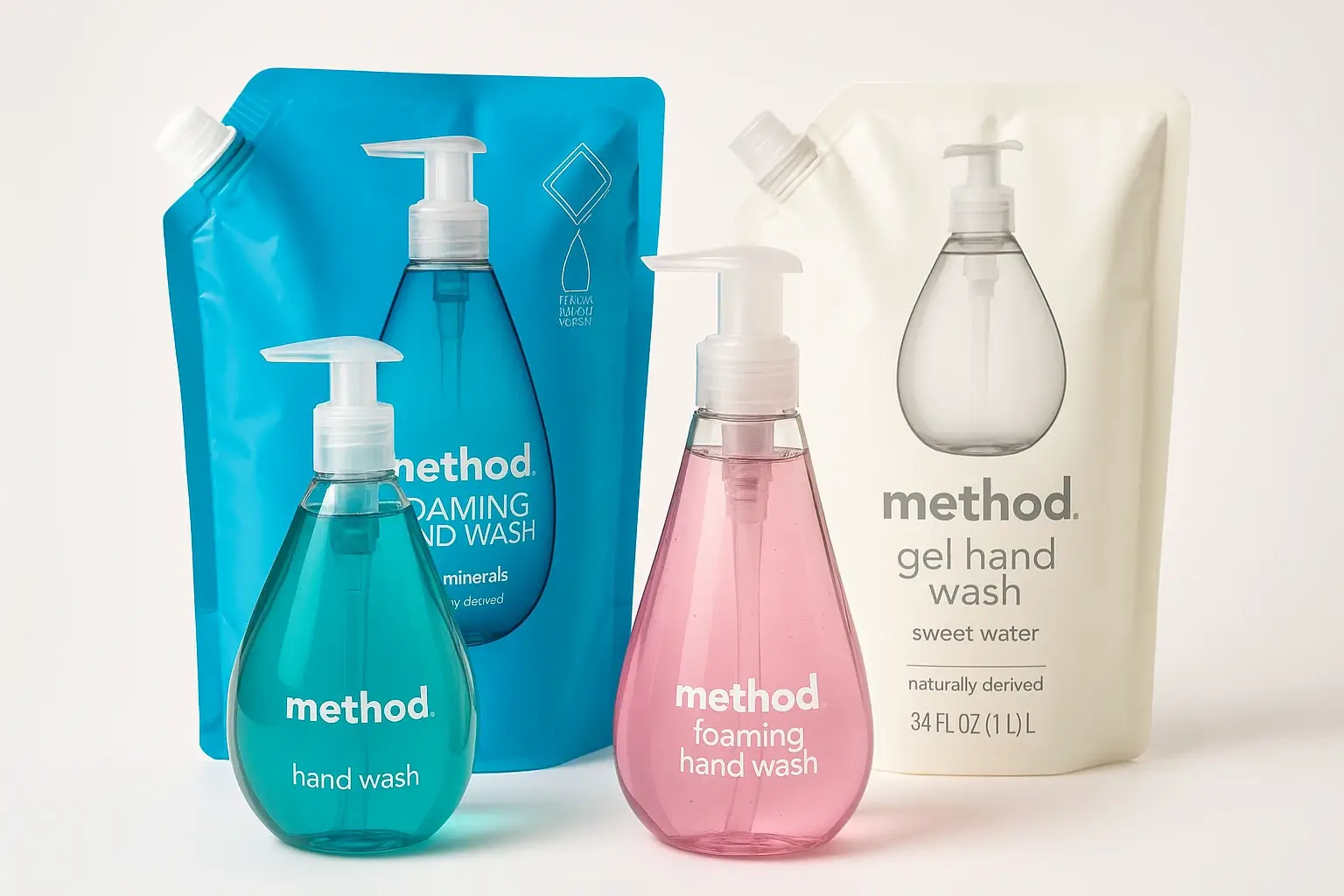
This product is a plant-based liquid cleanser designed for routine handwashing, standing in contrast to more targeted masculine formulations analyzed in the Method men’s soap complete guide. The brand offers two primary systems gel hand soap and foaming hand soap across multiple scents and refill formats, alongside adjacent lines such as the men-focused formulations. The formulas are built around mild anionic surfactants and amphoteric surfactants supported by solvent systems, viscosity modifiers, pH adjusters, preservatives, and scent molecules. Method emphasizes biodegradable surfactants and recyclable packaging, including large refill pouches refill formats represent a major structural component of the product line, with pouch systems and bulk volumes designed to reduce packaging mass and increase refill efficiency..
| Parameter | Typical Value / Range | Notes |
|---|---|---|
| Product Type | Gel & Foaming Liquid Soap | Different surfactant ratios depending on system |
| Volume (Bottles) | 10 oz, 12 oz (varies by market) | Standard retail sizes |
| Refill Sizes | 28 fl oz, 34 fl oz, 1 L, 2 L | Refill pouches reduce plastic use |
| pH Range | ~5.0–6.0 (estimated) | Milder range suitable for frequent handwashing |
| Surfactant System | Mild anionic + amphoteric | Typical blend includes sodium laureth sulfate alternatives and cocamidopropyl betaine |
| Packaging | Recycled PET bottles, flexible pouches | Consistent with brand’s sustainability focus |
| Scent Variants | Lavender, Sea Minerals, Pink Grapefruit, Sweet Water, Basil, Green Tea, Lemon Mint, Vanilla Raspberry, Vetiver & Amber, Ylang Ylang | Available in gel and/or foaming, varies by region |
Variants Overview
The brand offers multiple hand soap formats, including gel, foaming, unscented, Free + Clear variants, products labeled as antibacterial, and larger-volume formats supplied through commercial distribution channels. The following section provides a structured comparison of these categories based on formulation type, labeling designation, and intended usage context.
| Variant | Texture / System | Key Components | Common Scents | Refill Availability |
|---|---|---|---|---|
| Gel Hand Soap | Viscous liquid | Anionic + amphoteric surfactants, solvents, thickeners | Lavender, Pink Grapefruit, Basil, Sea Minerals | Yes (28–34 oz pouches) |
| Foaming Hand Soap | Low-viscosity foam system | Higher water ratio, optimized amphoteric surfactants | Sweet Water, Lemon Mint, Sea Minerals | Yes (foaming refill formats) |
| Free + Clear / Unscented | Gel or foam (varies) | No dyes or fragrance compounds | Unscented | Yes |
| Antibacterial-Labeled Listings | Gel or foam (market-specific) | Standard surfactants + antimicrobial agent (regulated) | Lemon, Orange Ginger (region-specific) | Limited |
| Commercial Supply | For foodservice + institutions | Larger volume pouches | Typically unscented or mild scents | Yes (bulk pouches) |
A formulation-specific breakdown appears in our Method gel hand soap analysis.
How It Works
This formulation operates through a mild surfactant system that reduces surface tension, lifts soils, binds oils, and suspends contaminants until water rinses them away. Gel versions rely on a higher concentration of surfactants and thickeners to create a dense lather, whereas foaming versions dilute the surfactant phase into a light, air-dispersed foam that spreads quickly on the skin.
The cleaning action is dominated by amphoteric surfactants such as cocamidopropyl betaine and mild anionic surfactants derived from plant-based feedstocks. These materials form micelles-spherical structures whose hydrophobic cores trap oils, fragrance residues, and environmental particulates. Hydrophilic outer shells keep the micelles suspended in water until they are rinsed away.
| Mechanism | Primary Agents | Functional Outcome |
|---|---|---|
| Micelle Formation | Amphoteric + mild anionics | Encapsulates oils and soils |
| Foaming Action | Betaine surfactants | Improves distribution and tactile experience |
| Solvent Assistance | Plant-derived solvents | Enhances dissolution of residues |
| pH Balancing | Citrate or gentle base adjusters | Maintains stability and rinsing efficiency |
Ingredients Explained
This product rely on a consistent foundation of plant-derived surfactants, solvents, conditioners, and preservatives. Although exact proprietary percentages are not published, publicly available ingredient lists, safety data sheets, and supplier documentation allow a chemistry-based interpretation of the formula behavior. The gel and foaming versions differ primarily in water ratio, surfactant loading, viscosity control, and solvent balance.
Below is a consolidated INCI-style interpretation capturing typical components found in Method gel hand soap, Method foaming hand soap, Method hand soap Free + Clear, and scented variants such as lavender, sea minerals, basil, sweet water, pink grapefruit, vetiver & amber, and lemon mint.
| INCI Name | Functional Category | Role in Formula |
|---|---|---|
| Water (Aqua) | Solvent | Primary carrier; viscosity and surfactant dispersion |
| Sodium Laureth Sulfate (plant-derived) | Anionic Surfactant | Primary cleansing; generates lather (gel version) |
| Cocamidopropyl Betaine | Amphoteric Surfactant | Boosts foam, improves mildness, stabilizes viscosity |
| Sodium Chloride | Viscosity Modulator | Controls thickness in gel variants |
| Cocamide MIPA (plant-derived) | Foam Booster | Improves lather and micellar stability |
| Sodium Citrate | pH Regulator | Maintains slightly acidic pH for skin-friendly behavior |
| Glycerin | Humectant | Supports skin hydration during wash cycle |
| Acrylates Copolymer | Rheology Modifier | Controls gel stability and texture |
| Sodium Benzoate | Preservative | Inhibits microbial growth, ensures shelf stability |
| Potassium Sorbate | Preservative | Provides secondary microbial protection |
| Citric Acid | pH Adjuster | Fine-tunes acidity to maintain product stability |
| Fragrance (Parfum) | Scent Components | Varies by scent family; absent in Free + Clear |
| Colorants (CI numbers) | Visual Agents | Adds color, varies by scent and product line |
Free + Clear (unscented) versions omit fragrance oils and synthetic colorants, resulting in a formula with fewer potential sensitizing components. EWG Method hand soap ratings vary by scent variant due to the fragrance differences, not the surfactant system itself.
Surfactant System & Chemistry
Method hand soap uses a mild surfactant architecture combining plant-derived anionic surfactants with amphoteric co-surfactants. This system is engineered for consistent cleaning while maintaining a lower irritation potential than harsher detergent systems.
| Surfactant Type | Representative Molecules | Functional Behavior |
|---|---|---|
| Anionic | Sodium Laureth Sulfate (plant-derived) | Primary cleaning, emulsification, lather generation |
| Amphoteric | Cocamidopropyl Betaine | Boosts mildness, enhances foam, stabilizes system |
| Nonionic (minor) | Plant-derived solubilizers | Improve fragrance and colorant dispersion |
Foaming versions reduce surfactant concentration and increase water content to create a low-density foam system optimized for air-mixing dispensers. Gel versions target a consistent, higher-viscosity wash cycle.
Foaming mechanics are examined in detail in the
Method foaming hand soap guide.
Scent & Variant Differences
These soaps are widely recognized for their scent profiles. Each fragrance variant uses a blend of aroma molecules rather than single-note scents. The fragrance component often determines user preference, refill selection habits, and EWG scoring differences.
| Scent Variant | Aroma Profile | Common Format | Relative Intensity |
|---|---|---|---|
| Lavender | Floral, herbal, calming | Gel + Refill | Medium |
| Pink Grapefruit | Citrus, bright, acidic | Gel + Foaming | High |
| Sea Minerals | Aquatic, clean, mineralic | Gel + Foaming | Low–Medium |
| Sweet Water | Crisp, watery, neutral | Foaming + Refill | Low |
| Vetiver & Amber | Warm, woody, resinous | Gel (varies by region) | Medium–High |
| Basil | Herbal, green, fresh | Gel | Medium |
| Lemon Mint | Citrus + herbaceous | Foaming | Medium |
| Vanilla Raspberry | Sweet, creamy, fruity | Limited/seasonal | High |
| Green Tea | Soft, herbal, neutral | Gel + Refill | Low–Medium |
| Ylang Ylang | Floral, sweet, exotic | Selective availability | Medium |
Unscented (Free + Clear) versions contain no fragrance molecules and no colorants, making them the least complex in terms of aromatic profiles and potential sensitizers.
Refill Sizes & Material Differences
Refill formats are widely available within the range, including flexible pouches designed for use with previously purchased pump dispensers. Compared with purchasing new pump bottles, refill packaging typically uses less plastic per unit of product volume, though material composition and recycling outcomes depend on local waste management systems. Refill formats may also alter cost-per-milliliter calculations, depending on retail pricing structures.
| Refill Size | Material | Typical Use | Environmental Notes |
|---|---|---|---|
| 28 fl oz | Flexible multilayer pouch | Common gel refill size | Lower plastic mass vs. bottles |
| 34 fl oz | Pouch (enhanced capacity) | Foaming + gel | Reduced packaging weight per mL |
| 1 Liter | Bulk pouch | Commercial + household | Highest refill efficiency |
| 2 Liter | Commercial refill system | Foodservice, high-volume settings | Designed for reduced material use |
Most pouches are multilayer structures combining polyethylene and barrier layers to preserve fragrance stability and prevent oxygen ingress. PET bottles are often made from recycled plastic depending on regional availability. Refill packaging systems are analyzed further in the foaming refill guide.
Performance Characteristics
The performance of this soap depends on surfactant concentration, dilution behavior, viscosity stabilizers, fragrance composition, and the mechanical action of rubbing hands together. Gel formulations deliver a denser wash cycle, whereas foaming versions distribute quickly, making them suitable for high-frequency washing environments.
| Parameter | Gel Version | Foaming Version |
|---|---|---|
| Surfactant Concentration | Medium–High | Low–Medium |
| Lather Density | Thick, rich foam | Air-expanded, lightweight |
| Spreadability | Moderate | High |
| Water Requirement | Moderate | Low |
| Rinsing Effort | Medium | Low |
| Residue Potential | Slight (depends on fragrance oils) | Minimal |
Foaming formats often appeal to users seeking faster wash cycles, lower soap usage per pump, and milder formulas. Gel formats remain preferred for tactile richness and fragrance retention.
Stability Notes
Stability in soap refers to how consistently the formula maintains viscosity, clarity, fragrance, and microbial integrity over its shelf life. The brand formulates its products to resist phase separation, maintain consistent texture, and preserve aromatic components across typical bathroom temperature ranges.
| Parameter | Typical Behavior | Influencing Factors |
|---|---|---|
| Viscosity | Stable at 20–30°C | Salt concentration, polymer modifiers |
| Phase Separation | Low incidence | Surfactant ratios, solvent balance |
| Color Stability | Good under normal storage | Synthetic dyes, light exposure |
| Fragrance Stability | High for most variants | Volatility of aroma molecules |
| Microbial Control | Stable | Sodium benzoate + potassium sorbate system |
Temperature fluctuations above 35°C may thin gel viscosity due to salt crystal redissolution, whereas cold temperatures (~10°C) can increase viscosity temporarily.
Safety Notes & Practical Use Guidance
This section provides non-medical safety considerations based on ingredient behavior, surfactant interaction patterns, and standard hygiene product guidance. It reflects chemistry-based insight rather than medical or dermatological claims.
- Surfactant Strength: Mild anionic and amphoteric surfactants may cause temporary dryness if used repeatedly without rinsing, due to lipid removal from the skin surface.
- Eye Contact: As with most household soaps, accidental contact may cause temporary stinging because surfactants reduce tear film stability.
- Fragrance Sensitivity: Scented variants contain multi-component fragrance oils; Free + Clear is suitable for users avoiding additional aroma compounds.
- Handling & Storage: Keep containers closed to prevent evaporation affecting viscosity. Avoid prolonged exposure to high-temperature storage areas to maintain aroma integrity.
- Practical Uses: Suitable for daily household handwashing, refilling pump bottles, and reducing plastic waste through refill pouches.
- Functional Benefits: Stable foam, mild surfactant blend, low-residue rinsing profile, and aromatic variety for user preference.
For broader non-medical skin interaction principles, see Skin Safety 101.
Environmental Notes
Sodium laureth sulfate is a synthetic anionic surfactant typically produced from ethoxylated fatty alcohols, which may originate from plant-based feedstocks.
| Component Class | Relative Biodegradability | Environmental Notes |
|---|---|---|
| Anionic Surfactants | High | Break down efficiently in wastewater plants |
| Amphoteric Surfactants | High | Common in personal care systems; biodegradable |
| Polymers | Low–Medium | May persist longer depending on composition |
| Fragrance Molecules | Variable | Depends on volatility + structure |
| Dyes | Low–Medium | Low concentration; treatment-dependent degradation |
| Packaging | Recyclable PET bottles | Pouches reduce total plastic mass per mL |
Refill pouches significantly reduce the environmental footprint by lowering plastic consumption per use cycle. Bulk refill options (1–2 liters) further improve resource efficiency for households and commercial facilities.
Summary of Findings
- Method hand soap uses a mild surfactant system engineered for routine handwashing. Gel and foaming formats differ in surfactant concentration, water ratio, and viscosity behavior.
- Fragrance variants drive major differences in user perception and formula composition. Lavender, pink grapefruit, sea minerals, sweet water, basil, and vetiver & amber each rely on unique aroma structures.
- Refill pouches reduce packaging mass significantly and help meet sustainability goals. Sizes range from 28 oz to 2 L for domestic and commercial applications.
- pH typically resides around 5–6, supporting a mild, skin-compatible wash cycle. Sodium citrate and citric acid stabilize pH across batches.
- Preservation relies on sodium benzoate + potassium sorbate. This combination maintains microbial stability without harsher preservatives.
- Environmental behavior is driven by biodegradable surfactants and recyclable PET bottles. Polymers and dyes remain the slowest-degrading components but appear in low concentrations.
- Free + Clear / unscented variants omit all fragrance and dye components. This simplifies the formula and lowers aroma-related sensitivity potential.
- Performance efficiency depends on surfactant ratios, water temperature, and fragrance load. Foaming systems excel in rapid coverage; gels offer richer tactile performance.
References
- Method Products. (2024–2025). Public ingredient disclosures and product information sheets. Official Brand Disclosures
- Method Products. (2024–2025). Safety Data Sheets (SDS) – Gel and Foaming Hand Soap Variants. SDS Documentation
- European Chemicals Agency (ECHA). Surfactant biodegradability requirements under REACH Regulation. ECHA Regulatory Portal
- Rosen, M.J., & Kunjappu, J.T. (2012). Surfactants and Interfacial Phenomena (4th ed.). Wiley. Publisher Link
- Cosmetics Ingredient Review (CIR). Safety Assessment of Cocamidopropyl Betaine and Related Amidoamine Compounds. CIR Safety Assessment Database
- U.S. Environmental Protection Agency (EPA). Safer Choice Program – Surfactant Environmental Profiles. EPA Safer Choice
- Colloids and Surfaces A: Physicochemical and Engineering Aspects. Studies on micelle formation and surfactant interaction mechanisms. Journal Archive