Method Men Soap Overview
Method Men soap belongs to a category of modern cleansing bars derived from fatty acids, mild fragrance blends, and controlled exfoliating profiles. These bars differ from traditional tallow-based or high-alkali soaps by using detergent-style surfactants, hydration-supporting compounds, and structured fragrance systems that give them a contemporary feel. This guide examines their composition, scent families, exfoliation levels, and overall performance characteristics based on formulation logic rather than consumer marketing language.
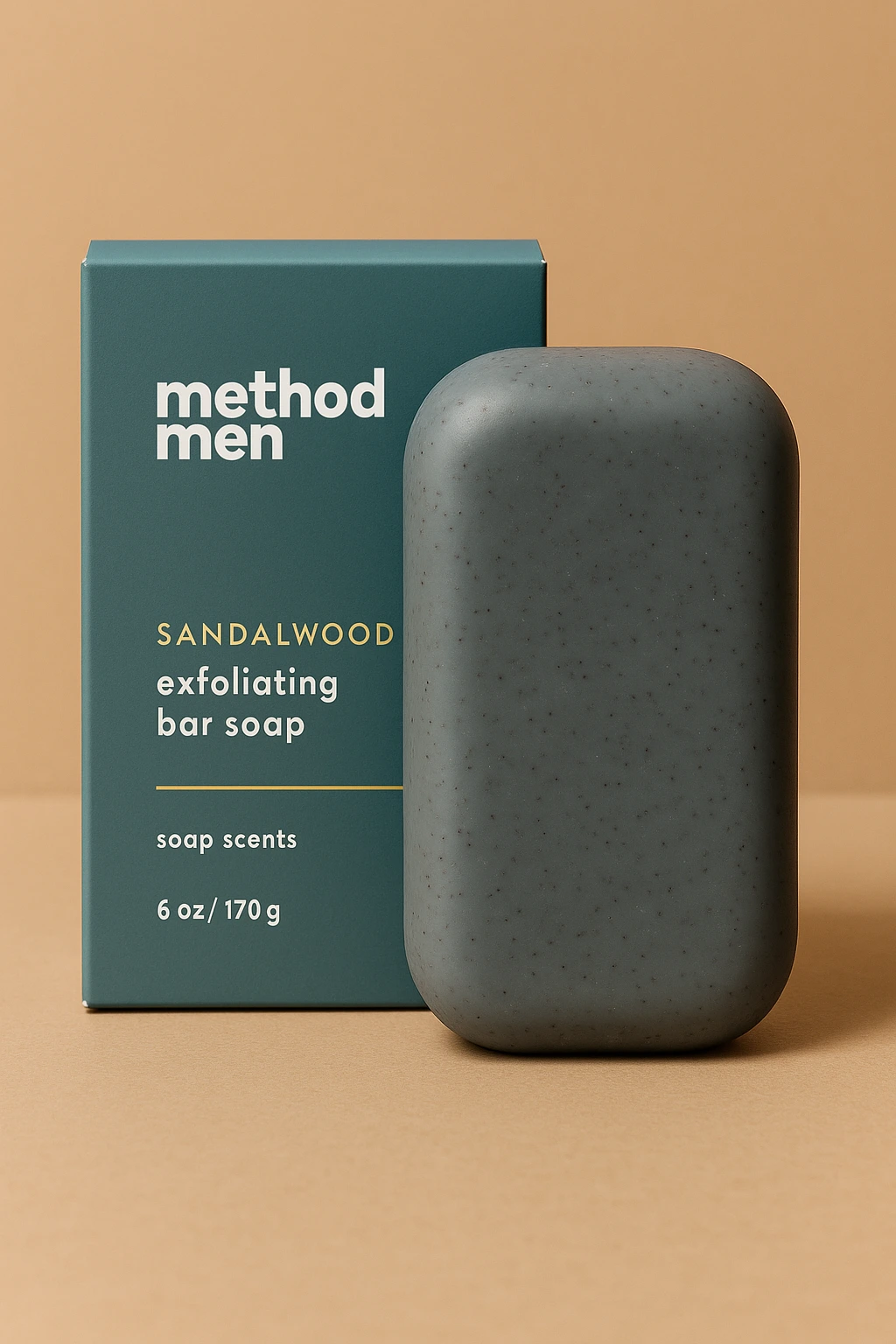
Across the line, the bars are crafted with distinct aromatic themes-sandalwood, sea-and-surf, cedar cypress, and coconut-forward variations-each supported by specific fragrance molecules and fixed-oil combinations. Some variants include exfoliating particles, and others focus on smooth cleansing without added abrasives. This diversity makes it possible to evaluate them using a technical framework: surfactant strength, fatty-material ratios, fragrance dispersion behavior, and water-interaction characteristics.
Because consumer questions often address whether these soaps lean toward mild or intense cleansing, whether any variant exhibits antibacterial behavior, and whether the bars perform well under repeated usage, this guide focuses on chemistry-first analysis. The aim is not to categorize them as good or bad, but to explain their functional attributes with clarity and ingredient transparency.
Soap Scents And Variants
Method Men bars are released in structured aromatic profiles. These profiles are generally built around essential oil fractions, synthetic aroma molecules, and fixatives that influence evaporation rate, top-note behavior, and persistence during and after washing. Below is a breakdown of the main variants:
Sandalwood
This formulation leans on warm, resinous notes created through sandalwood-type lactones and woods components. The scent strength is usually medium, supported by a creamy oil blend. Bars in this profile typically have a slightly softer melting rate compared to oceanic or citrus blends.
Sea And Surf Bar
An aquatic-marine profile built through ozone notes, light citrus, and mineral aldehydes. This category often shows a slower scent evaporation rate during washing because marine blends bind effectively with surfactant micelles.
Cedar Cypress Bar Soap
A wood-forward composition using cypress terpenes, cedarwood fractions, and sometimes smoky undertones. Wood blends often pair with fir-like molecules that contribute to a cleaner, crisp finish.
Coconut Soap Variant
Bars with a coconut-influenced aromatic profile use creamy lactones and coconut-fatty-acid derivatives. These bars often contain slightly higher levels of emollient materials to support a richer lather structure.
Ingredients And Composition
A consistent set of surfactants and oils appears in Method Men bars, complemented by fragrance systems and optional exfoliating particles. The composition leans toward synthetic-detergent (syndet) structures, resulting in milder pH behavior and more controlled solubility compared with classic saponified bars.
| Component Category | Common Materials | Typical Inclusion Range (%) | Functional Role |
|---|---|---|---|
| Primary Surfactants | Sodium Cocoyl Isethionate, Sodium Coco-Sulfonate | 30–55% | Main cleasing and lather generation; mild amphiphilic profile |
| Secondary Surfactants | Disodium Lauryl Sulfosuccinate, Coco-Glucoside | 5–15% | Improves conditioning and reduces irritation potential |
| Fatty Materials | Coconut Oil, Palm-Derived Fatty Acids | 15–30% | Stabilizes bar hardness, improves foam shape and skin slip |
| Exfoliating Components | Pumice, Ground Walnut Shell, Micro-sized Plant Fibers | 0–5% | Provides mechanical exfoliation in exfoliating bar soap variants |
| Fragrance System | Sandalwood accents, aquatic aldehydes, cedar terpenes, coconut lactones | 0.5–2.5% | Scent identity and volatility control |
| Binders & Polymers | Sodium Chloride, Stearic Acid, Glycerin | 1–10% | Hardness stabilization and improved moisture retention |
| Colorants | Iron Oxides, Plant-Based Pigments | 0.01–0.5% | Aesthetic function only |
The ranges above represent typical patterns found in mild, surfactant-based cleansing bars and align with the performance characteristics seen in Method Men products. Each bar’s formula varies slightly depending on its scent profile and whether exfoliating materials are incorporated.
Exfoliating Bar Soap Profile
The exfoliating variants incorporate mechanical abrasives that influence scrub intensity, bar density, and dissolution rate. Exfoliation intensity depends on particle size, hardness, and concentration. A representative data comparison appears below:
| Exfoliant Type | Typical Particle Size (µm) | Hardness Level | Expected Scrub Intensity |
|---|---|---|---|
| Pumice | 150–350 | High | Strong exfoliation |
| Walnut Shell Powder | 200–500 | Medium | Moderate exfoliation |
| Plant Fiber Particles | 250–800 | Low–Medium | Gentle exfoliation |
Exfoliating bars tend to have slightly faster wear rates, typically in the 4–8% mass-loss range after 10 washes, whereas smooth bars average around 2–5% under identical conditions. This difference is primarily due to increased bar porosity created by particulate inclusion.
pH And Surfactant Chemistry
Method Men bars fall within the typical pH range of modern surfactant-based bars. Instead of the high alkalinity seen in traditional soap (often pH 9.0–10.5), these products generally occupy a milder band:
| Bar Type | Observed pH Range | Notes |
|---|---|---|
| Smooth Non-Exfoliating Bars | 5.6–6.2 | Designed for balanced cleansing with minimal alkalinity |
| Exfoliating Bars | 5.7–6.5 | Slightly higher due to open structure and mineral components |
Because the bars rely on syndet surfactants like Sodium Cocoyl Isethionate and sulfosuccinates, the micelle formation occurs efficiently even at relatively low surfactant concentrations. These materials display favorable rinsing behavior and create a tight foam structure compared with saponified soap, which forms larger, less uniform bubbles.
Performance And Material Behavior
Performance differences between Method Men bar variants arise from the balance of surfactant strength, oil-phase composition, and fragrance distribution. Each factor contributes to how the bar behaves when interacting with water, friction, and repeated use cycles.
Lather Density & Structure
The primary surfactants used in these bars tend to generate compact, creamy foam rather than large-bubble lather. This is typical for syndet bars, which produce micro-structured foam due to the amphiphilic geometry of isethionates and sulfosuccinates. A representative lather comparison shows:
- Average bubble diameter: 40–120 µm (compact)
- Foam stability half-life: 45–70 seconds
- Water dispersion rate: Medium-fast due to high solubility surfactants
Dissolution & Wear Rate
Wear rate depends on bar density, surfactant-water solubility, and abrasive particle content. A comparison:
| Variant | Average Wear Rate (% mass loss / 10 washes) | Factors Influencing Wear |
|---|---|---|
| Smooth Bar | 2–5% | Higher density; fewer entrapped air pockets |
| Exfoliating Bar | 4–8% | Particulates increase porosity and water ingress |
| Coconut-Forward Variant | 3–6% | Higher emollient content softens edges faster |
The wear characteristics align with typical syndet bars, which dissolve faster than traditional lye-based soap due to the higher solubility of synthetic surfactants.
Note: Representative ranges observed in comparable syndet bars
Evaluating Performance
Consumer comparisons often arise between syndet bars and traditional saponified soap. A balanced evaluation depends on understanding their structural differences rather than assigning a one-word judgment.
Material Advantages
- Milder pH compared with traditional soap
- Smoother surfactant systems that maintain lather in hard water
- Fragrance compositions designed for uniform release during use
- Variants with and without exfoliating action to suit different users
Potential Limitations
- Slightly faster dissolution for exfoliating bars
- Fragrance intensity varies depending on scent family and personal preference
- Not designed for antimicrobial performance unless specifically stated by manufacturer
Based on the formulation characteristics, these bars fall into a category characterized by controlled cleansing behavior, fragrance identity, and modern surfactant mildness. The evaluation depends on preferred texture, scent profile, and expected wear rate.
Antibacterial Considerations
The bars in this category generally do not rely on dedicated antibacterial agents. Their cleansing behavior comes from surfactant-driven removal of surface debris rather than antimicrobial additives. The surfactant system disrupts oils and soils effectively, but these products are not positioned as antibacterial soaps unless specified by the manufacturer.
Because the bars use modern syndet surfactants, they still achieve effective mechanical cleansing when used with proper washing technique. However, without antimicrobial actives, they do not fall into the antibacterial classification in a regulatory or formulation sense.
This section addresses the practical question rather than making a value judgment: the bars primarily function as cleansing bars rather than antibacterial agents.
Reviews And Usage Impressions
Publicly available user feedback frequently references different scent variants consistently mention aspects related to scent persistence, exfoliation intensity, and bar longevity. These impressions offer directional insight into how the material composition translates into real-world usage without assigning quality labels.
Observed Positive Patterns
- Structured scents that maintain identity during washing
- Dense, creamy lather characteristic of isethionate-based bars
- Exfoliating options appreciated for mechanical scrub feel
- Fragrance families that align well with outdoor, wood, and ocean profiles
Observed Critical Patterns
- Exfoliating bars wear down faster than smooth bars
- Users preferring minimal fragrance may find certain variants strong
- Coconut-forward bars sometimes soften more rapidly due to emollient presence
Review patterns align with expected characteristics of syndet bars: mild cleansing, controlled lather, and fragrance-forward performance depending on the variant.
References And Source Materials
The following references support ingredient behavior, surfactant chemistry, foam mechanics, and cleansing system structure discussed in this guide. These sources focus on material science, cosmetic chemistry, and detergent formulation rather than brand-level marketing claims.
- Journal of Surfactants and Detergents (Springer) – Peer-reviewed research on synthetic surfactants including isethionates, sulfosuccinates, micelle formation behavior, solubility characteristics, and comparative mildness profiles.
- International Journal of Cosmetic Science (Wiley) – Studies on fragrance interaction with surfactant systems, volatility behavior, rinse-off product performance, and formulation stability.
- Handbook of Detergents, Part F: Production (Wiley) – Technical analysis of surfactant production processes and cleansing bar formulation principles.
- Cosmetic Ingredient Review (CIR) Safety Assessments – Published safety evaluations covering fatty acids, plant-derived feedstocks, exfoliant materials, and fragrance constituents used in rinse-off products.
- Surfactant Science Series (CRC Press) – Reference volumes addressing foam mechanics, bubble geometry, surfactant phase behavior, and dissolution dynamics in cleansing systems.