Product Overview
Method laundry detergent is positioned as a plant-forward liquid detergent line intended for domestic laundry. Core product claims focus on biodegradability, reduced reliance on petrochemical surfactants, and cleaner packaging choices, reflecting the distinction between branding language and formulation behavior explored in marketing language versus formulation reality. The brand provides several trade-off points: fragrance-free options marketed as Method laundry detergent Free and Clear, baby-specific formulations labeled as Method baby laundry detergent, and concentrated variants often listed as Method laundry liquid on retail channels. Method’s formulations aim to balance surfactant efficacy with consumer preferences for lower fragrance and recyclable packaging.
In practical terms, Method’s formulations fall within the standard liquid detergent design space: a surfactant matrix (anionic + nonionic), co-solvents to aid oil solubilization, water-conditioning agents (chelators), preservatives, and fragrance or its omission. Manufacturers tune each variant for load type (everyday, baby clothing, sensitive skin) and water conditions.
Product Profile / Specification / Overview
The table below summarizes the technical profile that consumers and procurement professionals typically use when comparing Method laundry detergents to alternatives (e.g., mainstream detergents or eco-branded competitors).
| Parameter | Typical Value / Range | Notes |
|---|---|---|
| Product Type | Liquid Laundry Detergent (concentrated) | Available as regular concentrate, Free + Clear, Baby |
| Formulation Base | Anionic + Nonionic surfactant blend | Plant-derived feedstocks used where possible |
| Surfactant Loading (active) | 5–15% (approximate, product-dependent) | Concentrated liquids toward upper range |
| pH Range | ~7.5–9.0 (manufacturing target) | Slightly alkaline improves oily soil removal |
| Typical Bottle Volumes | 25 fl oz, 40 fl oz, 50 fl oz | Retail sizes vary by market |
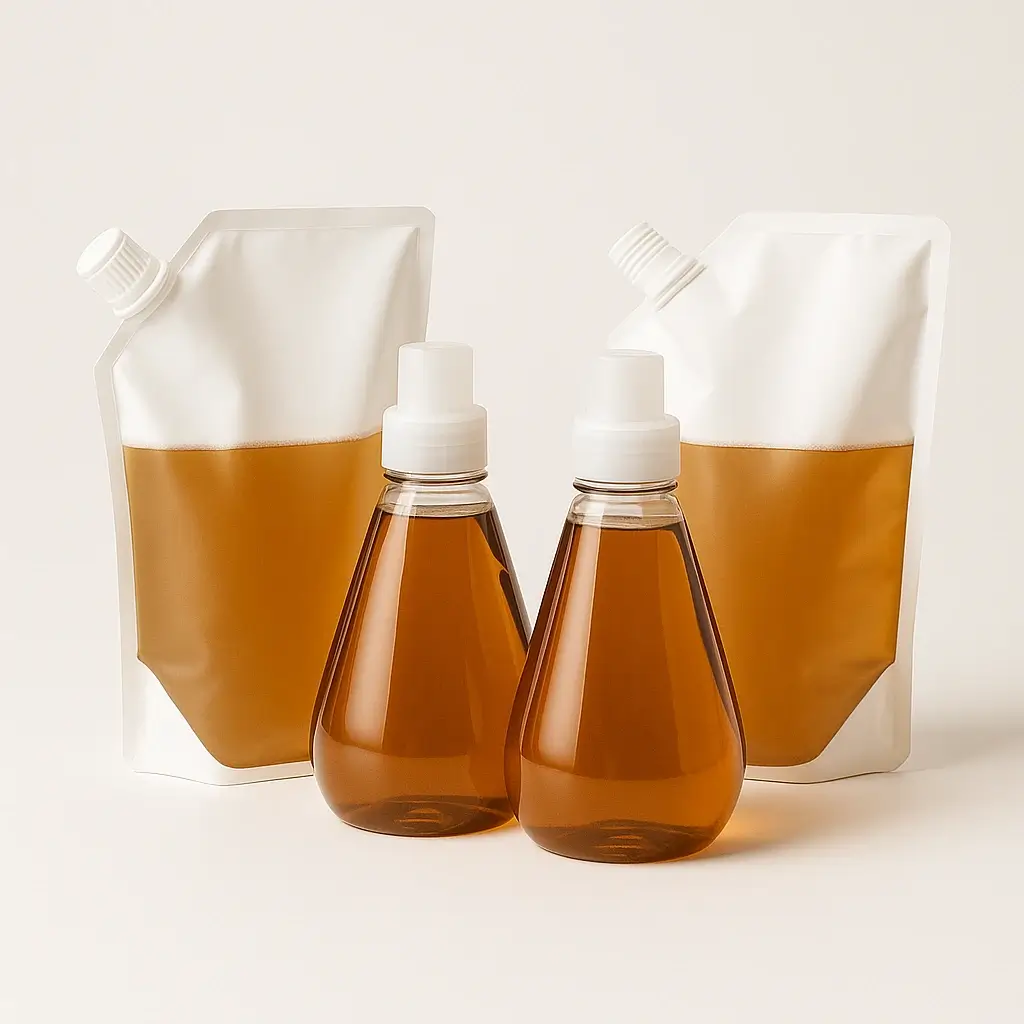
| Refill Sizes | 1 L, 1.5 L pouches (market-dependent) | Pouches reduce packaging mass per wash |
| Key Additives | Chelators, stabilizers, enzymes (select variants), fragrances | Enzyme inclusion varies; Baby and Free + Clear omit fragrance |
| Biodegradability | High for surfactant portion | Depends on surfactant class and wastewater conditions |
| Vegan / Cruelty-Free | Brand-claimed | Third-party verification varies by market |
Note: exact active percentages and ingredient statements vary between markets and specific SKUs; the table provides a data-driven summary useful for technical comparison.
Variants Overview
Method’s product family includes several consumer-facing variants that address sensitivity, scent preference, and cleaning power, with a broader structural comparison documented in the Method laundry products guide. Below is a compact classification focused on attributes relevant to buyers comparing Method laundry detergent vs other brands (Seventh Generation, Tide, Gain).
| Variant | Primary Focus | Key Ingredients / Differences | Typical Use Cases |
|---|---|---|---|
| Method Laundry Liquid (Standard) | Everyday cleaning | Anionic + nonionic surfactants, fragrance | General household loads |
| Method Laundry Detergent Free + Clear | Sensitivity reduction | No fragrance, no dyes; simplified additive profile | Allergy-prone users, sensitive skin |
| Method Baby Laundry Detergent | Delicate fabrics, infant skin considerations | Milder surfactant ratios; fewer fragrances; targeted rinseability | Baby clothing, linens |
| Method Plant-Based / Eco Variants | Reduced petrochemical footprint | Higher proportion of plant-derived surfactants | Eco-conscious households |
When comparing Method to mainstream detergents such as Tide or Gain, the primary differences are surfactant selection, fragrance load, enzyme package, and concentration. Enzyme packages (protease, amylase) improve removal of protein and starch soils; some Method SKUs include enzymes while others do not.
How It Works
Liquid laundry detergents operate by combining surfactant-driven wetting and micelle formation with mechanical agitation (wash action) to dislodge soils. Method’s formulations follow this paradigm: anionic surfactants reduce surface tension and solubilize lipids; nonionic surfactants improve removal of oily and particulate soils and enhance enzyme performance where present.
Laundry detergents also use water softening strategies: chelators (e.g., sodium citrate) sequester calcium and magnesium that otherwise form insoluble salts with anionic surfactants. Enzymes, when present, target specific soil classes (proteins, starches, lipids) and function optimally in defined pH and temperature windows.
| Component | Function | Typical Range / Notes |
|---|---|---|
| Anionic Surfactants | Primary soil removal | Majority of active surfactant weight |
| Nonionic Surfactants | Solubilize oils; reduce foaming in high-efficiency machines | Minor to moderate fraction |
| Enzymes (optional) | Target protein/starch/lipid stains | Included in select formulations |
| Chelators | Improve performance in hard water | Present in low % |
Ingredients Explained
Method laundry detergents rely on a multi-component cleaning matrix rather than a single "active ingredient," similar to the surfactant-driven systems examined in the ECOS soap ingredient breakdown. The detergent’s performance emerges from interactions between anionic surfactants, nonionic surfactants, co-solvents, chelators, optional enzymes, fragrance molecules, and stabilizers. This section provides a breakdown reflecting commonly disclosed components in Method laundry liquid and Method laundry detergent Free + Clear.
| Ingredient Class | Common Examples (Not exhaustive) | Primary Function |
|---|---|---|
| Anionic Surfactants | Sodium laureth sulfate (plant-derived), linear alkylbenzene sulfonate (in some markets) | Primary soil removal, foaming modulation |
| Nonionic Surfactants | Alcohol ethoxylates, plant-derived nonionics | Oil solubilization, high-efficiency (HE) compatibility |
| Solvents | Propylene glycol, ethanol | Improve solubility of oily soils; stabilize fragrance |
| Chelating Agents | Sodium citrate, gluconates | Bind calcium/magnesium to prevent surfactant precipitation |
| Enzymes (selected SKUs) | Protease, amylase | Break down protein and starch soils |
| Preservatives | Sodium benzoate, benzisothiazolinone (concentration-dependent) | Control microbial growth in water-rich formulas |
| Fragrances | Proprietary blends; not present in Free + Clear | Provide scent profile; low % of total mass |
| Colorants | Minimized; absent in Free + Clear | Visual differentiation only |
Exact concentrations vary by SKU and region, but publicly available safety data sheets (SDS) and ingredient disclosures suggest typical surfactant loadings in the 5–15% range for concentrated Method laundry liquid.
Full INCI-Style Ingredient Interpretation
The following table interprets commonly listed ingredients across Method liquid laundry detergent, Free + Clear, and Baby formulations. Values reflect typical concentration categories, not exact proprietary ratios.
| INCI Name | Functional Category | Notes on Role & Behavior |
|---|---|---|
| Aqua(Water) | Solvent | Primary carrier; influences viscosity and solubility |
| Sodium Laureth Sulfate | Anionic surfactant | Major soil-removal agent; plant-derived feedstock often used |
| C12–C16 Alcohol Ethoxylates | Nonionic surfactant | Improve removal of oily soils; low foam for HE machine compatibility |
| Sodium Citrate | Chelating agent | Reduces hardness ions; improves surfactant efficiency |
| Protease | Enzyme (selected variants) | Breaks down protein stains (blood, dairy, grass) |
| Amylase | Enzyme (selected variants) | Targets starch-based soils (food residues) |
| Propylene Glycol | Solvent | Solubilizes surfactants & fragrances; viscosity control |
| Sodium Benzoate | Preservative | Controls microbial growth in water-rich surfactant systems |
| Benzisothiazolinone | Preservative | Broad-spectrum microbial protection at low % |
| Fragrance (Parfum) | Aroma component | Excluded from Free + Clear; proprietary molecules with varied volatility |
| Colorants | Dyes | Minimal use; omitted in fragrance-free / sensitive variants |
Free + Clear and Baby variants simplify the formula by minimizing fragrance components, reducing the number of aromatic compounds and potential sensitizers.
Surfactant System Chemistry
Method formulations rely on synergistic interaction between anionic and nonionic surfactants. This combination balances cleaning power with controlled foaming, an important requirement for high-efficiency (HE) washing machines.
| Surfactant Type | Characteristics | Approximate Contribution |
|---|---|---|
| Anionic | Strong grease removal; produces foam; requires water-conditioning | ~60–80% of total active surfactants |
| Nonionic | Excellent for oily soil; low foam; improves performance in cool water | ~20–40% of total active surfactants |
| Enzymatic Support (where included) | Not surfactants-assist in stain breakdown | 0.1–1% depending on variant |
The ratio of these surfactant types heavily influences foam height, rinseability, and stain-removal behavior across different soil classes.
Additives, Enzymes & Functional Roles
Additives control formulation stability, support stain removal, or help the detergent behave predictably under temperature, water-hardness, and soil-load variation. Enzymes are included in certain Method SKUs but intentionally omitted from Free + Clear and Baby variants.
| Additive | Functional Purpose | Technical Notes |
|---|---|---|
| Chelators | Bind hardness ions | Enable anionic surfactant efficiency |
| Solvents | Solubilize oily soils & fragrances | Improve low-temperature performance |
| Enzymes | Break down protein/starch soils | Temperature-sensitive; pH-dependent |
| Viscosity Regulators | Ensure consistent bottle pour | Prevent phase separation during storage |
| Preservatives | Maintain microbial stability | Used at very low percentages |
| Fragrance Oils | Provide signature scents | Varies widely between "which Method laundry detergent smells best" candidates |
Packaging Analysis
Method packaging emphasizes reduced environmental footprint using recyclable PET bottles and concentrated formats that reduce total plastic mass per wash cycle. Refill pouches further lower packaging mass relative to rigid containers. Labeling generally discloses surfactant origin (plant-based where feasible) and fragrance presence or absence.
| Format | Material | Resource Impact |
|---|---|---|
| Rigid Bottle | PET (recyclable) | Higher plastic mass; durable |
| Refill Pouch | Flexible multi-layer film | Lower mass; not always curbside recyclable |
| Bulk Format (commercial) | High-volume plastic containers | Reduced plastic-per-liter ratio |
Performance Metrics & Cleaning Analysis
The performance of Method laundry detergent depends primarily on surfactant concentration, nonionic-to-anionic ratio, enzyme inclusion (when present), water hardness, wash temperature, and mechanical agitation. While proprietary performance benchmarks are not publicly disclosed, the detergent’s behavior aligns with well-characterized detergent chemistry principles.
| Parameter | Standard Variant | Free + Clear | Baby |
|---|---|---|---|
| Oily Soil Removal | High | Moderate | Moderate |
| Protein Soil Removal | Moderate–High (if enzymes included) | Moderate (enzyme-free) | Moderate (enzyme-free) |
| Starch Soil Removal | Variable; improves with amylase | Lower | Lower |
| Cold Water Efficiency | High (nonionic-rich) | High | Moderate |
| Foam Behavior (HE machines) | Low–Moderate foam, HE-compatible | Low foam | Low foam |
| Fragrance Residue | Moderate (varies by scent) | None | Minimal |
| Rinseability | High | High | High |
Because Method uses nonionic surfactants extensively, its performance in cold water cycles is strong relative to traditional detergent designs dominated by anionic-only systems. Nonionics also reduce foam, which is beneficial for high-efficiency washers.
Method vs. Seventh Generation, Tide & Gain
While Method emphasizes plant-forward surfactants and lighter scent profiles, mainstream detergents such as Tide and Gain rely on more complex enzyme packages, higher surfactant loading, and broader use of proprietary polymers. Seventh Generation falls closer to Method in environmental positioning but differs in concentration and enzyme strategy.
| Feature | Method | Seventh Generation | Tide | Gain |
|---|---|---|---|---|
| Surfactant Base | Plant-forward anionic + nonionic | Plant-based surfactants | Petrochemical + plant hybrid | Petrochemical-focused |
| Enzyme Package | Limited / variant-specific | Moderate | High | Moderate–High |
| Fragrance Load | Low–Moderate | Low | High | High |
| Cold Water Performance | High | High | High–Very High | High |
| Environmental Emphasis | Strong | Very Strong | Moderate | Moderate |
| Biodegradability | High (surfactants) | High | Moderate | Moderate |
| Cleaning Strength (Heavy Soil) | Moderate–High | Moderate | Very High | High |
Method positions itself between high-performance mainstream detergents and eco-labeled alternatives, offering balanced cleaning with fewer additives and a reduced fragrance load.
Stability Notes
Stability in Method laundry detergent refers to maintaining a uniform liquid phase, predictable viscosity, and consistent scent profile across a variety of household temperature conditions. Because the formula contains surfactant-solvent mixtures, temperature shifts can influence solubility, especially around 5–10°C or 30–35°C.
| Parameter | Typical Behavior | Influencing Factors |
|---|---|---|
| Viscosity | Stable through 15–30°C | Surfactant concentration; solvent balance |
| Phase Separation | Low incidence | High nonionic content improves solubility |
| Fragrance Volatility | Moderate–High | Dependent on aroma molecule volatility |
| Enzyme Stability | Variant-dependent |
Biodegradability & Environmental Notes
Surfactants used in Method laundry detergent-particularly the alcohol ethoxylates and laureth sulfates-are characterized by high biodegradability under aerobic conditions, supported by regulatory biodegradation tests. Method advertises its detergents as biodegradable, and this aligns with documented behavior of their surfactant classes.
| Component Class | Relative Biodegradability | Environmental Notes |
|---|---|---|
| Anionic Surfactants | High | Rapid breakdown in municipal wastewater systems |
| Nonionic Surfactants | High | Biodegradable; some intermediates form during oxidation |
| Enzymes | Readily biodegradable proteins | Break down naturally |
| Solvents | High | Propylene glycol readily biodegradable |
| Fragrance Molecules | Variable | Volatility influences environmental distribution |
| Packaging | PET recyclable | Refill pouches reduce plastic mass |
The detergent qualifies as plant-based or eco-oriented due to surfactant origin and packaging choices, though not all components originate from renewable feedstocks.
Safety, Handling & Practical Uses
This section covers practical, non-medical safety considerations derived from surfactant chemistry and ingredient interactions. It does not constitute medical or dermatological advice.
- Surfactant Exposure: As with all detergents, prolonged exposure to concentrated liquid may cause temporary dryness because surfactants remove natural oils from the skin surface.
- Fragrance Sensitivity: Free + Clear variants omit fragrance components entirely, reducing aromatic compound exposure.
- Allergic Responses: Reactions are typically linked to fragrance blends or preservatives; individuals "allergic to Method laundry detergent" may react to either category.
- Handling: Avoid leaving the cap open because solvent evaporation may alter viscosity.
- Practical Uses: Suited for standard and HE washers, regular household laundry, baby garments (Baby variant), and situations requiring reduced fragrance load.
- Functional Benefits: Good performance in cold water, strong surfactant efficiency, and reduced fragrance residue.
Summary of Findings
- Balanced Surfactant System: Method laundry detergent uses a plant-forward blend of anionic and nonionic surfactants optimized for cold-water and HE machine performance.
- Variant-Specific Additives: Free + Clear and Baby formulas minimize fragrances and reduce sensitizer load while standard Method laundry liquid may include enzyme packages for stain diversity.
- Environmental Positioning: Surfactant systems exhibit high biodegradability, and packaging emphasizes recyclability and reduced plastic mass.
- Performance Differentials: Compared to Tide and Gain, Method prioritizes ingredient simplicity and environmental design rather than maximizing enzyme complexity.
- Practical Use Considerations: Suitable for general laundry, sensitive households, and eco-minded users; concentrated formats deliver effective cleaning per mL with lower packaging waste.
References
- OECD. Guidelines for the Testing of Chemicals – Biodegradability. OECD Publishing.
- European Chemicals Agency (ECHA). Substance Information Database. Surfactant substance profiles and regulatory data.
- U.S. Environmental Protection Agency (EPA). Safer Choice Program – Surfactants & Detergents.
- Method Products. Sustainability & Ingredient Transparency Disclosures.
- Academic literature on alcohol ethoxylate surfactant performance and biodegradability.
- Industry technical data sheets for protease, amylase, and mixed surfactant systems used in household detergents.