Overview
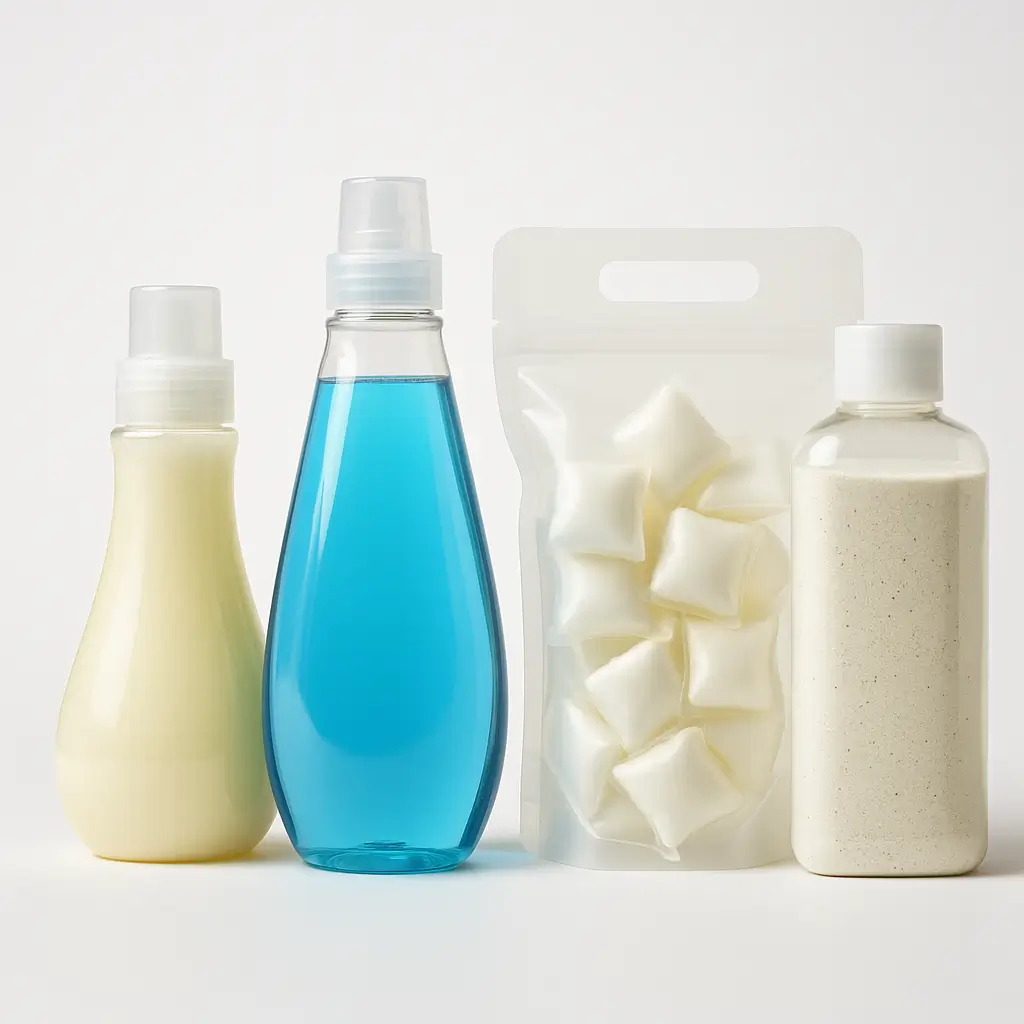
Method’s laundry portfolio covers several categories: concentrated liquid detergent, detergent pods, fabric softener, baby and sensitive variants, and a wide set of scent-focused formulations including Fresh Air and Ginger Mango. Despite differences in packaging and concentration, the underlying chemistry is built around plant-derived surfactants, mild solvents, stabilizers, enzyme systems (in select versions), and biodegradable polymer components designed to maximize soil suspension while minimizing environmental persistence.
The brand positions its products with a combination of performance and environmental considerations: reduced plastic, refill pouches, high-efficiency (HE) machine compatibility, lower wash temperatures, and high surfactant efficiency. These factors collectively influence consumer perception and tie into questions such as whether Method laundry detergent is non-toxic, biodegradable, cruelty-free, vegan, and suitable for sensitive skin.
This guide consolidates all Method laundry detergent formats-including Method laundry detergent pods, Method laundry softener, Method laundry detergent Fresh Air, and Method laundry detergent Ginger Mango-into a single technical resource. Each format is evaluated through a surfactant-science lens, focusing on ingredient structure, functional performance, comparatives, and how these engineered systems behave inside wash cycles.
Product Profile and Specification
This section consolidates technical characteristics of Method laundry systems. Since formulations differ slightly between pods, liquids, softeners, and scent variants, the table reflects typical profiles based on publicly available data, safety disclosures, and detergent formulation norms.
| Specification | Typical Range / Details |
|---|---|
| Product Types | Liquid detergent, detergent pods, fabric softener, baby detergent, Free + Clear, Fresh Air, Ginger Mango |
| Surfactant System | Anionic + nonionic plant-derived surfactants (typically alcohol ethoxylates, anionic blends) |
| Enzyme Inclusion | Varies by variant; some include protease/amylase; Free + Clear may reduce enzyme load |
| Packaging Formats | HDPE bottles, measured-pump bottles, refill pouches, pod containers with moisture barriers |
| pH Range | Likely mildly alkaline in concentrated liquid (~8–9) |
| Biodegradability | High proportion of readily biodegradable surfactants; polymers vary by system |
| Concentration Level | Highly concentrated formulas; pumps designed for small-dose delivery |
| Compatibility | HE machines, cold water cleaning, standard washers |
| Scent Variants | Fresh Air, Ginger Mango, Beach Sage, Lavender + Cedar, Free + Clear (unscented), others |
Variants Overview
Method’s laundry lineup spans multiple functional and fragrance segments. Differences primarily arise from surfactant concentration, presence or absence of enzymes, fragrance systems, softening agents, and packaging format. The following overview describes how each variant fits into user needs, washing conditions, and environmental considerations.
| Variant | Key Characteristics | Typical Use Case |
|---|---|---|
| Liquid Detergent | Concentrated surfactant system, optional enzymes, multiple scents | Everyday laundry, mixed fabric loads |
| Detergent Pods | Pre-measured doses, membrane-dissolving format | Convenience, reduced measuring error |
| Fabric Softener | Cationic conditioning agents, plant-based softening system | Softening, reducing static on synthetics |
| Fresh Air Scent | Low-intensity aromatic blend, lighter volatile compounds | Neutral fragrance preference |
| Ginger Mango Scent | Warm tropical fragrance profile | Fragrance-forward laundry users |
| Baby Detergent | Moderate surfactant load, reduced fragrance intensity | Infant clothing, sensitive-use households |
| Free + Clear | Fragrance-free, often reduced enzyme and additive load | Fragrance-sensitive households |
Method Laundry Detergent Pods: Concentration, Behavior & Dissolution Profile
Method laundry detergent pods provide a pre-measured detergent system inside a water-dissolvable membrane. The membrane typically consists of polyvinyl alcohol (PVA), a polymer engineered for rapid solubilization in wash water, provided temperature and agitation reach functional thresholds. The pod interior contains concentrated surfactants, solvents, and optional enzymes, allowing consistent dose delivery across loads.
Pod systems reduce consumer dosing variability-a major contributor to overuse in liquid detergents. The highly concentrated internal matrix means surfactant levels are elevated relative to liquid-per-mL equivalents, but become normalized once dispersed in a wash cycle. Dissolution speeds depend on water hardness, temperature, and mechanical agitation; pod systems perform more consistently in ≥20°C washes but are increasingly engineered for cold water thanks to hydrophilic PVA film adjustments.
| Component Type | Role in Pod | Estimated Relative Range |
|---|---|---|
| Anionic + Nonionic Surfactants | Main cleaning agents | 40–65% of total actives |
| Solvents (e.g., ethanol, glycol ethers) | Viscosity tuning, solubilization | 5–15% |
| Enzymes | Stain-type targeting (protein / starch) | 0.1–1% |
| Polymers | Anti-redeposition, soil suspension | 1–5% |
| Fragrance | Scent profile (Fresh Air or Ginger Mango) | 0.1–3% |
| PVA Film | Pod membrane | External shell; dissolves during wash |
Compared to liquids, Method laundry detergent pods focus on predictable dosing, compact packaging, and improved storage efficiency. Their concentrated design delivers comparable or higher cleaning efficiency per gram of surfactant due to optimized ratios and controlled release in the wash environment.
Method Laundry Softener: Conditioning Agents, Performance & Usage
Method laundry softener uses a cationic conditioning system built around plant-derived softening compounds. These positively charged molecules adsorb onto negatively charged fabric surfaces, reducing inter-fiber friction and static buildup. Unlike traditional animal fat-derived tallow-based quats found in many softeners, Method typically emphasizes plant-derived ester quats which exhibit improved biodegradability.
Softener performance is driven by deposition efficiency, conditioning agent chain length, and fragrance binding. The system’s mild solvents and stabilizers maintain dispersion until rinse-phase cationic deposition occurs. Fabric softeners do not directly remove soils; instead, they modify fabric handfeel, reduce static (particularly in synthetics), and influence fragrance longevity.
| Component | Function | Typical Presence |
|---|---|---|
| Ester Quats | Primary softening agents (cationic) | 10–20% |
| fatty alcohols | Co-softening, viscosity modulation | 2–8% |
| Solvents | Dispersants and diluents | 5–10% |
| Fragrance | Fresh Air or Ginger Mango scent systems | 0.1–3% |
| Preservatives | Stability during storage | <1% |
Method Laundry Detergent Fresh Air: Scent Chemistry & Functional Profile
The Fresh Air variant uses a low-intensity aromatic blend engineered to create a clean, subtle fragrance profile. Unlike heavier compositions, Fresh Air leans on lighter volatile molecules-often a mixture of citrus aldehydes, low-weight esters, and green-note aroma chemicals. These fragrance types evaporate more quickly during drying, leaving minimal residual scent on fabrics. This design aligns with users who prefer a non-overpowering fragrance but do not want fully unscented formulas.
Scent behavior in detergent systems follows several interactions: solubilization inside the detergent matrix, release during wash agitation, deposition onto fibers, and volatilization during the drying phase. Lightweight fragrance components found in Fresh Air show lower deposition but higher rinse-phase release, contributing to its "clean-air" sensory effect. Its profile is compatible with sensitive-use households that want fragrance without intensity.
| Component Type | Role | Typical Range |
|---|---|---|
| Anionic + Nonionic Surfactants | Base cleaning system | Core active system (varies by load) |
| Fragrance (Fresh Air) | Light, ozone-inspired aromatics | 0.1–2% |
| Solvents | Fragrance solubilization | 1–5% |
| Enzymes (varies) | Stain removal | 0.1–1% |
| Stabilizers & Polymers | Formula stability, soil suspension | 1–5% |
The Fresh Air variant shows balanced performance across mixed loads. Lower fragrance deposition also means minimal interference with textiles such as sportswear or technical fabrics that often retain scent residues from heavier formulas. Due to its lighter aromatic footprint, Fresh Air is often preferred in households combining fragrance preference with a desire for low residual intensity.
Method Laundry Detergent Ginger Mango: Warm Aromatic Profile & Stability Notes
The Ginger Mango variant is built around a warmer, fruit-forward aromatic blend. These fragrances typically include medium-weight esters, lactones, and aromatic compounds that create a tropical sensory profile. The "ginger" component is generally composed of synthetic aroma compounds inspired by ginger root volatiles; these molecules add brightness and depth to the mango-based profile.
Fragrance retention for Ginger Mango is higher than Fresh Air due to greater molecular weight and increased affinity for textile fibers. During the drying cycle, mango-forward aromatic compounds partially volatilize but leave a detectable fabric scent. The combination of plant-derived surfactants and fragrance solubilizers ensures even distribution of the scent molecules throughout the wash liquor.
| Component | Functional Contribution | Presence Range |
|---|---|---|
| Aromatic Esters & Fruit Notes | Primary mango scent character | 0.5–3% |
| Ginger-Inspired Compounds | Sharp, fresh top note | 0.1–1% |
| Nonionic Surfactants | Cleanability and fragrance solubilization | Core cleaning system |
| Enzymes (varies by SKU) | Stain removal performance | 0.1–1% |
| Polymers | Soil suspension, stability | 1–5% |
The Ginger Mango variant often appeals to users who prefer long-lasting scent retention. Its heavier fragrance molecules tend to deposit more substantially onto certain textiles. As with most perfumed detergents, performance relates to both how well surfactants disperse the fragrance and how the system maintains stability across storage conditions, temperature shifts, and water hardness.
Ingredients Explained: Surfactants, Enzymes, Solvents & Polymers
Laundry detergents rely on synergistic interactions between surfactants (the primary cleaning agents), enzymes (biological catalysts for stain types), solvents, and polymers (soil suspension and rinseability). Method’s ingredient sets emphasize plant-derived surfactants, reduced harshness solvents, and high-biodegradability chemistries.
| Ingredient Class | Function | Role in Method Products |
|---|---|---|
| Anionic Surfactants | Primary soil and grease removal | Core cleaning in liquids and pods |
| Nonionic Surfactants | Boost cleaning, improve fragrance solubility | Key component of plant-derived systems |
| Enzymes | Catalyze stain breakdown | Present in many pods; variable in liquids |
| Polymers | Prevent redeposition, stabilize soils | Improve performance in mixed soil loads |
| Solvents | Viscosity control, solubilization | Help maintain stability |
| Fragrance Components | Scent profile creation | Fresh Air, Ginger Mango, others |
| Preservatives | Protect formula during storage | Used at low levels |
Compared to conventional detergents, Method’s reliance on plant-derived alcohol ethoxylates and reduced-harshness surfactants results in a cleaning profile focused on balanced efficiency rather than maximum aggressiveness. These choices influence how well the detergent handles mixed stains, cold-water loads, and high-efficiency washing cycles.
How Method Laundry Detergent Works: Surfactant Behavior & Wash-Cycle Dynamics
Laundry detergents operate through a coordinated set of chemical interactions that occur during a wash cycle. Method’s systems rely on plant-derived surfactants, mild solvents, anti-redeposition polymers, and-depending on variant-enzymes that specialize in target stain types. When introduced into wash water, these components undergo dissolution, micelle formation, catalytic reactions, and soil suspension.
Surfactant Micelle Formation: Once dispersed, surfactant molecules self-assemble into micelles, where hydrophobic tails orient inward and hydrophilic heads remain outward facing. This allows oils, sebum, and particulate soil to be encapsulated and lifted from fabric surfaces. The micelles remain suspended until rinse-out, aided by polymers that reduce redeposition.
Enzyme Activity (in enzyme-containing variants): Protease, amylase, and lipase enzymes degrade proteins, starches, and fats. These biocatalysts accelerate stain breakdown by lowering activation energy for soil fragmentation. Their activity depends on pH, water temperature, and dwell time. Method formulations preserve enzyme stability through careful inclusion of solvents, polymers, and pH control.
Polymers & Anti-Redeposition: Soil-suspending polymers prevent detached soils from reattaching to fabrics-a crucial step when washing large or heavily soiled loads. These polymers also modify water surface tension and improve dispersion of particulate soils.
The combined effect is a wash-cycle profile optimized for cold- and warm-water cleaning. High-efficiency (HE) machines benefit from Method’s low-sudsing profile, improving rinse-out and reducing residue buildup.
Performance Characteristics: Cleaning, Dissolution, Residue & Fabric Interaction
Performance varies slightly across Method’s liquid, pod, and softener systems. The following table summarizes functional behaviors relevant to household use. Values reflect comparative behavior among Method product formats and not laboratory-grade quantification.
| Characteristic | Liquid Detergent | Detergent Pods | Laundry Softener |
|---|---|---|---|
| Cold-Water Dissolution | Very good | Good to very good (dependent on agitation) | Not applicable |
| Stain Removal (Grease) | High (surfactant-driven) | High (concentrated actives) | Not applicable |
| Stain Removal (Protein/Starch) | Varies (enzyme-dependent) | High if enzymes included | Not applicable |
| Residue on Fabric | Low | Low if fully dissolved | Deposits intentionally for softening |
| Scent Retention | Moderate | Moderate to high | High |
| HE Machine Compatibility | Yes | Yes | Yes (rinse phase) |
Pods offer consistent dosage and a controlled release of concentrated surfactants, which often provides stronger performance on mixed loads. Liquid detergent provides flexibility for pretreatment or partial loads. Softener performance is not related to soil removal but to deposition of conditioning agents during the rinse stage.
Across categories, Method products remain low-residue, partly due to the use of alcohol ethoxylates and carefully tuned polymer systems. These choices contribute to reduced buildup in modern high-efficiency machines.
Packaging Analysis: Bottles, Refill Pouches & Pod Containers
Packaging plays a substantial role in Method’s sustainability image and user experience. The packaging strategy includes concentrated bottles, ergonomic pumps, refill pouches, and moisture-resistant pod canisters.
| Packaging Format | Material | Functional Benefit |
|---|---|---|
| Liquid Bottles | HDPE (#2 plastic) | Recyclable, durable, compatible with concentrated formulas |
| Pump Bottles | HDPE + pump components | Controlled dosing reduces overuse |
| Refill Pouches | Multi-layer flexible film | Lower plastic footprint per ounce of detergent |
| Pod Containers | Rigid plastic with moisture barrier | Protect PVA films from premature dissolution |
Refill systems can reduce total plastic consumption by an estimated 60–70% compared to purchasing equivalent volumes in new rigid bottles. Concentrated liquid formats reduce freight and storage requirements by lowering the water content per wash dose. Pod packaging, while protective, uses more rigid plastic than liquids per wash but eliminates measuring tools and reduces dosing errors.
Safety Notes, Handling Precautions, Practical Uses & Functional Benefits
This section summarizes non-medical, performance-based safety and handling information derived from detergent chemistry norms and ingredient behavior.
- Handling: Concentrated liquids and pods should be stored dry and sealed; moisture exposure may affect performance, especially for pod membranes.
- Performance Safety: Using more than the recommended dose does not improve cleaning efficiency and may increase rinsing requirements.
- Load Optimization: Detergent concentration supports effective cold-water washing, lowering energy consumption without major performance losses.
- Softener Use: Overuse of softener may lead to buildup in synthetic fabrics; dosing should be matched to load size.
- Fragrance Considerations: Heavier fragrances (e.g., Ginger Mango) exhibit greater fabric retention; choose lighter options (e.g., Fresh Air) when low residual scent is desired.
These notes provide practical guidance for maximizing efficiency while ensuring formula stability and long-term appliance performance. They do not address medical or therapeutic considerations.
Environmental Notes: Biodegradability, Surfactant Breakdown & Packaging Impact
Method emphasizes biodegradable surfactants, reduced plastic packaging, and plant-derived ingredients. The biodegradation behavior of surfactants depends on molecular structure: alcohol ethoxylates and certain anionic surfactants readily break down under aerobic wastewater conditions, whereas synthetic polymers degrade more slowly. The overall environmental profile depends on wastewater treatment availability and local conditions.
Refill pouch adoption significantly lowers plastic mass per wash load. Concentrated formulas reduce supply-chain emissions through lower transport weight. Pod membranes composed of PVA are designed for rapid dissolution and downstream biodegradation through microbial enzymatic processes, though complete mineralization efficiency depends on treatment facility capability.
Comparison Tables: Pods vs Liquid, Fresh Air vs Ginger Mango, Softener vs Detergent
This section provides structured comparisons to help users evaluate Method’s laundry formats based on performance, chemistry, scent behavior, and functional outcome.
| Feature | Liquid Detergent | Detergent Pods |
|---|---|---|
| Dose Control | User-controlled, variable | Pre-measured, consistent |
| Concentration | High | Very high |
| Cold-Water Compatibility | Excellent | Good to excellent (depends on agitation) |
| Pretreatment Ability | Good for direct application | Not applicable |
| Storage Stability | High | Membrane requires moisture protection |
| Spill Risk | Possible | Minimal |
| Attribute | Fresh Air | Ginger Mango |
|---|---|---|
| Aromatic Intensity | Low to moderate | Moderate to high |
| Residual Scent | Low | High |
| Volatility | Higher (faster evaporation) | Lower (longer retention) |
| Fabric Compatibility | Suitable for fragrance-sensitive households | Better for users preferring strong scent |
| Blend Characteristics | Airy, clean-note fragrance | Warm tropical blend |
| Parameter | Laundry Detergent | Fabric Softener |
|---|---|---|
| Primary Function | Soil and stain removal | Softening and static reduction |
| Active System | Anionic + nonionic surfactants | Cationic conditioning agents |
| Residue Behavior | Low residue | Intentional deposition |
| Machine Cycle | Main wash | Rinse cycle |
| Fragrance Retention | Varies by variant | High |
Summary
Method laundry products-including liquid detergents, pods, and fabric softeners-use plant-derived surfactants, mild solvents, optional enzymes, fragrances, and conditioning agents to deliver efficient cold-water cleaning with reduced environmental impact. Pods provide highly concentrated dosing and strong stain performance, while liquid detergents offer dosing flexibility and pretreatment potential. Softener systems rely on cationic deposition for anti-static benefits and fabric handfeel.
Scented variants such as Fresh Air and Ginger Mango exhibit distinct behavior: Fresh Air provides a subtle, rapidly volatilizing profile, while Ginger Mango delivers a warm, longer-lasting aroma. Across variants, the detergent systems maintain low-residue behavior, compatibility with HE machines, and efficient soil suspension through polymer-aided micelle stabilization.
Environmental considerations include biodegradable surfactants, reduced plastic via refill pouches, and concentrated formulas that reduce transport footprint. Packaging types vary by product: HDPE bottles for liquids, flexible pouches for refills, and rigid moisture-controlled containers for pods.
Summary of Findings
- Plant-derived surfactants: Method uses mild nonionic and anionic systems optimized for cold water and HE machines.
- Pods offer consistent dosing: High-concentration interiors deliver predictable stain removal performance.
- Softener uses cationic conditioners: Designed for static reduction and optimized fragrance retention.
- Fresh Air vs Ginger Mango: Light, clean scent vs warm, long-lasting tropical aromatic profile.
- Refill pouches reduce plastic: Substantial packaging mass reduction compared to rigid bottles.
- Biodegradability varies: Surfactants break down readily; polymers degrade more slowly depending on treatment conditions.
References
- Journal of Surfactants and Detergents. Research on surfactant–enzyme interaction in household detergents.
- U.S. Environmental Protection Agency (EPA) – Safer Choice Program. Surfactant environmental and biodegradability criteria.
- European Chemicals Agency (ECHA) – Chemical Substance Database. Regulatory substance data on alcohol ethoxylates and surfactants.
- International Fragrance Association (IFRA). Technical documentation on fragrance safety and volatility.
- OECD Guidelines for the Testing of Chemicals. Biodegradability testing standards for surfactants and polymers.
- Method Products – Sustainability & Ingredient Transparency Disclosures.