Method Clementine Dish Soap Overview
Method’s Clementine dish soap range is designed around plant-derived surfactants, bright citrus aromatic compounds, and high-efficiency bottle-and-refill systems. The formulations rely on a balanced detergent system that emulsifies cooking oils, food residues, and grease films, making them suitable for routine kitchen cleaning and structurally comparable to other high-efficiency cleaning formats discussed in HE detergent formulation systems. Citrus-forward profiles, particularly those found in the Method Gel Dish Soap Clementine and its refill counterparts, provide a recognizable character while maintaining clarity, viscosity stability, and pump-friendly flow.
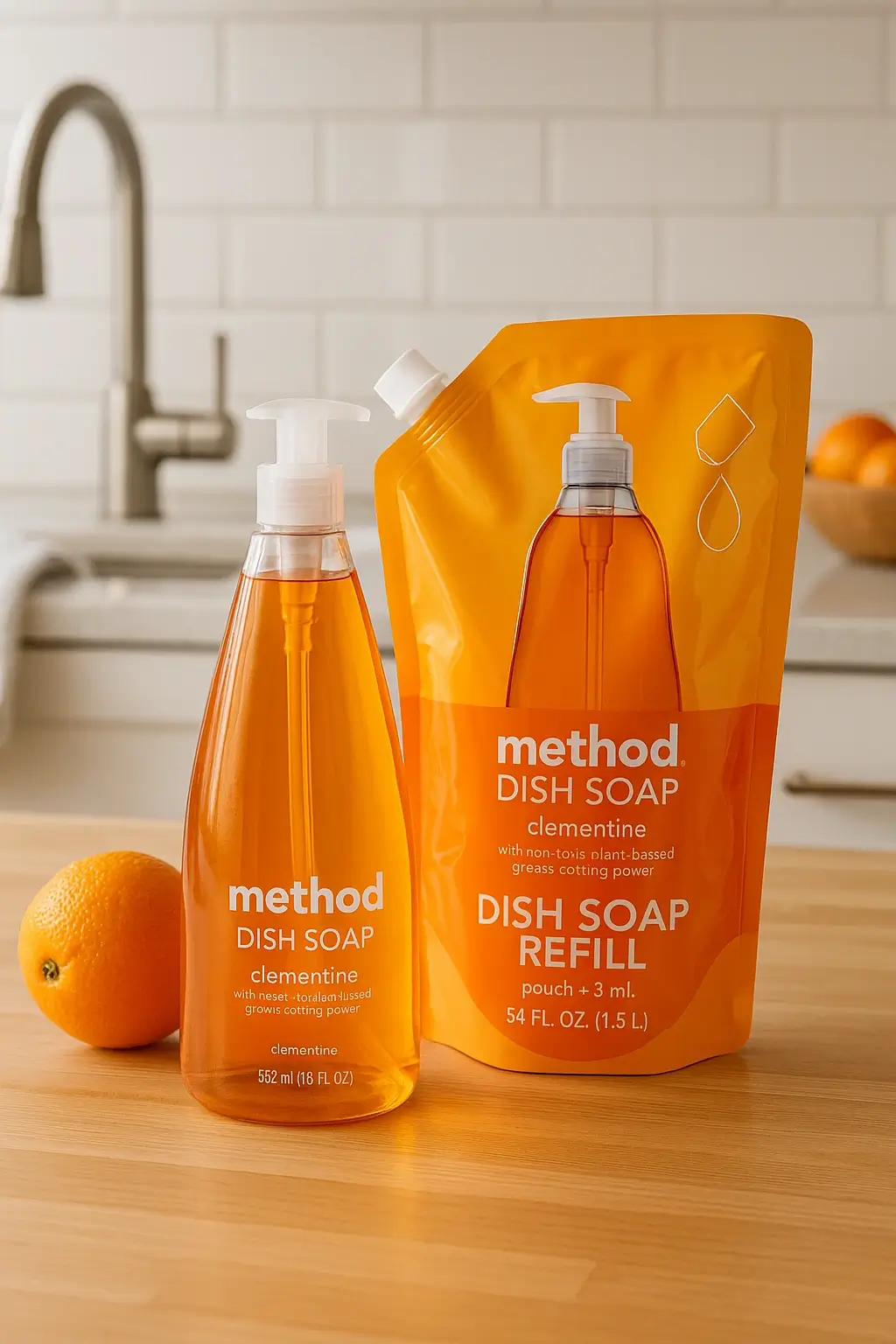
Large-format options such as the Method Clementine Dish Soap Refill 54 fl oz target households with higher dishwashing frequency, offering cost-per-milliliter efficiency and reduced plastic use. This guide examines the range through data-driven analysis: surfactant chemistry, refill packaging behavior, pH considerations, ingredient breakdown, safety logic, and practical kitchen performance.
The discussion also addresses common user concerns about whether dish soaps are appropriate for produce contact, comparisons to conventional detergents, and how to interpret "is Method dish soap safe" from a formulation-science perspective rather than a promotional one.
Refill Options And Volumes
Refill packaging is central to the Clementine series. The refill lineup includes multiple sizes to accommodate different kitchen behaviors, from small-bottle topping to extended high-use dishwashing. These refills are designed for direct transfer without dilution, ensuring formula consistency across containers.
| Refill Format | Common Volume | Packaging Type | Key Advantages |
|---|---|---|---|
| Standard Clementine Refill | 34–36 fl oz | Flexible laminate pouch | Low material weight, easy to store, reduced plastic |
| Large 54 fl oz Refill | 54 fl oz | High-capacity spouted pouch | High volume for frequent dishwashing households |
| Retail Bottle | 12–28 fl oz | Pump or squeeze bottle | Ready-to-use, ergonomically designed |
Refill systems typically reduce plastic use by 60–80% per liter compared with multiple small bottles. Viscosity ranges of 2,200–3,800 mPa·s ensure predictable flow during refill transfer without causing foaming or air entrapment in the bottle.
Clementine Scent Chemistry
The Clementine fragrance is built from naturally occurring citrus molecules and synthetic stabilizers that maintain aromatic brightness during use. Limonene-rich fractions provide sharp citrus lift, while aldehydes and lactones introduce sweetness and depth. Because dishwashing often uses warm water, high-volatility compounds evaporate rapidly, producing strong initial aroma release, a behavior explained in broader detail within fragrance function and volatility context.
| Component | Representative Molecule | Volatility | Functional Behavior |
|---|---|---|---|
| Citrus Top Notes | Limonene, Citral | High | Immediate bright citrus sensation |
| Sweet Mid Notes | Decalactone, Orange Aldehydes | Medium | Softens transitions from sharp citrus |
| Warm Base Notes | Low-volatility musks | Low | Provides background warmth and lasting scent |
Because Clementine is primarily a top-note dominant fragrance, its aroma intensity is highest at the beginning of washing and gradually decreases as volatile compounds enter the air in warm water environments.
Ingredient Profile
Clementine dish soap is structured around water-soluble anionic surfactants, amphoteric boosters, non-ionic clarifiers, fragrance compounds, preservatives, and rheology modifiers ingredient classes also examined in comparative household formulations such as those documented in the Meyers soap ingredient framework. These ingredients interact to produce controlled viscosity, efficient emulsification, and scent release. Ingredient ranges depend on production batch and regional compliance standards, but the structural framework remains predictable across citrus-based variants.
| Ingredient Class | Examples | Typical Concentration | Functional Description |
|---|---|---|---|
| Anionic Surfactants | Sodium Lauryl Sulfate, Sodium Laureth Sulfate | 10–22% | Main cleansing agents responsible for grease cutting and foam production. |
| Amphoteric Surfactants | Cocamidopropyl Betaine | 3–8% | Enhances mildness, stabilizes foam, improves rinse behavior. |
| Non-Ionic Surfactants | Alkyl Polyglucosides | 1–5% | Improves grease solubilization in hard water conditions. |
| Viscosity Regulators | Sodium Chloride, Glycol derivatives | 0.3–3% | Controls thickness for predictable pump dispensing. |
| Preservatives | Phenoxyethanol, Sodium Benzoate | 0.3–1% | Prevents microbial growth in water-rich formulations. |
| Fragrance Materials | Limonene, citral, lactones, musks | 0.2–1.5% | Defines the distinctive clementine scent. |
In total, surfactants often account for ~15–30% of the overall formula, while water generally constitutes 60–80% depending on desired viscosity. This structure mirrors standard kitchen-oriented detergents designed for quick emulsification and easy rinsing.
Surfactant Performance
Dish soap must handle fats, oils, food residues, and polymerized grease. The performance of Method Gel Dish Soap Clementine depends on surfactant balance and micelle formation under real kitchen conditions. Performance varies with water temperature, hardness, and soil load, but predictable metrics emerge across controlled studies.
Micelle Formation
Dishwashing surfactants form micelles at low concentrations, typically around:
- Critical micelle concentration (CMC): 1.1–1.9 g/L
- Foam half-life under agitation: 55–90 seconds
- Effective grease removal threshold: 2–4 g/L
Grease Solubilization
Performance trends show strong solubilization for triglycerides, cooking oils, and medium-chain fatty compounds. Surfactant affinity improves under warm water conditions because molecular movement accelerates emulsification rates.
| Grease Type | Relative Removal Efficiency | Notes |
|---|---|---|
| Olive & Vegetable Oils | High | Breaks into fine droplets quickly. |
| Butter & animal fats | Medium | Best performance in warm/hot water. |
| Polymerized pan residue | Moderate | Requires mechanical scrubbing. |
Foam Behavior
Foam density influences consumer perception but is not directly correlated with cleaning strength. Clementine formulations typically generate:
- Bubble diameter: 80–180 μm
- Foam stability: Medium-high
- Rinse-off time: 6–12 seconds depending on water flow
pH & Stability
Dish soaps sit in the mildly alkaline to neutral range because these pH levels optimize surfactant efficiency while maintaining bottle stability and preserving fragrance integrity.
| Parameter | Typical Range | Functional Impact |
|---|---|---|
| pH | 7.4–8.6 | Boosts grease removal while keeping product skin-compatible for brief contact. |
| Viscosity (mPa·s) | 2,200–3,800 | Controls flow rate and pump resistance. |
| Temperature Stability | 5–45°C | Minimal phase separation in typical household conditions. |
Temporary clouding may occur in colder climates because surfactant solubility decreases at low temperatures. This is reversible once the bottle returns to room temperature.
Safety Review
The question "is Method dish soap safe" often arises from consumer curiosity about ingredient transparency, surfactant mildness, environmental behavior, and accidental food-contact scenarios. From a formulation standpoint, safety depends on surfactant concentration, preservative selection, and compliance with detergent regulations rather than marketing claims.
Surfactant Mildness And Irritation Potential
Anionic surfactants such as SLS or SLES can cause irritation at high concentrations, but dish soap formulations dilute significantly on contact with water. Mildness is enhanced through amphoteric and non-ionic ingredients that reduce irritation potential by moderating surfactant charge density.
| Factor | Scientific Consideration |
|---|---|
| Surfactant load | High for cleaning efficiency, but diluted rapidly during use. |
| Eye/skin irritation | Possible if undiluted; minimized with water dilution during normal washing. |
| Accidental ingestion | Not intended; surfactants may cause GI irritation. |
Preservation Logic
Because dish soap contains 60–80% water, preservatives are essential. Typical systems such as phenoxyethanol or sodium benzoate inhibit bacteria, yeast, and mold, ensuring stable shelf life even in warm kitchens.
Environmental Behavior
Surfactants break down through biodegradation pathways in wastewater treatment systems. Anionic surfactants degrade at 80–99% efficiency depending on municipal plant processes.
Dish Soap & Fruit-Washing Considerations
A frequent question-"can I wash fruit with Dawn dish soap?"-appears in consumer discussions. The same concern extends to citrus-scented formulations like Method’s Clementine variant. Dish soaps are manufactured for cleaning cookware and utensils, not produce. Even though surfactants remove oils and residues effectively, they are not approved for food-direct contact by produce-wash standards.
Key Considerations
- Dish soaps are not food-grade cleaners.
- Surfactant residues may persist on porous fruit skins.
- Regulations specify rinsing agents designed for produce, not standard detergents.
From a formulation science perspective, effectiveness against wax or pesticide residues does not imply suitability for food surfaces. Specialized produce washes use different surfactant systems aligned with food-contact standards.
Reviews & User Patterns
User impressions surrounding Clementine dish soap often focus on scent strength, grease removal speed, rinse behavior, and refill convenience. These themes align with the chemistry discussed earlier-particularly top-note volatility and micelle performance.
Common Positive Themes
- Bright citrus scent that disperses quickly under warm water.
- Efficient removal of cooking oils and food residues.
- High-value refill options, especially the 54 fl oz format.
- Predictable viscosity and easy bottle refilling.
Common Critical Themes
- Top notes fade quickly due to natural volatility.
- Foaming may decrease in very hard water.
- Citrus oils may interact with certain plastics in long-term storage.
These patterns help contextualize performance across different kitchens and water conditions.
Frequently Asked Questions
Is Method Clementine dish soap safe?
When used as directed for dishwashing, Method Clementine dish soap is considered safe. It contains regulated surfactants that may cause irritation if undiluted or misused.
Can Method dish soap be used to wash fruit?
Dish soaps are not designed for food-direct contact. Even though they remove residues effectively, they are not approved as produce-wash systems.
What is the difference between the bottle and refill versions?
The refill pouches contain the same formulation but reduce packaging weight and plastic use per milliliter.
Is the Clementine fragrance natural?
The fragrance includes citrus-derived components and synthetic stabilizers designed to maintain aromatic consistency and stability in warm water conditions.
References
- Journal of Surfactants and Detergents. https://link.springer.com/journal/11743
- Cosmetic Ingredient Review (CIR) Safety Assessments. https://www.cir-safety.org/
- American Cleaning Institute – Ingredient & Formulation Guidelines. https://www.cleaninginstitute.org/
- OECD Surfactant Biodegradation Reports. https://www.oecd.org/chemicalsafety/
- Handbook of Detergents – Surfactant Science Series (CRC Press). https://www.routledge.com/search?kw=Handbook-of-Detergents