Ingredient Definition
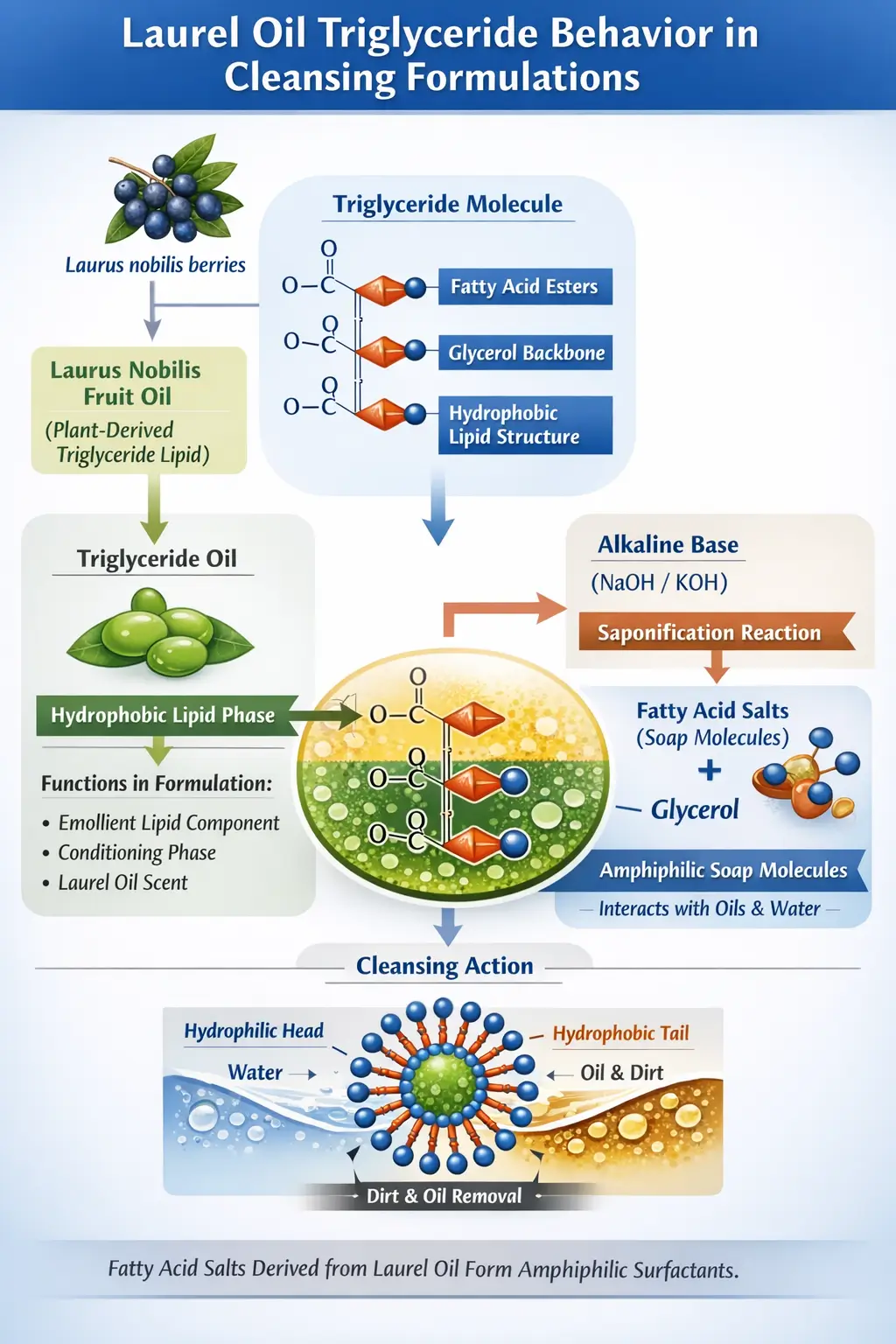
Laurel oil is a plant derived lipid obtained from the berries of Laurus nobilis, a botanical species commonly associated with aromatic culinary leaves but also valued in cleansing formulations. In cosmetic ingredient terminology it is typically declared as Laurus Nobilis Fruit Oil. Within formulation chemistry it is classified as a triglyceride based vegetable oil composed primarily of fatty acid esters bound to glycerol.
In cleansing systems such as laurel oil soap, liquid cleanser bases, or certain traditional shampoo preparations, the oil functions as a lipid precursor that can be chemically transformed into soap salts or incorporated as a conditioning lipid phase. When converted through alkaline saponification, the triglyceride molecules generate fatty acid salts that participate in surfactant activity. When left unsaponified, the oil behaves as a hydrophobic component contributing to emollient characteristics and fragrance nuances associated with laurel oil smell and laurel oil scent.
This page belongs to the CleanFormulation Ingredient Library, a research project examining how ingredients behave inside real cleansing formulations rather than evaluating products or providing dermatological recommendations.
Quick Facts
| Property | Description |
|---|---|
| Ingredient Type | Plant derived vegetable oil |
| INCI Name | Laurus Nobilis Fruit Oil |
| Chemical Class | Triglyceride lipid composed of fatty acid esters and glycerol |
| Functional Role | Lipid precursor for soap salts, aromatic lipid phase, structural contributor in traditional soap systems |
| Ionic Class | Non ionic lipid prior to saponification |
| Typical Use Context | Traditional bar soap systems, specialty liquid cleansers, heritage style shampoo formulations |
Ingredient Interaction Logic
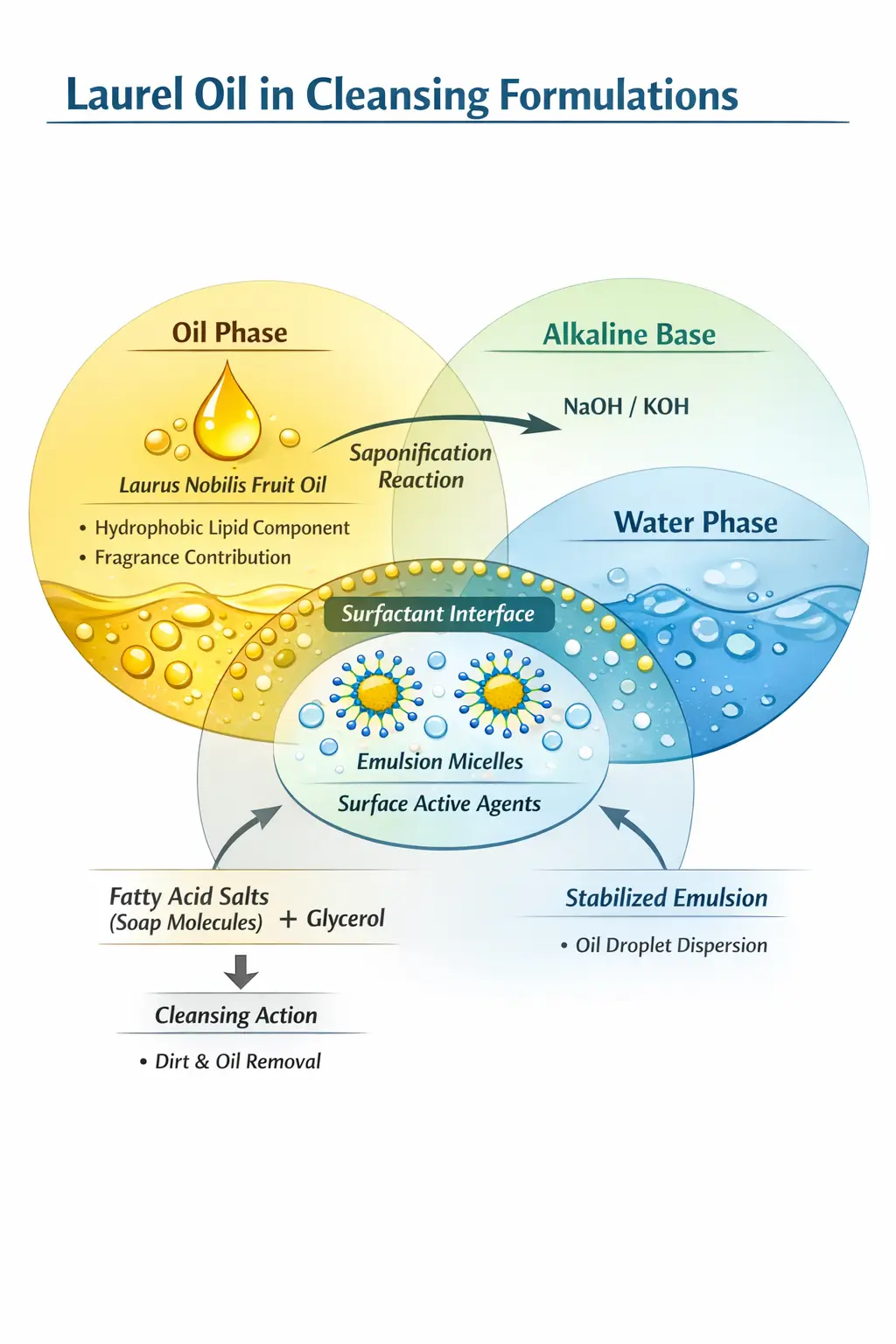
Within cleansing formulations laurel oil rarely acts alone. Its behavior is strongly shaped by interactions with other formulation components. The most important interaction occurs with alkaline bases such as sodium hydroxide or potassium hydroxide during soap production. These compounds initiate the hydrolysis reaction that converts triglycerides into fatty acid salts.
Water plays a second essential role by acting as the reaction medium in which the saponification process occurs. The oil phase initially exists as dispersed lipid droplets within the aqueous phase. As the reaction progresses, amphiphilic soap molecules form and begin organizing into micellar structures capable of interacting with both hydrophobic soils and water.
In liquid cleansing systems the oil may also interact with surfactants such as sulfate based or amphoteric detergents. In this context the oil droplets are stabilized by emulsifiers or surfactant structures that prevent separation of the lipid phase. Humectants such as glycerin influence the viscosity and water binding characteristics of the system, indirectly affecting how dispersed oils behave during washing.
Fragrance materials and essential oil components can further modify the sensory characteristics of the formulation. Because laurel oil already contains aromatic molecules, its presence may influence how additional fragrance ingredients are perceived in the finished cleansing system.
Why This Ingredient Appears on Labels
Consumers frequently encounter laurel oil in ingredient lists associated with traditional soap production, particularly formulations historically connected to Mediterranean cleansing practices. When listed on product labels, the ingredient generally indicates the presence of Laurus nobilis fruit oil either as a raw lipid input or as a partially converted component within a soap matrix.
In the case of laurel oil soap, the oil serves as a starting material that reacts with alkaline compounds during the saponification process. The resulting fatty acid salts contribute to cleansing behavior while residual oil fractions can remain within the finished bar. These residual components may influence sensory perception such as the characteristic laurel oil smell or laurel oil scent that persists after curing.
In liquid formulations such as laurel oil cleanser bases or certain niche shampoo preparations, the oil may appear on labels because it is blended into the formulation as a lipid additive rather than fully converted into soap salts. In this configuration it behaves as a dispersed oil phase interacting with surfactant systems, emulsifiers, and fragrance components.
Label appearance therefore reflects formulation architecture rather than a single functional meaning. The same ingredient can serve as a reactive soap precursor in one product type and as a lipid additive in another cleansing system.
Chemical Identity and Classification
Laurel oil used in cleansing formulations is identified in cosmetic ingredient nomenclature as Laurus Nobilis Fruit Oil. It is extracted from the berries of the evergreen tree Laurus nobilis, a species native to the Mediterranean basin. From a formulation chemistry perspective, the ingredient belongs to the class of vegetable triglyceride oils. These oils are composed of glycerol molecules esterified with fatty acids of varying chain lengths.
The fatty acid composition of laurel oil differs from many commonly used cosmetic oils because it contains a relatively high proportion of medium chain fatty acids in addition to longer chain components. Lauric acid, oleic acid, palmitic acid and linoleic acid are frequently identified in analytical profiles. This distribution of fatty acids explains why laurel oil behaves differently from oils such as olive oil when incorporated into soap systems.
Prior to chemical conversion the oil is classified as a non ionic lipid. Triglyceride molecules contain no permanent charge and therefore do not behave as surfactants on their own. However, during alkaline saponification the ester bonds linking fatty acids to glycerol are cleaved. The liberated fatty acids react with alkali metals such as sodium or potassium to form fatty acid salts. These salts represent the true cleansing agents within traditional soap structures.
Because of this transformation pathway, laurel oil functions less as a finished surfactant and more as a chemical precursor that becomes part of the surfactant system once converted inside the formulation process.
Functional Role in Soap Systems
The functional behavior of laurel oil in cleansing formulations depends strongly on whether the oil remains intact or undergoes saponification. In traditional bar soap production the triglyceride molecules are exposed to alkaline conditions that break the ester bonds connecting fatty acids to glycerol. The resulting fatty acid salts form the primary cleansing matrix of the finished soap.
When laurel oil participates in this conversion, the fatty acid profile influences how the soap performs. Lauric acid derivatives contribute to rapid foam formation and efficient interaction with oils present on surfaces. Oleic acid derivatives introduce a softer structural character within the soap matrix. The balance between these fatty acid salts determines the resulting lather density, foam persistence and hardness of the cured bar.
In formulations where a portion of the oil remains unsaponified, the lipid phase can influence the tactile perception of the finished product. Residual oil droplets can interact with surfactant micelles during washing, modifying the feel of the foam and altering how the cleansing system spreads across surfaces. This behavior is sometimes observed in formulations marketed as laurel oil cleanser systems where the oil is retained in partial form rather than fully converted.
The aromatic fraction of the oil also contributes to the distinctive sensory profile associated with laurel oil smell and laurel oil scent. Unlike synthetic fragrance ingredients, this aroma originates from naturally occurring volatile compounds present within the botanical extract.
Phase Behavior in Cleansing Formulations
The phase behavior of laurel oil is typical of triglyceride based vegetable oils. At room temperature the oil forms a hydrophobic liquid phase that does not naturally mix with water. When added to aqueous formulations it initially separates into droplets unless an emulsification mechanism is introduced.
During soap production the alkaline reaction alters this phase behavior. As triglycerides are converted into fatty acid salts the resulting molecules possess both hydrophilic and hydrophobic regions. These amphiphilic molecules are capable of assembling into micelles, structures that allow oils and water to coexist within a stable cleansing system.
Temperature also influences the physical behavior of laurel oil. Elevated temperatures during soap making increase molecular mobility and improve mixing between the oil phase and the aqueous alkaline phase. As the mixture cools and the soap matrix begins to solidify, crystalline structures develop within the fatty acid salt network. These crystalline domains help determine the hardness and durability of the finished soap bar.
In liquid formulations such as laurel oil shampoo bases the oil remains as a dispersed lipid phase stabilized by surfactant systems. Stability depends on droplet size, emulsifier presence and the viscosity of the surrounding aqueous phase.
Regulatory Context
In cosmetic ingredient labeling within the European Union, laurel oil is declared using the International Nomenclature of Cosmetic Ingredients system under the name Laurus Nobilis Fruit Oil. The declaration requirement arises from the EU Cosmetic Regulation framework, which mandates standardized ingredient naming to ensure transparency and consistent labeling across products sold in the European market.
Under Regulation EC No 1223 2009 cosmetic manufacturers must list ingredients in descending order of concentration within the product formulation at the time of incorporation. Vegetable oils such as laurel oil therefore appear within ingredient lists according to their relative formulation quantity.
Regulatory databases such as CosIng maintain ingredient identity records describing classification and cosmetic functions associated with raw materials used in cosmetic formulations. These records assist manufacturers in aligning ingredient declarations with recognized nomenclature systems.
Outside the European Union, labeling frameworks may differ slightly depending on national regulatory systems. However the INCI naming convention remains widely adopted internationally, which helps maintain consistency for ingredients appearing in cleansing products such as soap, liquid cleanser systems or shampoo formulations.
Common Misunderstanding
A frequent misunderstanding arises from the assumption that laurel oil itself functions as the cleansing agent in soap. In reality, raw vegetable oils do not behave as surfactants. The cleansing capability associated with traditional soaps emerges only after triglyceride oils undergo alkaline hydrolysis during the saponification process.
In other words, the cleaning action attributed to laurel oil soap does not originate from the oil molecules directly. Instead it comes from the fatty acid salts formed when the oil reacts with alkaline compounds during manufacturing. These salts possess amphiphilic properties that allow them to interact with oils and water simultaneously.
Another misconception relates to fragrance perception. Some consumers interpret the distinctive aroma of traditional formulations as added fragrance. In many cases the characteristic laurel oil scent originates from naturally occurring volatile compounds within the oil itself rather than from externally added fragrance ingredients.
Structural Limitations in Formulation
Despite its historical association with soap production, laurel oil presents several formulation constraints that must be considered during product development. One limitation arises from oxidative stability. Like many vegetable oils containing unsaturated fatty acids, laurel oil can gradually oxidize when exposed to oxygen, heat or light. This process may influence odor stability or alter the sensory profile of the finished formulation over extended storage periods.
Another limitation relates to formulation balance in soap systems. Because the oil contains a mixture of fatty acids, it rarely functions as a complete standalone oil in modern soap formulations. Formulators often combine multiple oils with different fatty acid profiles in order to achieve a balanced structure that provides adequate hardness, lather formation and curing behavior.
In liquid cleansing systems the hydrophobic nature of the oil also creates formulation challenges. Without appropriate emulsification or surfactant stabilization the oil can separate from aqueous phases. This separation can lead to visual instability or uneven distribution within the product matrix.
These limitations do not prevent the ingredient from being used in cleansing formulations, but they illustrate why formulation architecture must consider the broader ingredient system rather than focusing on a single oil component.
Formulation References Using This Ingredient
Summary of Findings
Laurel oil is a triglyceride based vegetable oil derived from the berries of Laurus nobilis. Within cleansing formulations it serves primarily as a lipid precursor capable of forming soap salts when exposed to alkaline conditions. The fatty acid profile of the oil influences how the resulting soap behaves in terms of foam formation, structural characteristics and sensory perception.
- Chemical Classification: Laurel oil is a triglyceride vegetable oil composed of fatty acids linked to glycerol.
- Formulation Role: It functions mainly as a precursor for fatty acid salts in soap production or as a dispersed lipid phase in certain cleanser or shampoo formulations.
- Interaction Logic: The oil reacts with alkaline bases during saponification and interacts with surfactant systems when used in liquid cleansing formulations.
- Phase Behavior: In its raw state it forms a hydrophobic oil phase that requires emulsification or chemical conversion to integrate into aqueous cleansing systems.
- System Boundaries: Oxidative sensitivity and formulation balance considerations influence how the oil is incorporated within complete cleansing formulations.