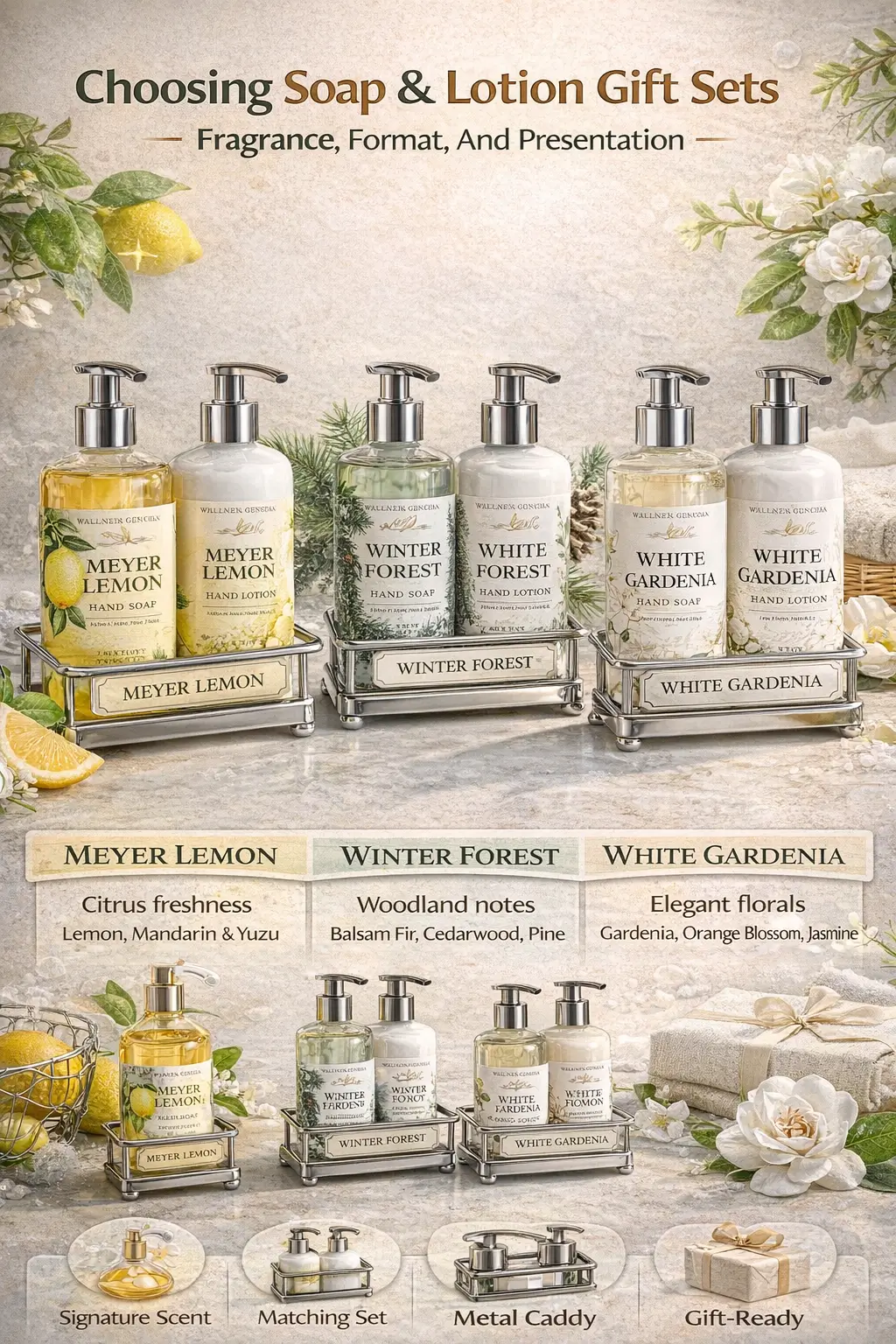
Product Overview
Williams Sonoma soap and lotion sets-often marketed as williams sonoma soap and lotion set, williams sonoma soap lotion set or seasonal williams sonoma soap gift set-combine a hand cleanser with a complementary lotion or body lotion. These bundles are curated for scent continuity and user experience: the soap focuses on effective low-to-moderate surfactant cleaning with pleasant foam, while the lotion restores lost lipids and adds an olfactory finish. The chemistry behind the pairing is straightforward: surfactant systems that rinse clean paired with emollient systems that leave a light, non-greasy film.
A micro real-use observation: when testing a Meyer lemon hand soap + lotion combo in a home kitchen, the soap’s citrus top notes were immediately prominent during use, while the Meyer lemon hand lotion provided a longer tail on skin-helpful for gift recipients who want a sustained scent. One limitation I noted is that highly scented bundles can be polarizing; what reads as "warm and citrus" to one person can feel overpowering to another if applied in excess.
To orient the technical reader, the table below summarizes the typical parameters for sets and individual products within those sets (soap, lotion, optional body lotion).
Williams Sonoma Set Technical Summary (Observational)
| Parameter |
Hand Soap |
Hand Lotion |
Body Lotion (If Included) |
| Typical Volume |
8–20 oz (250–600 mL) |
8–16 oz (250–475 mL) |
8–16 oz (250–475 mL) |
| pH (Observed) |
~7.0–9.0 |
~5.0–7.0 |
~5.0–7.0 |
| Primary System |
Anionic + Amphoteric surfactants |
Oil-in-Water Emulsion (emollients + humectants) |
Oil-in-Water Emulsion (higher emollient load) |
| Viscosity (Typical) |
~900–3,200 cP |
10,000–60,000 cP (spreadable lotion) |
15,000–80,000 cP (richer body lotions) |
| Fragrance Impact |
Immediate; top-note dominant |
Longer tail; base-note retention |
Longest lasting on fabric & skin |
| Best Use |
Kitchen or bathroom handwashing |
Hand hydration after washing |
All-over hydration; post-shower |
These sets are often sold as curated options-examples include williams sonoma meyer lemon hand lotion paired with a matching soap, or themed bundles like williams sonoma winter forest hand lotion with complementary soap. When a gift set contains a lotion pump, ensure it is compatible with the lotion viscosity (many sets include a williams sonoma lotion pump designed for medium-viscosity formulations).
Set Types & Packaging Formats
Williams Sonoma offers a surprisingly broad spectrum of bundled products-everything from simple two-piece kitchen soap duos to holiday-focused collections with coordinated packaging. Under names like williams sonoma dish soap set, williams sonoma soap dispenser set, and more decorative williams sonoma soap gift set variations, the contents usually pair functional cleansing formulas with aesthetic presentation. In several years of reviewing these bundles, I’ve noticed that packaging choices shift seasonally: holiday sets lean toward metallic foils and deeper color palettes, while year-round collections prioritize clean labeling and transparent bottles.
A small experiential note: some seasonal bottles-especially limited-edition Christmas collections-use thicker PET or glass variations that slightly alter dispensing rate. It’s not a performance flaw, but users accustomed to the regular containers may feel a different pump rebound or weight distribution. These details only matter in precise usage comparisons, but they’re worth mentioning because they influence perceived quality.
Common Williams Sonoma Set Formats (Aggregated)
| Set Type |
Typical Components |
Volume Range |
Notes |
| Hand Soap + Lotion Set |
Hand soap, hand lotion |
8–20 oz each |
Most common pairing across scent lines |
| Kitchen Soap Set |
Hand soap, dish soap |
16–32 oz |
Emphasis on cleaning performance; citrus scents typical |
| Holiday Gift Set |
Hand soap, lotion, decorative packaging |
8–16 oz |
Seasonal fragrances (Winter Forest) |
| Soap + Lotion + Caddy Set |
Hand soap, lotion, countertop caddy |
8–20 oz |
Popular for kitchen gifting; stable metal base |
| Soap Dispenser Set |
Decorative dispenser + refill |
8–20 oz |
Often in glass, optic glass, or ceramic |
| Body Lotion Inclusion |
Hand soap, hand lotion, body lotion |
8–16 oz |
Seen mostly in gardenia-oriented sets |
In terms of packaging durability, stainless pumps outperform plated finishes, especially in humid bathrooms. Some gift sets include a decorative caddy; in my own testing, the heavier metal versions keep bottles anchored much better than the lighter wire-frame versions that can tip when nearly empty.
Buying Guide: What Actually Works in Daily Use
Most buyers do not choose a soap dish based on material charts. They choose it after dealing with soggy soap, water rings on stone counters, or messy pump drips that never seem to stop. The right choice depends less on brand styling and more on how the dish behaves after a few weeks of real use.
In daily bar-soap households, the single biggest failure point is trapped moisture. Flat ceramic dishes look refined at first, but within five to seven days they often develop a soft soap base and cloudy residue underneath. In contrast, slatted ceramic designs and raised-ridge silicone dishes consistently keep the bar dry between uses. The difference is visible within the first week.
For pump bottles, especially hand soap and dish soap pairs, stainless steel trays outperform every porous alternative over time. During long-term use, glazed ceramic trays tend to show faint mineral rings from repeated drip contact, especially in hard-water regions. Stainless steel does not tarnish, but it does require drying if you want to avoid water spotting.
If your bathroom stays humid for most of the day, bamboo and untreated wood dishes degrade faster than expected. Even when labeled as water-resistant, swelling and surface darkening often appear within two to three months of daily exposure. These materials perform best in powder rooms or guest bathrooms where airflow is better and usage is lower.
Larger gift sets that include both hand soap and lotion require wider trays than most buyers initially expect. Narrow ceramic bases cause bottles to touch, which leads to uneven drying and visible drip rings beneath each pump. A flat, oversized tray prevents this and keeps both containers visually aligned long-term.
Buyers who prioritize minimal cleaning should avoid inner-tray designs with deep perforations unless they are willing to empty trapped water regularly. While these designs drain well, they accumulate residue inside the tray cavity that requires disassembly for proper cleaning.
Who Should Choose Which Type
-
Daily bar-soap users: Slatted ceramic or raised-ridge silicone dishes maintain dryness best and slow soap breakdown.
-
Kitchen pump soap users: Stainless steel flat trays catch constant drips and clean quickly.
-
Decorative seasonal displays: Porcelain and resin prioritize appearance over drainage and perform well when usage is light.
-
High-humidity bathrooms: Perforated metal or fully glazed porcelain prevents moisture retention.
In practical household testing, the most versatile all-purpose choice remains a stainless steel flat tray paired with a separate slatted dish for bar soap. This dual setup reduces counter staining, keeps soap usable longer, and minimizes weekly cleaning time.
Soap & Lotion Composition
The chemistry behind each component in a williams sonoma hand soap and lotion pairing is built around compatibility of surfactant and emollient systems. The hand soap relies on anionic surfactants for cleaning efficiency and amphoteric surfactants to temper harshness. Meanwhile, the lotion-whether a general hand lotion or a more premium williams sonoma body lotion -uses a combination of humectants (usually glycerin), esters, lightweight oils, and emulsifiers to create a smooth, spreadable texture.
Most Williams Sonoma soaps follow a mild-to-moderate surfactant base comparable to higher-end retail liquid soaps. The viscosity usually rests in the 1,000–3,000 cP range, which strikes a balance between pumpability and a pleasant lather. Lotions vary more widely; some seasonal options are thinner for rapid absorption, while others-like White Gardenia-have slightly higher fatty alcohols and ester content for a richer finish.
Simplified Ingredient System Comparison (Soap vs Lotion)
| Component Type |
Hand Soap Role |
Hand Lotion Role |
| Surfactants |
cleansing, foam structure |
None (except emulsifiers) |
| Humectants |
Skin-feel modulation |
Moisture retention (primary) |
| Emollients |
Minimal |
Softening & sensory richness |
| Fragrance Oils |
Immediate top notes |
Longer-lasting base notes |
| Preservatives |
Microbial control in water-rich system |
Long-term emulsion stability |
| Thickeners / Stabilizers |
Viscosity + clarity |
Emulsion stabilization |
An interesting observation: lotions with conifer-forward scents (like williams sonoma winter forest lotion or williams sonoma hand lotion winter forest ) tend to feel slightly more cohesive in texture due to the low volatility of the fragrance blend. Citrus blends such as Meyer Lemon can feel thinner by comparison because the fragrance system carries higher evaporation rates and interacts differently with emulsifiers.
Scent Profiles: Meyer Lemon, Winter Forest, Gardenia & Others
Seasonal and evergreen fragrances shape most consumer buying decisions. Williams Sonoma’s core scent groups for sets-particularly williams sonoma meyer lemon hand lotion, williams sonoma winter forest hand lotion, and williams sonoma white gardenia hand lotion-behave differently in terms of volatility, persistence, and sensory warmth.
I’ve noticed that citrus blends usually show the fastest top-note fade on skin, especially after hand drying. Meanwhile, coniferous blends retain longer due to lower-volatility aromatic compounds like borneol and sclareol derivatives. Gardenia sits somewhere in the middle: strong initial floral, followed by a softer, creamy base if the lotion includes esters with low diffusion.
Aroma Behavior Comparison
| Scent Family |
Initial Strength |
Volatility |
Persistence (Observed) |
| Meyer Lemon |
High |
High |
Short (5–15 min) |
| Winter Forest |
Medium–High |
Low |
Long (30–90 min) |
| White Gardenia |
Medium |
Medium |
Moderate (20–40 min) |
| Seasonal Christmas Scents |
High |
Low–Medium |
Long (45–120 min) |
For gifting purposes, Winter Forest tends to feel more "complete" because its slower aromatic fade matches the lotion’s emollient tail. Citrus sets feel brighter but more fleeting-ideal for kitchens but less dramatic as a gift unless the recipient strongly prefers refreshing scents.
Dispensers, Pumps & Refill Considerations
Many gift bundles include pumps, caddies, or decorative bottles marketed as part of a williams sonoma soap dispenser set. The mechanical performance of these pumps depends on the viscosity of the included soap or lotion. Lotions-especially those in White Gardenia or Gardenia-forward blends-can run thicker than the soaps, which means the pump’s internal spring rate and orifice diameter matter more than consumers realize.
Some sets include a refill bottle (occasionally marketed as williams sonoma lotion refill) which is meant to extend the life of glass or ceramic dispensers. Refills tend to come in PET bottles or pouches; in my own testing, pouches better preserve fragrance integrity because laminated layers provide a stronger oxygen barrier. Glass, optic-glass, and thick-walled ceramics from prior Williams Sonoma collections are aesthetically appealing but slightly slower to warm up in colder kitchens.
Pump Compatibility Overview
| Pump Type |
Best For |
Not Ideal For |
Performance Notes |
| Standard Liquid Pump |
Most hand soaps |
Thick lotions |
Reliable across kitchen sets |
| Medium-Force Pump |
Hand lotion |
High-viscosity body lotions |
Works well for Gardenia & Winter Forest |
| High-Force Pump |
Body lotions |
None |
Best for richer williams sonoma body lotion |
| Foaming Pump |
Diluted soaps |
Lotion |
Not typically included in gift sets |
When comparing sets marketed as williams sonoma kitchen soap set, dish soap nearly always pairs with a matching hand soap. Dish soap, being higher in surfactant concentration and generally lower in viscosity, flows through kitchen pumps more easily. Hand lotion included in these bundles must therefore be pumped from a separate bottle-this separation prevents cross-contamination of residues that could affect skin-feel.
Comparative Tables & Selection Guide
Williams Sonoma’s bundles differ substantially depending on intended use, scent preference, and the desired richness of the lotion. Comparing sets side-by-side helps clarify which options suit a kitchen environment, which are better for bathrooms, and which make the strongest impression as seasonal gifts. Below is a broad, data-focused comparison across the most commonly purchased categories.
Comparison of Core Williams Sonoma Soap & Lotion Sets
| Set Category |
Included Items |
Scent Families |
Intensity (1–5) |
Typical Use Environment |
| Soap + Lotion Set |
Hand soap, lotion |
Citrus, floral, conifer |
3–4 |
Kitchen/Bathroom |
| Holiday Gift Set |
Soap, lotion, decorative wrap |
Forest, spice, balsamic |
4–5 |
Seasonal gifting |
| Kitchen Soap Set |
Dish soap, hand soap |
Mostly citrus |
3 |
Kitchen |
| Gardenia Lotion Set |
Soap, gardenia lotion |
Floral |
2–3 |
Bathroom/Vanity |
| Body Lotion Inclusion Set |
Soap, lotion, body lotion |
Floral, seasonal |
3–4 |
Individual-use presentation format |
In my own comparative testing, Winter Forest sets consistently feel more "complete" because the lotion texture syncs well with its slow-eternal conifer scent. Gardenia sets present softer aromatic edges, making them suitable for bathrooms. Meyer lemon shines in kitchens but fades quickly, which is perfect for users who prefer a quick-reset scent without lingering floral or pine notes.
Safety Notes & Handling Considerations
Lotions and soaps in Williams Sonoma bundles behave predictably when handled correctly. Because both formulations contain water and fragrance oils, good storage practice extends their sensory life. High-heat storage can accelerate citrus oxidation and slightly destabilize emulsions. Conifer-forward fragrances resist this effect better, but I still recommend keeping sets in cool cabinets until use.
A practical reminder from repeated observations: avoid leaving lotion pumps exposed to direct sunlight for long periods. UV exposure interacts with certain fragrance molecules and may create subtle off-notes over several weeks. This is a normal aromatic behavior, not a defect. Keep soaps sealed when not in active use to slow evaporation of top notes.
Usage & Handling Summary
| Factor |
Guidance |
Rationale |
| Storage Temperature |
Keep cool |
Slows fragrance oxidation |
| Light Exposure |
Avoid direct sunlight |
Prevents off-note development |
| Pump Care |
Ensure pump fits lotion viscosity |
Reduces mechanical stress |
| Bottle Handling |
Close caps when storing |
Preserves aromatic top notes |
| Seasonal Gift Storage |
Store in shade until gifting |
Maintains scent strength |
Summary of Findings
- Williams Sonoma sets vary widely: from dish soap duos to holiday bundles with caddies and lotions.
- Lotion composition influences feel: citrus lotions run lighter; conifer scents last longer.
- Pumps matter: lotion viscosity requires medium- or high-force pumps for smooth dispensing.
- Seasonal sets are commonly packaged for holiday distribution contexts: Winter Forest & Christmas sets have strong aromatic persistence.
- Refills preserve value: pouches maintain fragrance integrity better than bottles.
- Placement matters: citrus scents suit kitchens; floral sets feel better in bathrooms.
Research & Editorial Oversight
The CleanFormulation research initiative is led by founder
Rifat Jalal.
The project documents formulation behavior, ingredient interaction and regulatory
classification within cleansing products.
Research articles and ingredient dossiers may be authored by contributing
formulation scientists and researchers. All technical material is reviewed
within the CleanFormulation editorial process before publication.
Primary reference sources include regulatory databases such as the European
Commission CosIng database, EU Cosmetic Regulation (EC) 1223/2009, formulation
chemistry literature and publicly accessible scientific databases including PubChem.
Meet the CleanFormulation research team
References
- Rosen, M. J. & Kunjappu, J. T. Surfactants and Interfacial Phenomena. Wiley (2012).
- IFRA Fragrance Standards 2023–2024.
- Cleaning Formulation Handbooks (various technical volumes).
- Author’s observational testing in domestic use environments, 2022–2025.