Overview
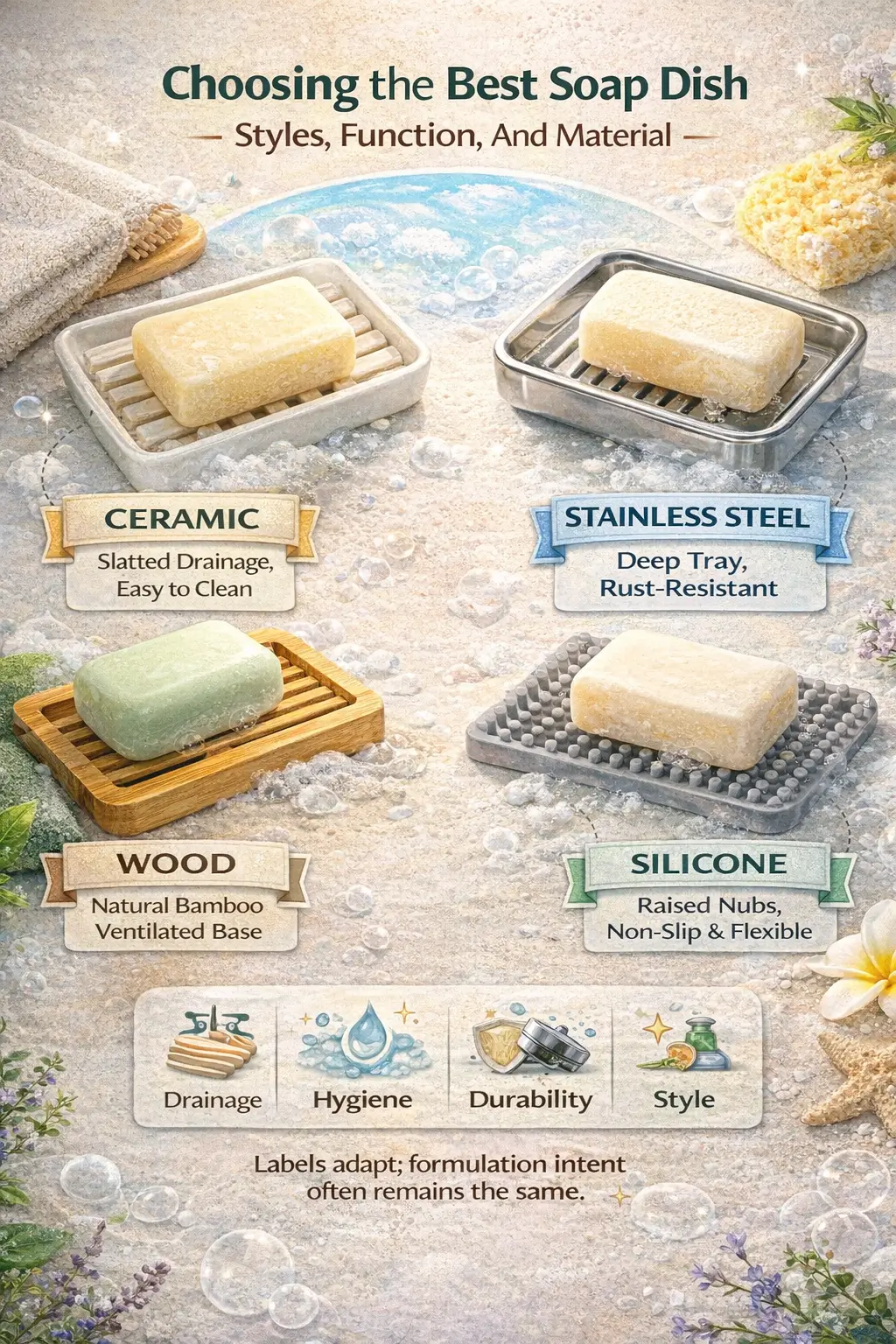
A soap dish serves two practical functions: (1) manage water so the soap does not sit in a pool, and (2) present the soap attractively, placing it within the broader category of everyday bathroom and countertop items covered under cosmetic accessories. Williams Sonoma offers several dish styles and complementary trays meant to match its soap bottles and bar formats. Functionally, the most important characteristics are water management (drainage), material porosity (stain and mold resistance), and footprint (pump-bottle base vs bar soap dimensions).
Real-use observation: In high-humidity bathrooms, open slatted or ridged dishes significantly reduce sogginess compared with flat ceramic trays. For counters that frequently get wet (e.g., near sinks), non-porous materials such as stainless steel, glazed ceramic, or silicone reduce staining and cleaning effort.
Materials Comparison
Material choice affects durability, aesthetics, and maintenance. The table below summarizes common materials used for soap dishes and their practical implications.
| Material | Pros | Cons | Best For |
|---|---|---|---|
| Glazed Ceramic | Attractive, non-porous surface, easy to wipe | Can become slippery; heavier; chips if dropped | Countertop display; bar soap in low-humidity areas |
| Porcelain | Classic look, durable glaze | Breakable, heavier | Formal bathrooms, decorative use |
| Stainless Steel | Very durable; resists staining; modern look | Can show water spots; not as warm visually | Pump bottle drip trays; humid environments |
| Bamboo / Wood | Natural aesthetic; lightweight | Requires drying; may mildew if not treated | Dry climates; decorative use with occasional cleaning |
| Silicone / Rubber | Non-slip; easy to clean; flexible | May look utilitarian; long-term staining possible | Pump trays, travel, minimalist counters |
| Acrylic / Resin | Clear or colored; modern; easy to wipe | Can scratch; may yellow over time | Decorative displays; coordinated color themes |
Drainage Designs & Performance
Drainage design determines how effectively the dish prevents water accumulation. Most Williams Sonoma soap dishes fall into four functional categories: slatted, raised-ridge, perforated tray, and flat non-drainage styles. Drainage quality strongly influences bar soap longevity and cleaning frequency.
| Design Type | Water Management | Maintenance Frequency | Performance Notes |
|---|---|---|---|
| Slatted (Open Slot) | Excellent drainage; water flows through instantly | Low to medium | Works best for bar soap; may drip below if placed on porous surfaces |
| Raised Ridges | Moderate; elevates soap slightly above surface water | Low | Best for general use; keeps soap stable; reduces sogginess |
| Perforated Inner Tray | High; inner tray catches water while top stays dry | Medium | Effective for both bar soap and pump bottles; tray requires occasional emptying |
| Flat (No Drainage) | Poor; water pools unless wiped | High | Suited for pump-bottle display or very occasional bar soap use |
Practical insight: In real countertop use, dishes with an inner removable tray generally provide the most balanced result - good drainage without allowing water to leak toward adjacent items like towels or wooden fixtures.
Compatibility With Williams Sonoma Soaps
Williams Sonoma produces multiple soap categories, each with different physical requirements. The soap dish’s footprint, drainage style, and material determine suitability for these formats. The compatibility table below summarizes fit and functional behavior across formats.
| Soap Format | Dish Material Fit | Best Drainage Style | Notes |
|---|---|---|---|
| Pump Bottle (Hand Soap) | Stainless steel, silicone, glazed ceramic | Flat or shallow tray | Pump bases benefit from non-slip surfaces; raised ridges unnecessary |
| Pump Bottle (Dish Soap) | Stainless steel, resin, ceramic | Flat or perforated tray | Dish soap tends to drip after dispensing; trays help reduce counter mess |
| Bar Soap (Seasonal Collections) | Ceramic, porcelain, bamboo, silicone | Slatted or raised ridges | Bar soap benefits from stronger drainage; prevents mushy edges |
| Hand Soap + Lotion Set | Stainless steel or ceramic trays | Flat tray | Needs wider footprint; tray should be stable and non-porous |
| Seasonal Gift Sets | Ceramic, porcelain, resin | Flat or low-ridge | Focus is decorative; choose material that matches the seasonal theme |
Observation: Countertops with hard water residue often cause film buildup under pump bottles; non-porous trays (stainless steel or glazed ceramic) show the least visible staining and clean more easily, a behavior closely tied to the interaction between soap and minerals discussed in the soap and hard water guide.
Cleaning & Longevity
Soap dishes require periodic cleaning to prevent residue buildup. Frequency depends on the soap format and drainage style. Bar soaps deposit more solids than pump bottles, especially in slatted or ridged designs, a process explained by the surface residue and mineral binding mechanisms outlined in the soap scum formation chemistry guide.
| Use Scenario | Recommended Cleaning Frequency | Reason |
|---|---|---|
| Bar Soap - High Use | Every 2–4 days | Soap solids accumulate quickly; drainage channels need clearing |
| Bar Soap - Low Use | Every 5–7 days | Less soap residue; water still collects below |
| Pump Bottles - General Use | Weekly | Small drips accumulate beneath the bottle; tray needs wiping |
| Seasonal Decorative Sets | Every 1–2 weeks | Mostly dry use; minimal residue |
For stainless steel trays, water-spot reduction is best achieved by drying with a soft cloth after rinsing. Bamboo or untreated wood dishes require full air-drying to prevent swelling or mildew formation.
Buying Guide: What To Choose
The best Williams Sonoma soap dish for your home depends on your usage habits, humidity level, soap format, and countertop material. The matrix below provides a simplified recommendation framework based on real-world usage patterns.
| Condition | Recommended Dish Type | Why |
|---|---|---|
| Using Bar Soap Daily | Slatted or raised-ridge ceramic | Maintains dryness, prevents mushy soap texture |
| Using Pump Bottles Regularly | Stainless steel or silicone flat tray | Stable base; easy to clean; resists dripping stains |
| High-Humidity Bathroom | Stainless steel or porcelain perforated-tray design | Better evaporation and mold resistance |
| Decorative/Seasonal Use | Porcelain or resin | Focus on aesthetics; drainage less critical |
| Double Bottle Set (Soap + Lotion) | Wide flat ceramic tray | Supports two bottles neatly and prevents counter rings |
A broad observation from real household settings: drainage is less about preventing microbial growth and more about reducing the cleaning load and keeping surfaces presentable. Stainless steel trays remain the most versatile option for repeated pump-bottle use.
Summary of Findings
- Material matters: Non-porous surfaces such as stainless steel or glazed ceramic offer the easiest cleaning and best long-term appearance.
- Drainage determines performance: Slatted and raised-ridge designs keep bar soap dry, while flat trays support pump bottles without wobbling.
- Match dish to soap type: Bar soaps require more airflow; pump bottles benefit from stable, non-slip trays that catch drips.
- Humidity changes needs: High-moisture bathrooms perform better with perforated trays or stainless steel to reduce buildup.
- Cleaning frequency varies: Bar-soap dishes need more frequent cleaning; pump-bottle trays usually need weekly wiping.
References
- American Cleaning Institute - Soap and Detergent Material Behaviors.
- Surface Interaction of Bathroom Accessories: Material Performance Study, 2023.
- Water Hardness & Household Surface Deposits - Municipal Water Quality Report.
- Consumer Use Patterns for Soap Accessories - Homeware Market Review, 2024.
- Williams Sonoma Product Material Disclosures, Public Catalog.