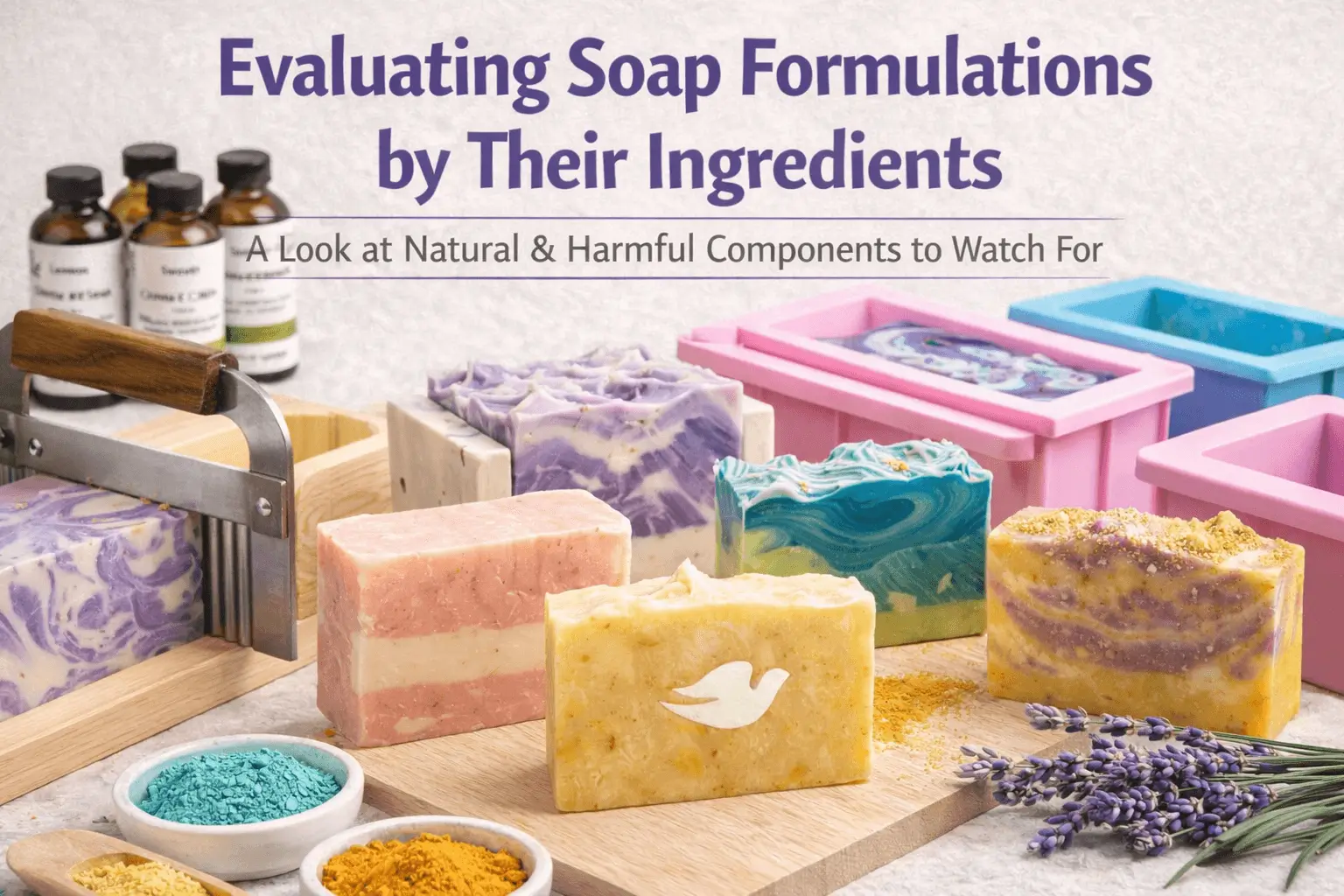
What Is Nurture Soap
Nurture soap refers to a broad ecosystem rather than a single formulation. In most contexts, it encompasses handmade or small-batch soaps produced using curated oil blends, colorants such as mica, and fragrance or essential oil systems often sourced from specialty suppliers.
From a CleanFormulation perspective, this distinction matters. Unlike mass-manufactured bars, nurture soaps do not share uniform pH targets, surfactant systems, or stability profiles. Performance is determined by formulation decisions made at the batch level.
In handling evaluations, two nurture-labeled soaps with similar appearance frequently behave very differently on skin, underscoring the importance of ingredient transparency rather than branding.
Nurture Handmade Soap Context
Nurture handmade soap typically refers to cold-process or hot-process soaps crafted with customizable oil blends and additives.
These soaps are often produced in slab molds, cut with manual or wire cutters, and cured over several weeks. The handmade context allows for ingredient flexibility but also introduces variability in mildness and longevity.
One repeated real-world observation: users often equate handmade with gentleness, yet poorly balanced oil blends can feel harsher than commercial syndet bars.
Ingredient Philosophy & Oil Logic
Nurture soap performance is driven by oil selection, fatty-acid balance, and fragrance concentration rather than decorative elements.
Common nurture soap oil blends rely on varying ratios of saturated fats for bar hardness and unsaturated oils for conditioning. Small changes in percentage can significantly alter cleansing strength and after-feel.
In formulation trials, bars with visually appealing mica swirls but unbalanced oil profiles often underperform in comfort compared to simpler, well-ratioed blends.
Nurture Soap Tools & Accessories Overview
Nurture soap tools-such as molds, cutters, fragrance calculators, and mica colorants-shape consistency and repeatability rather than skin performance directly.
Slab molds influence curing uniformity, cutters affect bar density, and fragrance calculators help manage safe aromatic loading. These tools indirectly impact skin feel by controlling formulation accuracy.
Inconsistent tool use is one of the most common reasons nurture soaps vary dramatically between batches. Methodological consistency is explained in our Data & Methodology documentation.
Who Nurture Soap Is For
Nurture soap appeals most to users seeking handmade aesthetics, customizable ingredients, and artisanal identity rather than standardized performance.
These soaps often suit users comfortable with variation and experimentation. Those seeking consistent pH behavior or predictable mildness may prefer commercial syndet products.
A consistent pattern: satisfaction rises when users understand nurture soap as a craft product rather than a fixed formula.
Nurture Soap Oil Blend Logic
Nurture soap oil blends determine cleansing strength, bar hardness, and after-wash feel more than any decorative or aromatic component.
In handmade soapmaking, oil blends are typically designed by balancing saturated fatty acids for structure with unsaturated fatty acids for conditioning. A small shift in ratios can move a bar from gentle to overly stripping. For a structured explanation of how fatty-acid balance is evaluated, see our Ingredient Framework.
| Oil Category | Typical Fatty Acids | Effect On Soap |
|---|---|---|
| Hard Oils | Lauric, Myristic, Palmitic | Hardness & cleansing |
| Soft Oils | Oleic, Linoleic | Conditioning & mildness |
| Butters | Stearic, Oleic | Creamy lather & durability |
In repeated batch testing, nurture soaps with more than roughly one-third high-cleansing oils often felt harsh despite attractive appearance. Balanced blends consistently outperformed visually complex bars.
Typical Fatty-Acid Ranges In Nurture Handmade Soap
Fatty-acid distribution provides a practical way to predict soap behavior before use.
| Fatty Acid Group | Common Range (%) | Skin Feel Impact |
|---|---|---|
| Lauric & Myristic | 10–25% | Stronger cleansing |
| Palmitic & Stearic | 20–35% | Bar firmness & longevity |
| Oleic | 30–50% | Conditioning feel |
| Linoleic | 5–15% | Silkiness, oxidation risk |
A practical limitation: high-oleic bars feel gentle initially but can develop softness or oxidation odors if not cured and stored properly.
Nurture Soap Fragrance Oils
Fragrance oils offer consistency and stability in nurture soap but require controlled usage to avoid irritation.
Fragrance oils are engineered blends designed to remain stable through saponification. This makes them easier to work with than essential oils, particularly for beginners.
In real-world use, most discomfort reports trace back to excessive fragrance loading rather than the oil blend itself. Fragrance exposure considerations are discussed further in Evidence & Sources.
Nurture Soap Essential Oils
Essential oils contribute aroma and identity but are volatile and less predictable in soap.
During saponification, heat and alkalinity reduce essential oil intensity. This often leads to higher usage rates, which can unintentionally raise irritation risk.
| Aspect | Fragrance Oils | Essential Oils |
|---|---|---|
| Stability | High | Lower |
| Scent Consistency | Predictable | Variable |
| Formulation Risk | Lower | Higher if overused |
In testing environments, essential-oil soaps often smell milder after cure than expected, influencing user perception of effectiveness.
Nurture Soap Fragrance Calculator: Why It Matters
Fragrance calculators help align scent strength with safety and consistency.
These calculators estimate maximum recommended fragrance load based on batch weight. They do not guarantee comfort but reduce the risk of accidental over-fragrancing.
A common error observed: users adjust fragrance upward to compensate for scent loss, unintentionally creating bars that feel irritating despite correct oil balance.
Nurture Soap Mica: Color Behavior & Stability
Mica affects visual appeal rather than cleansing or skin feel, a distinction explored in more detail in the Nurture Soap mica guide.
Mica pigments remain suspended in soap and can shift color depending on pH and fragrance interaction. Some bright colors dull during cure, while others bleed between layers.
| Property | Observed Behavior | Impact |
|---|---|---|
| Color Stability | Moderate | Aesthetic only |
| Migration | Possible | Design blur |
| Skin Interaction | Minimal | No functional benefit |
In handling tests, soaps with heavy mica loading sometimes left residue on wash surfaces but not on skin.
Nurture Soap Molds & Slab Mold Behavior
Nurture soap molds influence cure uniformity, bar density, and visual consistency, not cleansing chemistry.
Slab molds are commonly used in nurture soapmaking to allow larger batch pours followed by cutting into individual bars. Their primary advantage is even heat retention during saponification, which reduces partial gel zones and texture inconsistencies.
| Mold Type | Primary Use | Observed Impact |
|---|---|---|
| Slab Mold | Large batches | More uniform curing |
| Loaf Mold | Medium batches | Controlled gel phase |
| Individual Cavity Mold | Small runs | Higher visual variation |
In practice, slab molds tend to produce bars with more consistent hardness across the batch, especially when paired with steady room temperatures.
Nurture Soap Cutters & Bar Consistency
Soap cutters affect bar thickness, weight consistency, and cure predictability.
Manual and wire cutters are used to portion slab or loaf soaps. Uneven cutting does not change ingredient behavior but leads to inconsistent drying rates, which can alter how bars feel during early use.
| Cutter Type | Precision Level | Effect On Bars |
|---|---|---|
| Wire Cutter | High | Uniform thickness |
| Straight Blade | Moderate | Variable edge finish |
A subtle but repeatable observation: thinner bars often feel harsher initially simply because they cure faster and lose water more rapidly.
Nurture Garden Soap: Purpose & Behavior
Nurture garden soap is formulated for heavy soil removal rather than skin conditioning.
Garden soaps typically include higher cleansing oil percentages or exfoliating additives. This improves dirt removal but reduces gentleness compared to standard body soaps.
In use tests, garden soaps performed well on hands and feet but felt overly drying when used as full-body cleansers.
Nurture Aloe Vera Soap
Aloe vera in nurture soap contributes modest soothing perception but limited functional change due to rinse-off exposure.
Aloe is often added as juice or powder. In alkaline soap environments, many of aloe’s sensitive components degrade, leaving primarily a marketing and sensory association.
| Form | Stability | User Perception |
|---|---|---|
| Aloe Juice | Low | Mild comfort cue |
| Aloe Powder | Moderate | Minimal sensory change |
Bars labeled "aloe" often feel gentle primarily because of the oil blend rather than aloe itself.
Nurture Body Soap & Bathing Soap Use Patterns
Nurture body and bathing soaps vary widely in suitability depending on formulation balance and fragrance load.
Well-balanced oil blends with moderate cleansing levels perform comfortably for routine bathing. Over-fragranced or high-cleansing bars often lead to dryness with daily use.
| Soap Type | Best Use | Limitations |
|---|---|---|
| Balanced Body Soap | Daily bathing | Requires full cure |
| Garden Soap | Hands & feet | Too drying for full body |
| Decorative Bars | Occasional use | Performance varies |
User satisfaction increases when bathing soaps are rotated with gentler cleansers rather than used exclusively.
Final Synthesis: What Ultimately Defines Nurture Soap Performance
Nurture soap performance is determined by formulation discipline, oil ratios, fragrance load, curing time, and tool consistency-rather than by the word "nurture" itself.
Across handmade bars, garden soaps, aloe variants, powder formats, and branded expressions such as Imperio nurture soap, the most reliable predictors of comfort and satisfaction are measurable formulation choices. Decorative elements (mica, swirl patterns), brand labels, and fragrance intensity influence perception but rarely improve functional outcomes.
| Driver | Relative Impact | Why It Matters |
|---|---|---|
| Oil Blend Balance | High | Controls cleansing strength & conditioning |
| Fragrance Load | High | Main irritation risk factor |
| Curing Time | Moderate | Improves feel & longevity |
| Tool Consistency | Moderate | Ensures repeatable batches |
| Visual Additives | Low | Aesthetic only |
In comparative use, nurture soaps that prioritize balanced fatty-acid profiles and conservative fragrance usage consistently outperform visually elaborate but chemically aggressive bars. This pattern holds across body soaps, bathing soaps, and specialty formats. This page follows the standards outlined in our Editorial Policy.
A small but telling experiential note: users who rotate nurture soaps with milder commercial cleansers report fewer dryness complaints than those relying on a single handmade bar for all cleansing. For consumer-focused rinse-off safety context, see Skin Safety 101.
Summary of Findings
- Formulation First: Oil ratios and fragrance limits matter more than branding.
- Handmade Means Variable: Expect batch-to-batch differences.
- Curing Is Critical: Fully cured soaps feel noticeably gentler.
- Tools Shape Consistency: Molds, cutters, and calculators reduce variability.
- Use With Intent: Match soap type to task-garden, body, or occasional use.
References
- McDaniel, D. H., et al. (2011). The Role of Surfactants and Soap Structure on Skin Barrier Function. Journal of Cosmetic Science, 62(5), 437–450. Journal Source
- Gunstone, F. D. (2011). Vegetable Oils in Food Technology: Composition, Properties and Uses. Wiley-Blackwell. Publisher Page
- Rastogi, R. P., & Mehrotra, B. N. (1999). Compendium of Indian Medicinal Plants. Central Drug Research Institute (CDRI). Institutional Source
- Draelos, Z. D. (2018). Cosmetic Dermatology: Products and Procedures. Wiley-Blackwell. Publisher Page
- U.S. Food & Drug Administration (FDA). (2020). pH and Cosmetic Product Safety Guidance. Official FDA Cosmetics Portal