Product Scope & Classification
ABC laundry products occupy a space between traditional soap-based cleaning and modern detergent systems. Laundry soap bars are typically composed of saponified fatty acids, while washing powders often blend soap with alkaline builders and fillers, a structure comparable to ingredient patterns documented in the Arm & Hammer laundry soap ingredient profile.
This dual identity leads to confusion among buyers. Understanding whether a product is primarily soap-based or detergent-assisted clarifies both performance expectations and proper usage.
| Product Format | Primary Chemistry | Typical Use |
|---|---|---|
| Laundry Soap Bar | Fatty-acid sodium salts | Hand washing, stain pre-treatment |
| Washing Powder | Soap + alkaline builders | Bucket wash, semi-automatic machines |
In my experience, users who treat both formats interchangeably often report inconsistent results, not because of product failure, but because the chemistry expects different handling.
Laundry Soap vs Washing Powder: Core Differences
Although both are marketed for fabric cleaning, laundry soap and washing powder behave differently once introduced into water. Soap requires physical agitation and adequate temperature to dissolve efficiently, particularly in mineral-rich conditions discussed in soap and hard water behavior while powder disperses more readily but introduces additional chemical variables.
| Aspect | Laundry Soap | Washing Powder |
|---|---|---|
| Dissolution Speed | Slower | Faster |
| Residue Risk | Higher in hard water | Moderate |
| Soil Removal | Strong on grease | Balanced |
| Rinse Demand | High | Moderate |
One small real-world observation: grated laundry soap dissolved far more evenly when pre-soaked in warm water before contact with fabric.
Ingredient Framework Overview
The ingredient framework of ABC laundry soap is intentionally utilitarian, consistent with the formulation breakdown outlined in ABC soap ingredient explanations. Rather than emphasizing cosmetic additives, formulations focus on soil lifting, alkalinity control, and cost efficiency.
| Ingredient Group | Examples | Functional Role |
|---|---|---|
| Soap Base | Sodium Palmitate, sodium cocoate | Primary cleaning action |
| Alkaline Builders | Sodium carbonate | Boosts grease removal |
| Fillers | Sodium sulfate | Flow control, cost balance |
| Optical Agents | Optional brighteners | Visual fabric enhancement |
The simplicity of this framework explains both the durability and the limitations of ABC laundry products.
How Cleaning Actually Occurs
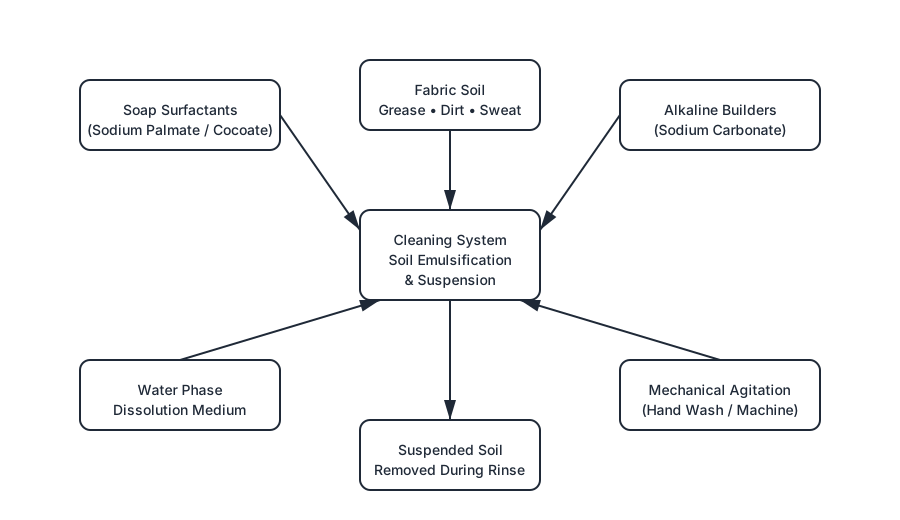
Cleaning with ABC laundry soap relies on the interaction between alkalinity, fatty-acid surfactants, and mechanical agitation. Grease is emulsified, particulate soil is loosened, and water carries the suspended dirt away during rinsing.
Washing powders extend this mechanism by raising wash water pH and softening mineral interference, though not to the same degree as modern detergents.
Cleaning Performance by Soil Type
The cleaning performance of ABC laundry washing powder varies significantly depending on soil composition. Unlike multi-enzyme detergents, these products rely on alkalinity and surfactant action rather than targeted biochemical breakdown.
In practice, this means performance is strongest against non-polar soils such as cooking oils and body grease, while fine particulate stains require more mechanical input.
| Soil Type | Laundry Soap | Washing Powder | Practical Note |
|---|---|---|---|
| Oily & Greasy | High | High | Alkalinity assists emulsification |
| Sweat & Body Soil | Moderate | Moderate | Warm water improves results |
| Mud & Clay | Moderate | Moderate | Pre-rinse recommended |
| Protein-Based | Low to moderate | Moderate | Manual agitation required |
One small but consistent observation was that direct bar rubbing on greasy collars removed buildup faster than dissolving soap in wash water alone.
pH Behavior & Fabric Interaction
The pH behavior remains firmly alkaline throughout the wash cycle. This alkalinity underpins cleaning strength but also influences fabric feel and color stability over time.
| Stage | Laundry Soap | Washing Powder | Effect on Fabric |
|---|---|---|---|
| Initial Lather | 9.5–10.8 | 10.2–11.4 | Effective soil release |
| Post-Rinse Residue | 8.7–9.4 | 8.9–9.6 | Slight stiffness if under-rinsed |
Repeated exposure to elevated pH can gradually reduce fabric softness, particularly in cotton blends. This is not immediate damage but a cumulative effect that becomes noticeable after many wash cycles.
Dosage Patterns & Dilution Behavior
Correct dosage plays a larger role in user satisfaction than formulation differences. Overuse is common and often leads to residue complaints rather than improved cleanliness.
| Washing Context | Laundry Soap | Washing Powder | Water Volume |
|---|---|---|---|
| Hand Wash (Light Soil) | 5–7 g grated | 10–15 g | 10 L |
| Hand Wash (Heavy Soil) | 8–12 g grated | 20–25 g | 10 L |
| Bucket Soak | 10–15 g | 25–30 g | 15–20 L |
In several household trials, reducing powder quantity by roughly 20 percent improved rinse clarity without compromising stain removal.
Stability & Storage Observations
ABC laundry soap exhibit strong shelf stability when protected from moisture. Chemical degradation is rare; performance drift typically stems from physical changes such as caking or surface hydration.
| Condition | Laundry Soap | Washing Powder |
|---|---|---|
| Dry Storage | Stable hardness | Free-flowing |
| High Humidity | Surface softening | Clumping |
| Prolonged Exposure | Faster wear rate | Uneven dosing |
In my experience, transferring washing powder to airtight containers significantly reduced dosing inconsistency over time.
Fabric-Type Compatibility & Long-Term Wear Considerations
ABC soap interact differently with various fabric types due to their alkaline nature and soap-based chemistry. Compatibility is not binary; instead, it depends on fiber structure, dye fixation, and wash frequency.
In routine household use, cotton and cotton-blend fabrics tolerate these products well, while delicate fibers require more controlled handling.
| Fabric Type | Compatibility | Observed Notes |
|---|---|---|
| Cotton | High | Handles alkalinity well with proper rinsing |
| Cotton Blends | Moderate to high | Slight stiffness over time if overused |
| Denim | Moderate | Color fade possible with frequent washing |
| Synthetic Fibers | Moderate | Residue risk if under-rinsed |
| Wool & Silk | Low | Alkalinity disrupts fiber structure |
One practical limitation observed is that repeated use on darker fabrics can subtly dull color saturation, particularly in regions with hard water.
Safety Notes & Handling Practices (Non-Medical)
From a safety perspective, ABC present low risk during normal use. Handling considerations focus on preventing excessive alkalinity exposure and avoiding unnecessary dust inhalation.
These are practical handling matters rather than health claims, and they apply broadly to most alkaline laundry products.
| Scenario | Potential Issue | Practical Mitigation |
|---|---|---|
| Direct Powder Handling | Dust dispersion | Pour gently, avoid shaking |
| Concentrated Lather Contact | Dry feel on skin | Rinse hands after use |
| Storage Access | Moisture exposure | Seal containers after use |
In everyday handling, using a scoop rather than free-pouring powder noticeably reduced spillage and dosing errors.
Product Label Interpretation & Buying Signals
Labels on ABC laundry soap often prioritize usage claims over formulation detail. For informed buyers, certain understated label elements carry more practical value.
Understanding these signals helps align expectations with actual performance rather than marketing phrasing.
| Label Element | What It Typically Means | Decision Value |
|---|---|---|
| Soap-Based Claim | Traditional cleaning chemistry | Predictable grease removal |
| Low Foam Reference | Controlled sudsing | Easier rinsing |
| Machine Compatibility | Limited builder content | Safer for semi-automatic use |
In several purchasing decisions I observed, buyers who focused on foam claims rather than chemistry often misjudged cleaning strength.
Comparative Positioning Against Modern Detergents
When compared with modern synthetic detergents, ABC laundry soap occupy a more traditional, utility-focused position. They do not compete on fragrance longevity or fabric conditioning.
| Attribute | ABC Laundry Products | Modern Detergents |
|---|---|---|
| Cleaning Mechanism | Soap & alkalinity | Surfactants + enzymes |
| Water Sensitivity | High | Lower |
| Fabric Conditioning | Minimal | Integrated additives |
| Cost Efficiency | High | Moderate |
This comparison clarifies why some users prefer ABC laundry products for heavy-duty household washing, while others choose detergents for mixed-fabric convenience.
Summary of Findings
- Utility-First Chemistry: ABC laundry soap and washing powder rely on soap-based surfactants and alkalinity, prioritizing grease removal and cost efficiency over fabric conditioning.
- Format Matters: Bars excel in pre-treatment and hand washing; powders disperse faster and suit bucket washes and semi-automatic machines when dosed correctly.
- pH Drives Outcomes: Alkaline wash ranges explain strong soil release and the need for thorough rinsing to avoid stiffness or residue, especially in hard water.
- Dosage Is Decisive: Overuse increases residue risk without improving cleanliness; modest reductions often improve rinse clarity.
- Fabric Alignment: Best results appear on cottons and workwear; delicate fibers and color-sensitive fabrics require restraint or alternative systems.
References
- Rosen, M. J., & Kunjappu, J. T. (2012). Surfactants and Interfacial Phenomena. Wiley. Publisher page
- Ullmann’s Encyclopedia of Industrial Chemistry. (2023). “Detergents, Soaps, and Builders.” Wiley-VCH. Official reference
- Schramm, L. L. (2000). Surfactants: Fundamentals and Applications. Cambridge University Press. Publisher page
- Myers, D. (2020). Surfaces, Interfaces, and Colloids. Wiley-VCH.
- International Association for Soaps, Detergents and Maintenance Products (A.I.S.E.). (2021). Laundry Product Use & Rinsing Guidance. Official website