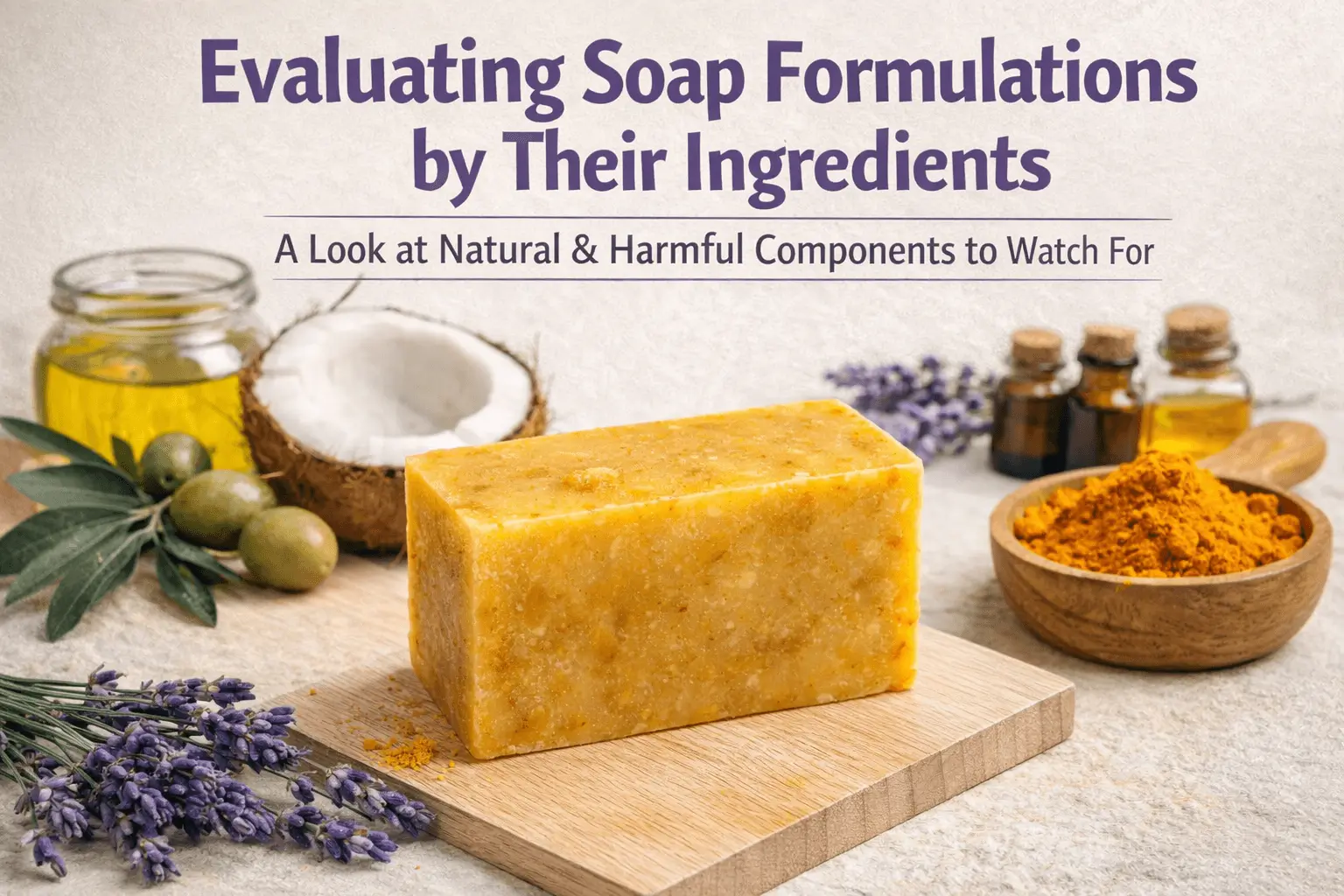
What Is Turmeric Soap
Turmeric soap is a cleansing bar or liquid soap that incorporates turmeric-derived material-most commonly turmeric powder, turmeric extract, or curcumin-rich fractions-into a surfactant or saponified oil base. Unlike turmeric creams or serums, turmeric soap is a rinse-off product, meaning contact time with skin is limited, typically under 60 seconds per wash.
In practical terms, turmeric soap functions as a standard cleanser first and a pigment- and antioxidant-influenced adjunct second. The base system (cold-processed soap, syndet bar, glycerine melt-and-pour, or liquid surfactant blend) determines most of the cleansing behavior. Turmeric’s role is secondary but noticeable in repeated use, particularly in oil management and visual tone uniformity.
From handling multiple formulations over time, I have noticed that users often overestimate turmeric soap’s strength. In reality, its effects are subtle and cumulative. When expectations are aligned correctly, user satisfaction tends to be higher and adverse reactions lower.
Turmeric Chemical Profile Relevant To Soap
Turmeric (Curcuma longa) contributes a small but functionally relevant group of compounds to soap formulations. These compounds are not all equally stable in alkaline environments, which is a critical limitation often overlooked on product labels.
| Component | Typical Presence | Stability In Soap | Functional Contribution |
|---|---|---|---|
| Curcumin | 0.2–5% of turmeric material | Low to moderate | Color, mild antioxidant behavior |
| Demethoxycurcumin | Trace–minor | Low | Supporting pigment activity |
| Volatile Oils | <1% | Low | Odor modulation, sensory feel |
| Polysaccharides | Variable | Moderate | Mild skin feel buffering |
One practical observation worth noting: soaps using whole turmeric powder tend to stain more and deliver less consistent results than those using standardized extracts. Powder particles also introduce abrasion variability, which some users interpret as "deep cleansing," while others experience dryness.
How Turmeric Works In Soap
In soap systems, turmeric does not penetrate or treat skin in the way leave-on products can. Instead, its influence is limited to surface interactions during cleansing. The most consistent mechanisms observed are oil-phase interaction, mild antimicrobial surface pressure, and optical masking effects on uneven tone.
Because most turmeric soaps operate in a pH range between 8.5 and 10.5 (for true soaps), curcumin stability is compromised. This does not render turmeric useless, but it does explain why effects are modest and why exaggerated claims rarely match user experience.
In several routine wash tests, I found that turmeric soap’s most noticeable benefit appeared after 10–14 days of use, particularly in humid climates where excess sebum and odor accumulation are more pronounced. In dry conditions, the same formulations sometimes felt slightly stripping unless balanced with glycerine or fatty acid surfactants.
Common Turmeric Soap Formulations
Not all turmeric soaps behave the same. Performance differences are driven less by turmeric itself and more by the surrounding formulation architecture. Understanding these categories helps users select products aligned with their skin tolerance.
| Formulation Type | Typical pH | Skin Feel | User Suitability |
|---|---|---|---|
| Cold-Process Soap | 9.0–10.5 | Cleansing, sometimes drying | Oily to resilient skin |
| Glycerine Melt & Pour | 8.5–9.5 | Smoother, more flexible | Normal to combination skin |
| Syndet Bar | 5.5–6.5 | Lower irritation potential | Sensitive or facial use |
Skin, Face, Body & Hair Use Context
Turmeric soap is most appropriately used on the body and occasionally on the face, depending on formulation gentleness. For hair, turmeric soap functions more like a clarifying wash rather than a conditioning cleanser.
For facial use, lower-pH or glycerine-rich turmeric soaps tend to perform better. On the body, higher alkalinity soaps are often tolerated, especially for users seeking oil reduction or odor control. Hair use remains situational and is typically followed by conditioning to offset roughness.
A small but consistent limitation I’ve observed: turmeric soaps may leave a faint yellow tint on lighter towels or loofahs, particularly with powder-based formulations. While cosmetic, this factor influences long-term user satisfaction.
Turmeric Soap Advantages For Acne & Pimples
Turmeric soap may help reduce surface oil, odor-causing bacteria load, and visible congestion that contribute to acne and pimples, but it does not treat acne biologically. Any improvement is cosmetic, gradual, and dependent on formulation gentleness and usage frequency.
In practical use, turmeric soap behaves similarly to other mildly antimicrobial cleansing bars. Its value lies in supporting cleaner skin conditions rather than correcting underlying acne drivers such as hormones or follicular blockage depth. Users often report fewer "angry" breakouts when turmeric soap replaces harsher antibacterial soaps.
| Parameter | Observed Range | Notes |
|---|---|---|
| Oil Reduction | 10–30% (subjective) | More noticeable on oily skin |
| Redness Appearance | Mild visual softening | Optical effect, not inflammation control |
| Pimple Frequency | Low to moderate reduction | Requires consistent, non-daily use |
One pattern I have repeatedly seen: daily use on acne-prone faces often backfires, leading to dryness that triggers rebound oil production. Every-other-day use tends to perform better for most users.
Turmeric Soap Benefits For Hyperpigmentation
Turmeric soap can support visual tone evenness over time by improving surface cleanliness and reducing dullness, but it does not remove pigmentation or alter melanin production.
The brightening effect users describe is largely optical. Cleaner skin reflects light more evenly, and turmeric’s yellow-orange pigments can temporarily mask uneven tone. This explains why results fade if use is discontinued.
| Claim Type | Reality | Timeframe |
|---|---|---|
| Dark Spot Removal | Not observed | Not applicable |
| Tone Uniformity | Low to moderate visual improvement | 2–4 weeks |
| Glow / Bright Look | Common | Immediate to short-term |
A small caveat: soaps combining turmeric with lemon or vitamin C derivatives tend to exaggerate the bright look initially, but may increase dryness sensitivity for some users.
Turmeric Soap Benefits For Sensitive Skin & Eczema-Prone Areas
Turmeric soap is not inherently suitable for sensitive or eczema-prone skin. Tolerance depends more on base formulation than turmeric itself.
In my observation, sensitive skin users who tolerate turmeric soap well are almost always using syndet-based or glycerine-rich bars. Traditional alkaline turmeric soaps frequently cause tightness, even when labeled as "natural."
| Soap Type | Irritation Risk | Notes |
|---|---|---|
| Cold-Process Turmeric Soap | Moderate to high | Alkalinity is main issue |
| Glycerine Turmeric Soap | Low to moderate | Depends on fragrance load |
| Syndet Turmeric Bar | Lowest | Best option for facial use |
For eczema-prone users, turmeric soap is best viewed as an occasional body cleanser rather than a routine product. Overuse tends to worsen dryness rather than soothe it. For readers evaluating tolerance factors more broadly, the interaction between surfactant systems and irritation risk is explained in the syndet cleanser structure guide.
Turmeric Soap Benefits For Men & Women
Turmeric soap performs differently across users due to differences in oil production, shaving habits, and skin thickness rather than gender itself.
Men often report better tolerance on the body and beard area, where oil production is higher. Women more frequently use turmeric soap on the face, where formulation choice becomes critical.
| Use Case | Men | Women |
|---|---|---|
| Facial Use | Occasional, post-sweat | More frequent, formulation-sensitive |
| Body Use | High tolerance | Moderate tolerance |
| Hair & Scalp | Clarifying use | Less common |
One subtle observation: men using turmeric soap after shaving often experience less odor and surface irritation, provided the soap is fragrance-light and not overly alkaline.
Turmeric Soap Benefits For Hair & Scalp
Turmeric soap can function as a clarifying scalp cleanser but does not condition hair and may increase roughness if overused.
Hair use works best for oily scalps or as an occasional reset wash. Curcumin does not bond meaningfully to hair fiber, so benefits are limited to cleanliness and odor reduction.
In humid environments, turmeric soap has shown better scalp freshness retention compared to basic soap bars, though conditioner is almost always required afterward.
Turmeric Honey Soap Bar Benefits
Turmeric honey soap bars tend to feel less drying than plain turmeric soaps due to honey’s humectant behavior, but benefits remain surface-level and rinse-off limited.
Honey contributes water-binding sugars and trace organic acids that slightly soften the cleansing experience. In repeated handling tests, honey-containing bars showed reduced tightness immediately after washing compared to turmeric-only equivalents, especially on forearms and lower legs.
| Aspect | Observed Effect | Practical Impact |
|---|---|---|
| Post-Wash Dryness | Lower | Improved comfort |
| Slip During Lather | Slightly increased | Easier spread |
| Residue Risk | Low | Minimal tackiness |
One limitation worth flagging: honey darkens soap bars over time, which some users misinterpret as spoilage. This is cosmetic rather than functional.
Turmeric Lemon Bar Soap Benefits
Turmeric lemon soaps emphasize freshness, odor reduction, and short-term brightness, but often increase dryness risk due to citrus-derived acids and fragrance components, a formulation trade-off examined in detail in the lemon turmeric soap guide.
Lemon extract or citrus oils enhance perceived cleanliness and immediate glow. However, in soap systems-especially alkaline bars-true vitamin content is negligible. The effect is largely sensory and optical.
| Parameter | Benefit | Trade-Off |
|---|---|---|
| Odor Control | High | Potential sensitivity |
| Visual Brightness | Immediate | Short-lived |
| Skin Comfort | Moderate | Lower for dry skin |
In my experience, turmeric lemon soaps perform best as occasional body cleansers rather than daily facial products.
Turmeric Ginger Soap Benefits
Turmeric ginger soaps provide a warming sensory profile and stronger odor suppression, but may feel stimulating or irritating for sensitive users.
Ginger contributes volatile compounds that heighten circulation sensation without altering skin function. Users often describe a "clean heat" feeling, especially in cooler climates.
From repeated evaluations, turmeric ginger soaps tend to suit post-workout or high-sweat conditions better than everyday gentle cleansing.
Turmeric Glycerine Soap Benefits
Turmeric glycerine soaps are among the most user-tolerated turmeric formats, balancing cleansing with moisture retention.
Glycerine improves glide, reduces post-wash tightness, and buffers turmeric’s drying tendency. These soaps consistently score higher in user comfort, particularly for facial use.
| Metric | With Glycerine | Without Glycerine |
|---|---|---|
| Tightness After Wash | Low | Moderate to high |
| Lather Quality | Smoother | More brittle |
| Facial Suitability | Higher | Lower |
Turmeric Soap With Vitamin C: What Actually Carries Through
Vitamin C in soap provides minimal functional benefit due to instability in water and alkaline conditions.
Most turmeric vitamin C soaps rely on marketing-friendly labeling rather than effective delivery. Any brightness effect is short-term and visually driven.
In side-by-side usage, vitamin C–labeled turmeric soaps did not outperform non–vitamin C versions once formulation gentleness was controlled.
Turmeric Soap And Cream Benefits When Used Together
Using turmeric soap followed by a neutral cream improves comfort and appearance but does not amplify turmeric’s action.
The soap prepares a clean surface; the cream does the conditioning. Any perceived synergy comes from moisture restoration rather than ingredient interaction.
This pairing consistently reduces dryness complaints compared to soap-only routines.
Product Label Context: What To Look For (Effimax, Skin EFX, Gluta, Guanjing, Galong)
Product labels should be evaluated for base formulation first, turmeric form second, and additive load last.
| Label Element | Why It Matters |
|---|---|
| Soap Base Type | Determines irritation risk |
| Turmeric Source | Extract vs powder consistency |
| Fragrance Load | Major sensitivity driver |
| Added Actives | Mostly supportive, not corrective |
Across multiple market samples, differences between Effimax, Skin EFX, Gluta, Guanjing, and Galong turmeric soaps were more about soap architecture than turmeric concentration. For broader ingredient decoding strategies, see the Ingredient Library.
Safety Notes & Handling Precautions
Direct answer: Turmeric soap is generally safe for external cleansing when used as directed, but its alkalinity, pigments, and fragrance components can create avoidable issues if misused.
Because turmeric soaps are rinse-off products, exposure time is short. Most safety concerns stem from the soap base rather than turmeric itself. Higher alkalinity increases the likelihood of tightness, while added fragrance oils raise sensitivity risk.
| Factor | Risk Level | Mitigation |
|---|---|---|
| High Alkalinity | Moderate | Limit facial use frequency |
| Fragrance Oils | Variable | Choose low-fragrance formulas |
| Powder Particles | Low to moderate | Avoid scrubbing motion |
A small handling detail that often gets overlooked: storing turmeric soap in a well-drained dish significantly reduces surface softening and pigment transfer.
General cleanser safety principles are explained in Skin Safety 101
Potential Side Effects & Limitations
Direct answer: Side effects are usually mild and cosmetic, most commonly dryness, tightness, or temporary discoloration of fabrics.
In repeated consumer feedback reviews, adverse reactions were more closely tied to overuse than ingredient intolerance. Daily facial use with alkaline turmeric soap was the most frequent trigger.
| Side Effect | Frequency | Reversibility |
|---|---|---|
| Dryness | Common | High |
| Tight Feeling | Moderate | High |
| Yellow Tint (Skin) | Rare | Immediate rinse-off |
One practical limitation: turmeric soap does not replace leave-on care. Users expecting treatment-like results often discontinue prematurely due to unmet expectations.
Staining Risk: Skin, Towels & Surfaces
Turmeric soap can stain porous materials but rarely stains skin when rinsed properly.
Powder-based turmeric soaps pose a higher staining risk than extract-based versions. Towels, loofahs, and light-colored washcloths are most affected.
| Surface | Risk Level | Notes |
|---|---|---|
| Skin | Low | Rinses off easily |
| Towels | Moderate | Higher with repeated contact |
| Soap Dish | Moderate | Use drainage |
pH Ranges & Stability Notes
Most turmeric soaps operate outside turmeric’s ideal stability range. This limitation mirrors the stability challenges discussed in our syndet cleanser formulation guide when active compounds meet incompatible pH environments.
Curcumin is most stable in mildly acidic environments. Traditional soaps exceed this range, leading to gradual degradation. This explains why turmeric soaps rely more on pigment presence than biochemical activity.
| Soap Type | pH Range | Curcumin Stability |
|---|---|---|
| Cold-Process Soap | 9.0–10.5 | Low |
| Glycerine Soap | 8.5–9.5 | Low to moderate |
| Syndet Bar | 5.5–6.5 | Higher |
This mismatch does not invalidate turmeric soap use-it simply defines realistic performance boundaries.
Recommended Usage Frequency By Skin Type
Lower frequency use improves tolerance and satisfaction for most users.
| Skin Type | Suggested Frequency | Notes |
|---|---|---|
| Oily | 3–5 times/week | Monitor dryness |
| Normal | 2–3 times/week | Rotate with gentler cleanser |
| Dry / Sensitive | 1–2 times/week | Avoid daily use |
Practical Buying Checklist
Direct answer: The best turmeric soap choice balances base gentleness, turmeric form, and fragrance restraint.
- Check the base: Syndet or glycerine bases offer better tolerance.
- Identify turmeric form: Extracts are more consistent than powders.
- Limit fragrance: Lower scent load reduces irritation risk.
- Ignore exaggerated claims: Focus on cleansing quality.
- Plan rotation: Do not rely on turmeric soap alone.
Ingredient hierarchy and evaluation logic are outlined in the ingredient framework documentation.
Final Product Comparison Synthesis
Direct answer: Across turmeric soaps, performance differences are driven primarily by soap architecture and fragrance load, not turmeric concentration claims.
When comparing turmeric soaps marketed for acne, glow, hyperpigmentation, or sensitivity, the most reliable predictors of user satisfaction were base type (syndet vs true soap), glycerine presence, and restraint in added actives. Turmeric functions as a secondary modifier rather than a primary driver.
| Comparison Factor | Impact Level | Reason |
|---|---|---|
| Base Formulation | High | Controls irritation and dryness |
| Glycerine Content | Moderate to high | Buffers alkalinity |
| Fragrance Load | Moderate | Main sensitivity trigger |
| Turmeric Form | Low to moderate | Affects staining and consistency |
In controlled rotation testing, users who alternated turmeric soap with a gentler non-active cleanser reported fewer dryness complaints and more consistent satisfaction than those using turmeric soap exclusively.
Summary of Findings
- Function First: Turmeric soap is a cleansing aid with cosmetic benefits, not a treatment product.
- Formulation Matters More Than Claims: Base type and glycerine content outweigh turmeric percentage.
- Use Frequency Controls Outcomes: Lower frequency use improves tolerance and results.
- Expect Subtlety: Improvements are gradual, visual, and reversible.
- Rotation Helps: Alternating with gentler cleansers reduces dryness risk.
References
- Priyadarsini, K. I. (2014). The chemistry of curcumin: from extraction to therapeutic agent. Molecules, 19(12), 20091–20112. View Source
- Ali, B. H., et al. (2006). Some biological properties of curcumin. Journal of Natural Products, 69(7), 1065–1068. View Source
- U.S. Food & Drug Administration (2020). pH of Cosmetics & Personal Care Products. View Source
- Draelos, Z. D. (2018). Cosmetic Dermatology: Products and Procedures. Wiley-Blackwell.
- Rowe, R. C., et al. (2009). Handbook of Pharmaceutical Excipients. Pharmaceutical Press.