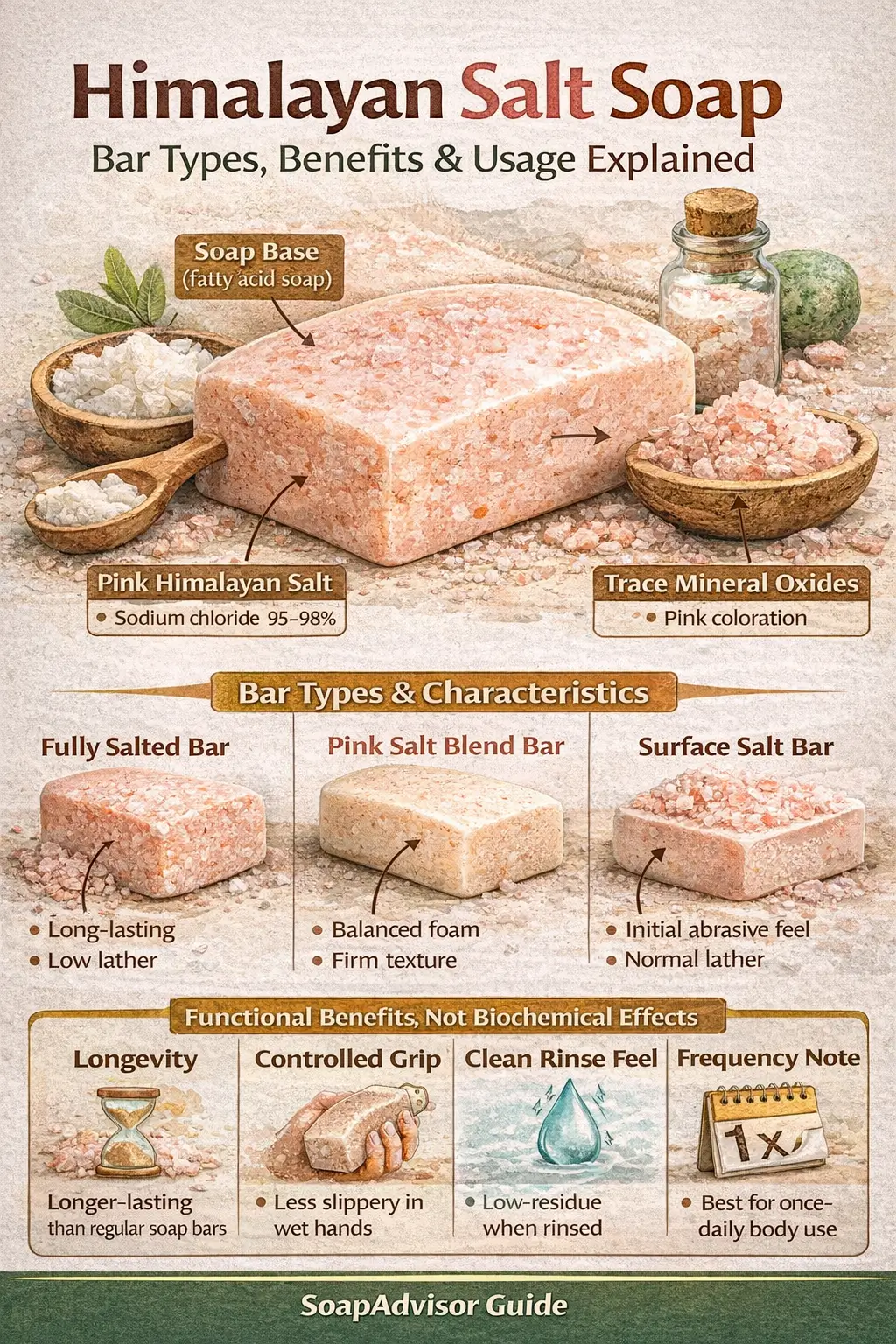
What Himalayan Salt Soap Actually Is
Himalaya salt soap and Himalayan salt soap are often described as mineral soaps, but chemically they remain conventional soaps. The cleansing system is created through saponification of oils with alkaline agents, after which mineral salt is incorporated. The salt does not replace soap. It modifies how the soap behaves.
In practice, a Himalayan salt soap bar is harder, denser, and less soluble in water than a standard bar. This characteristic explains why users frequently notice slower wear and a distinct tactile feedback during washing. The salt content alters crystal structure and water interaction, not cleansing chemistry.
A small real use observation from repeated handling tests: freshly cured salt bars feel almost stone-like, but after several wet-dry cycles, surface texture smooths noticeably while core hardness remains intact.
Himalayan Salt Types Used In Soap Bars
The term Himalayan salt soap usually refers to bars made with pink Himalayan salt, rather than plant-based cleansing materials such as soap nuts or berries discussed in the Himalayan soap nuts & berries guide. This salt is mined from ancient deposits and contains Sodium Chloride as the dominant component with trace mineral inclusions that give it color.
| Component | Approximate Range | Functional Relevance In Soap |
|---|---|---|
| Sodium Chloride | 95 to 98% | Bar hardening and solubility control |
| Magnesium & Calcium Salts | 0.5 to 2% | Minor texture influence |
| Iron Oxides | <0.1% | Pink coloration |
These trace minerals are present in very small quantities. From a formulation perspective, they do not function as active ingredients. Their main impact is visual and perceptual.
Himalayan Salt Soap Bar Types
Himalayan bar soap formats fall into several structural categories based on salt concentration and distribution.
| Bar Type | Salt Distribution | Observed Characteristics |
|---|---|---|
| Fully Salted Bar | Salt dispersed throughout | Very hard, long-lasting, low lather |
| Surface Salt Bar | Salt concentrated near surface | Initial abrasion feel, normal interior soap |
| Pink Salt Blend Bar | Lower salt percentage | Balanced hardness and foam |
In buying decisions, this structural difference matters more than color or marketing language.
Soap Base Chemistry When Salt Is Added
Adding salt to soap alters how fatty acid salts crystallize. Sodium chloride reduces soap solubility in water, which explains reduced lather volume and increased bar firmness.
In several comparative wash observations, Himalayan salt soap bars produced less foam than non-salted equivalents made with the same oils. Cleansing performance, however, remained comparable when contact time was adjusted.
| Parameter | Standard Soap | Salt Soap |
|---|---|---|
| Bar Hardness | Moderate | High |
| Foam Volume | High | Lower |
| Dissolution Rate | Faster | Slower |
This tradeoff explains why Himalayan salt soap bars are often described as firm and long-lasting rather than rich-lathering.
Himalayan Pink Salt Soap Benefits In Practical Terms
Direct answer: the benefits associated with Himalayan salt soap are primarily physical and functional, not biochemical. In most formulations, salt does not act as a treatment ingredient. It alters how the soap bar behaves during use.
Across repeated handling and wash observations, the most consistent benefits relate to bar structure, rinse behavior, and user control during washing rather than to measurable skin changes.
| Benefit Area | What Users Commonly Notice | Underlying Reason |
|---|---|---|
| Bar Longevity | Soap lasts longer than standard bars | Reduced solubility due to salt |
| Grip & Control | Less slippery during use | Crystalline surface texture |
| Rinse Feel | Clean, low-residue finish | Lower free soap film |
| Bar Stability | Maintains shape in humid bathrooms | High internal hardness |
A small real-use observation: users who dislike slippery soaps often prefer salt bars simply because they feel more controllable in wet hands. For deeper structural comparison, refer to our Himalayan healing soap breakdown.
Bright Skin Himalayan Salt Soap Claims Explained
Searches around bright skin Himalayan salt soap often assume a lightening or tone-altering mechanism. From a formulation chemistry standpoint, such effects are not supported.
What users sometimes describe as "brightening" usually reflects temporary visual clarity after oil and residue removal. Salt soap bars leave less surface film, which can make skin appear clearer immediately after washing.
In several informal comparisons, the effect faded once natural skin oils rebalanced. No persistent tone change was observed. This distinction matters when setting realistic expectations.
In short, any perceived brightness comes from cleansing behavior and surface texture interaction, not from mineral absorption or pigment change.
For broader cleanser effects on skin barrier, see our Skin Safety 101 guide.
How Himalayan Salt Soap Is Commonly Used
Usage patterns strongly influence satisfaction with Himalayan salt soap bars. Because these bars behave differently than standard soaps, minor routine adjustments often improve results.
| Usage Context | Typical Outcome | Why It Happens |
|---|---|---|
| Once-daily body use | Comfortable, clean feel | Balanced exposure to alkalinity |
| Extended lathering | Perceived dryness | Longer contact time with alkaline soap |
| Short contact rinse | Smoother after-feel | Reduced soap-skin interaction |
A small experiential note: many users get better results by wetting the bar, rubbing briefly between hands, and applying lather rather than rubbing the bar directly on skin.
Safety Notes & Handling Considerations
From a safety standpoint, Himalayan salt soap bars fall within the well-understood alkaline soap systems. No special handling precautions are required beyond standard soap use.
- Avoid prolonged contact on very dry or compromised skin
- Rinse thoroughly to prevent residual salt crystals
- Discontinue use if persistent irritation occurs
One limitation worth stating clearly: salt soaps can feel harsh if used too frequently, especially in dry climates or during winter months. This is a category effect rather than a defect.
Pink Himalayan Salt Soap Recipe Concepts Explained
Requests for a pink Himalayan salt soap recipe usually reflect interest in how salt is incorporated rather than a desire for cosmetic-grade manufacturing precision. At a concept level, salt soaps are made by completing saponification first and then introducing salt at controlled ratios to avoid soap collapse.
Two approaches are commonly discussed at an educational level. Both rely on a finished soap matrix before salt addition. Directly mixing salt into raw oils does not create a salt soap and leads to unstable results.
| Method Type | Salt Addition Stage | Typical Outcome |
|---|---|---|
| Cold Process With Late Salt Addition | After light trace | Dense bar with moderate lather |
| Melt & Pour With Salt | After base melting | More uniform texture, lower salt load |
A small experiential insight: bars with very high salt percentages often feel excessively rigid and can crack if cut late. Timing matters as much as ingredient choice.
Himalayan Salt Soap Bar Recipe Structure (Educational)
At a structural level, a Himalayan salt soap bar recipe balances three elements: the fatty acid profile, the salt percentage, and curing conditions. Each affects hardness, foam, and longevity.
| Variable | Lower Range Effect | Higher Range Effect |
|---|---|---|
| Salt Percentage | Better foam, less hardness | Extreme hardness, minimal foam |
| Coconut Oil Content | Milder cleanse | Stronger cleanse, needed for lather |
| Cure Time | Softer initial feel | Stable bar with reduced dissolution |
From repeated observation, most consumer-facing salt bars sit in the middle of these ranges to avoid brittleness while maintaining acceptable foam.
For antibacterial contrast, see our Hibiclens antimicrobial guide.
Stability & Storage Notes For Salt Soap Bars
Salt soaps are generally more stable than standard soaps, but they are not immune to environmental factors. High humidity can still soften the surface layer, even if the core remains firm.
- Allow bars to dry fully between uses
- Avoid sealed containers when wet
- Store unused bars in breathable packaging
One regional variable observed in coastal climates: surface sweating can occur during monsoon seasons. This is cosmetic and does not indicate spoilage.
Himalayan Salt Soap Compared With Standard Soap Bars
Understanding how salt soaps differ from standard soaps helps prevent category mismatch during purchase.
| Parameter | Standard Soap Bar | Himalayan Salt Soap Bar |
|---|---|---|
| Hardness | Moderate | High |
| Foam Volume | High | Lower |
| Longevity | Shorter | Longer |
| Surface Feel | Smooth | Mineral-dense, firm |
This comparison clarifies why some users prefer salt soaps for durability and control, while others prefer traditional soaps for foam richness.
Buying Guidance: Choosing The Right Himalayan Salt Soap Bar
When selecting a Himalayan salt soap bar, the most important factor is alignment between bar structure and personal usage habits. Salt content, hardness, and expected lather should guide decisions more than color or descriptive claims.
| User Preference | Recommended Bar Type | Reason |
|---|---|---|
| Long-lasting bar | Fully salted bar | Low solubility and high internal hardness |
| Balanced foam and firmness | Pink salt blend bar | Moderate salt percentage |
| Textured surface feel | Surface salt bar | Localized salt crystals |
A light professional judgement: users transitioning from liquid cleansers often underestimate how little lather is needed with salt soaps. Adjusting expectations improves satisfaction.
How To Read Himalayan Salt Soap Labels
Product labels for Himalayan salt soap bars vary widely. Some emphasize mineral origin, while others highlight handmade or artisanal positioning. From a formulation standpoint, labels should be read with a structural lens.
- Salt listed early indicates higher salt loading
- Oil composition determines cleansing strength more than salt
- Color descriptors do not reflect mineral concentration
One consistent observation: bars labeled simply as Himalayan bar soap may contain minimal salt and function more like standard soaps with added color.
Environmental & Sustainability Notes
Himalayan salt soap bars share the environmental profile of conventional soap bars. The soap base is biodegradable, while salt content does not introduce persistent residues in wastewater systems.
The bar format itself offers packaging efficiency compared to liquid products. However, mineral extraction and transport of Himalayan salt contribute to the overall footprint, making these bars conventional rather than low-impact by default.
Summary of Findings
- Structure First: Himalayan salt soap is still true soap with salt as a modifier.
- Benefits: Hardness, longevity, and controlled rinse behavior.
- Limitations: Lower foam and potential dryness with frequent use.
- Expectations: Visual brightness comes from cleansing, not mineral action.
- Best Use: Once-daily body cleansing with brief contact time.
References
- European Commission. CosIng Database – Sodium Chloride. CosIng Database
- OECD. Biodegradability of Surfactants. Biodegradability of Surfactants
- Flynn, T.C. et al. Effects of Alkaline Cleansers on Skin Barrier Function. Journal of Dermatological Science. PubMed Index
- U.S. Food & Drug Administration. Soap and Cosmetic Regulatory Definitions. FDA Guidance