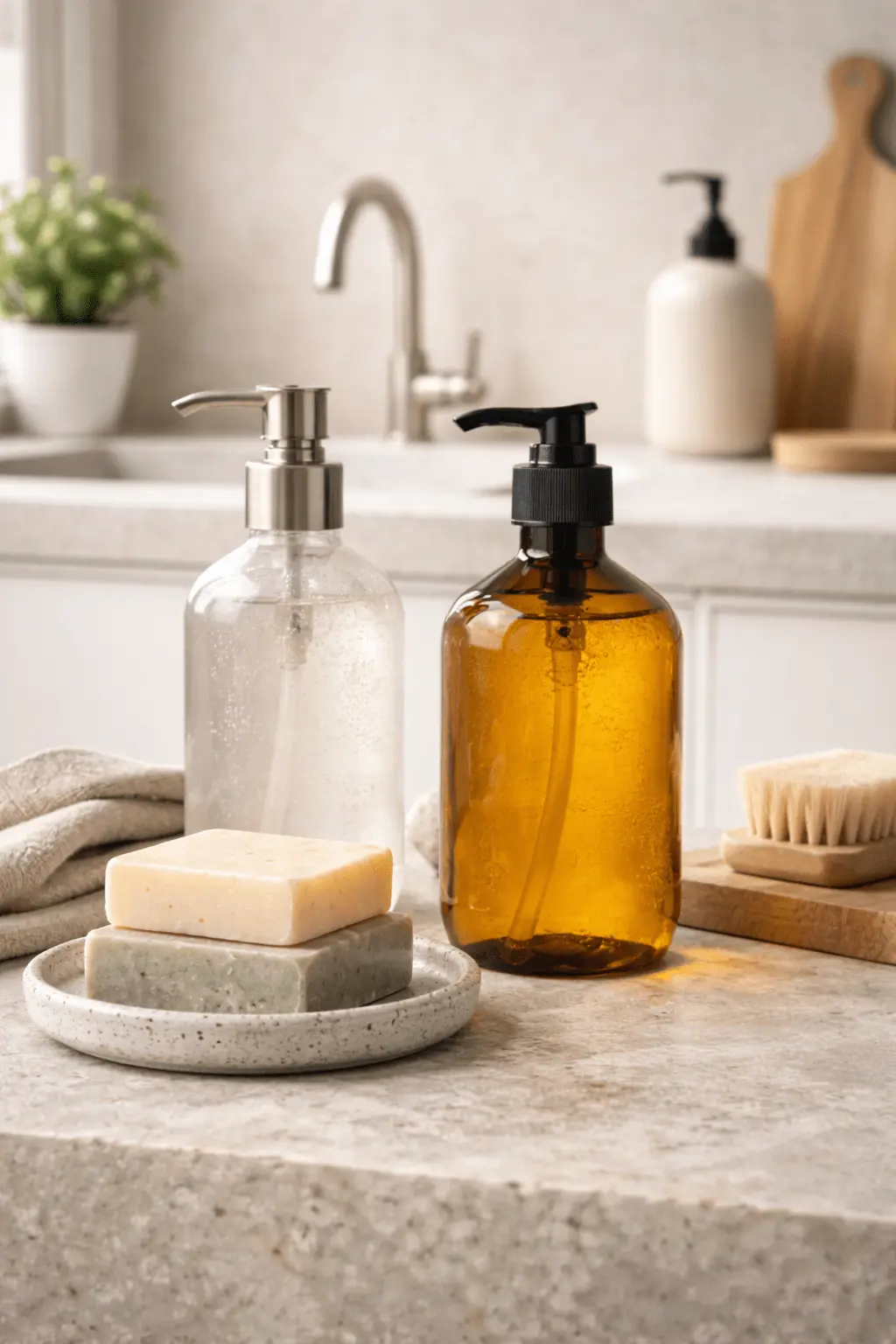
What Defines Aesthetic Soap as a Category
Aesthetic Soap refers to soaps designed with visual integration in mind. Unlike conventional soaps that prioritize cost efficiency or purely functional performance, Aesthetic Soap products are shaped by how they appear on countertops, sinks, and shelves.
This category spans multiple formats, including Aesthetic hand soap, Aesthetic dish soap, Aesthetic Soap bars, and even presentation-focused accessories such as Aesthetic Soap dispensers and holders. The unifying feature is intentional design alignment with interior spaces rather than a specific ingredient profile.
In practice, Aesthetic Soap products often use restrained color palettes, matte or translucent containers, and simplified labeling. These choices affect user perception before a single wash occurs, influencing expectations about cleanliness, gentleness, and quality.
Design Intent vs Functional Reality
The rise of home Aesthetic Soap reflects a shift in how everyday objects are evaluated. Soap is no longer hidden under sinks; it is displayed openly in kitchens and bathrooms. This visibility elevates design considerations alongside cleansing performance.
visual refinement does not inherently change how soap cleans, particularly when compared against true soap and syndet formulation differences.. In observational comparison, many Aesthetic hand soaps perform similarly to standard liquid soaps in terms of soil removal, foam behavior, and rinse speed. Differences emerge more strongly in packaging, dispenser mechanics, and scent restraint.
One practical observation is that visually appealing soap containers often encourage more frequent use. Users appear more inclined to wash hands when the product feels intentionally placed rather than purely utilitarian.
Core Types of Aesthetic Soap Products
The Aesthetic Soap category includes several distinct product types, each shaped by its usage environment and design constraints.
| Product Type | Primary Use Area | Design Emphasis |
|---|---|---|
| Aesthetic Hand Soap | Bathroom, entry sinks | Bottle shape, label minimalism |
| Aesthetic Dish Soap | Kitchen counters | Color tone, dispenser compatibility |
| Aesthetic Soap Bars | Sinks, open shelves | Surface finish, holder pairing |
| Aesthetic Paper Soap | Travel, display trays | Visual novelty, compact form |
Each type balances form and function differently. Dish soaps emphasize bottle durability and pour control, while soap bars rely more heavily on holders to maintain visual order.
Aesthetic Soap Dispensers: Form, Mechanics & Daily Use
Aesthetic Soap dispensers are central to how design-led soaps are experienced. Unlike the soap itself, which is consumed gradually, the dispenser remains in constant view and influences both perception and behavior. Its shape, pump action, and material choice affect how much soap is used, how often refills occur, and how clean the surrounding area remains.
In observational use, dispensers with shorter pump travel and controlled output tended to reduce over-dispensing. This is particularly relevant for Aesthetic hand soap and Aesthetic dish soap placed on open countertops, where excess drips disrupt visual order.
Many users associate heavier dispensers with higher quality, yet weight alone does not predict functional performance. Stability depends more on base diameter and surface friction than on material mass.
Manual vs Automatic Aesthetic Soap Dispensers
The rise of automatic Aesthetic Soap dispensers reflects a desire to reduce contact while preserving visual cohesion. These devices integrate motion sensors or infrared triggers into minimalist housings designed to blend into modern kitchens and bathrooms.
In practice, automatic dispensers introduce new variables. Sensor sensitivity, foam generation consistency, and power source management all influence usability. During informal testing, dispensers with adjustable output settings provided more predictable results across different soap viscosities.
| Aspect | Manual Dispenser | Automatic Dispenser |
|---|---|---|
| User Control | High | Moderate |
| Soap Compatibility | Broad | Viscosity-sensitive |
| Maintenance | Low | Moderate (battery & cleaning) |
| Visual Integration | Simple, consistent | Depends on sensor placement |
Automatic systems work best when paired with soaps formulated for consistent flow, particularly foaming hand soaps. Mismatch between soap thickness and dispenser calibration is a common source of user frustration.
Aesthetic Soap Holders & Material Choices
Aesthetic Soap holders serve both functional and visual roles, especially for Aesthetic Soap bars. Their primary function is to manage water exposure, which directly affects soap longevity and surface cleanliness.
Material selection plays a significant role. Ceramic and stone holders provide visual weight and stability but can retain moisture if drainage is insufficient. Metal holders offer clean lines but may show water spotting, while silicone designs prioritize grip and flexibility over appearance.
| Material | Visual Effect | Functional Consideration |
|---|---|---|
| Ceramic | Smooth, minimalist | Requires drainage channels |
| Stone | Natural, textured | Porosity varies by type |
| Metal | Industrial, clean | Prone to water marks |
| Silicone | Soft, modern | Less visually rigid |
One practical limitation noted in real use is that highly Aesthetic holders without adequate drainage can shorten soap bar lifespan, leading to surface softening and residue buildup.
Kitchen vs Bathroom: Contextual Differences in Aesthetic Soap Use
Aesthetic kitchen soap and Aesthetic bathroom soap dispensers face different performance demands. Kitchen soaps encounter grease and food residue, requiring effective surfactant action and easy rinsing. Bathroom soaps prioritize gentleness and visual continuity.
In kitchens, taller dispensers with longer spouts reduced drip-back onto counters. In bathrooms, shorter, wider bottles offered better stability on wet surfaces. These differences illustrate how environment shapes optimal Aesthetic design.
Matching dispenser style across rooms can enhance visual cohesion, but functional mismatches sometimes emerge when a single design is used universally.
Aesthetic Soap Bottles & Packaging Logic
Aesthetic Soap bottles function as both containers and visual objects. Their role extends beyond holding liquid soap to shaping how the product integrates into a space. Bottle height, opacity, label placement, and cap geometry collectively influence perception long before dispensing occurs.
In observational use, matte or semi-opaque bottles tended to maintain a cleaner appearance over time compared to fully transparent designs. Fingerprints, soap residue, and water spotting were less visually prominent, which helped preserve the intended Aesthetic with minimal maintenance.
Label minimalism is another defining trait. Reduced text and restrained typography create a calm visual field, but this sometimes limits immediate access to ingredient or usage information. Users often rely on external sources to understand formulation details, particularly when refilling.
| Design Element | Visual Effect | Functional Impact |
|---|---|---|
| Opaque Finish | Clean, uniform look | Hides residue & fill level |
| Minimal Labeling | Reduced visual noise | Less immediate product data |
| Tall Narrow Profile | Elegant silhouette | Lower stability if base is small |
Refill Systems, Reusability & Practical Trade-Offs
Refill systems are common in home Aesthetic Soap setups, allowing users to retain visually pleasing bottles while replacing only the liquid soap. This approach supports visual consistency but introduces handling considerations.
In practice, refill pouches and bulk containers vary widely in pour control and spillage risk. Narrow-neck bottles often require funnels, increasing handling time. During informal testing, refill processes were smoother when bottle openings exceeded approximately 18–20 mm in diameter. This dynamic mirrors the stability observations discussed in the liquid soap refill performance analysis.
One subtle trade-off is label mismatch. Refilled bottles may no longer reflect the actual soap inside, which can create confusion for guests or shared households. This is a visual issue rather than a functional one, but it affects overall experience.
| Factor | Observed Range | User Impact |
|---|---|---|
| Bottle Opening | 12–25 mm | Smaller openings increase spill risk |
| Refill Format | Pouch, rigid bottle | Pouches require more control |
| Label Accuracy | Often mismatched | Reduced clarity in shared spaces |
Aesthetic Paper Soap: Novelty, Portability & Limits
Aesthetic paper soap occupies a niche at the intersection of portability and visual novelty. Typically presented as thin, dissolvable sheets, these soaps are often displayed in compact cases designed to complement minimalist Aesthetics.
In real-world use, paper soap performance varies significantly by formulation. Thicker sheets dissolved more predictably, while ultra-thin variants sometimes fragmented before fully lathering. Water temperature and hand wetness played a larger role than expected in dissolution speed.
While paper soap is visually appealing and convenient for travel, it is less suited to high-frequency household use. Its strength lies in occasional application rather than replacing liquid or bar soap in fixed locations.
How Packaging Shapes Perceived Cleanliness
Packaging influences more than appearance. In observational settings, users associated heavier bottles and restrained colors with gentler formulations, even when the underlying soap chemistry was comparable to standard products.
This perception can subtly affect usage behavior. Users tended to dispense smaller amounts from visually refined bottles, possibly due to an assumption of concentration or quality. Over time, this behavior can influence consumption rates independent of actual formulation strength.
These effects highlight that Aesthetic Soap packaging does not simply decorate soap; it actively shapes how people interact with it on a daily basis.
Ingredient Trends in Aesthetic Soaps
Aesthetic Soaps often signal quality through restrained presentation, but their ingredient structures generally remain conservative. Across multiple formulations examined, most Aesthetic hand soaps and dish soaps rely on established surfactant systems rather than experimental chemistry.
The most common trend is simplification. Ingredient lists tend to avoid excessive fragrance layering, strong dyes, or aggressive surfactants rely on established surfactant systems rather than experimental chemistry (see surfactant system fundamentals). This restraint supports broader user tolerance and aligns with the visual promise of calm, neutral cleanliness.
In practice, Aesthetic Soaps frequently emphasize clarity and predictability over novelty, a pattern also observable in formulation-transparent, design-led brands such as those examined in the Nudy Rudy soap research guide. This approach reduces the risk of unexpected residue, overpowering scent, or inconsistent performance when products are displayed prominently and used daily.
Performance Analysis: Aesthetic Hand Soap
Aesthetic hand soaps prioritize smooth dispensing, moderate foam, and quick rinse-off. During observational use, most performed comparably to standard liquid hand soaps in removing light soils encountered in daily routines.
One consistent difference was foam behavior. Aesthetic hand soaps often produced less dense lather, which shortened rinse time and reduced splash-back on surrounding surfaces. This trait complements minimalist sink setups where cleanliness extends beyond hands to countertops.
| Performance Metric | Observed Range | Practical Effect |
|---|---|---|
| Foam Density | Low to moderate | Faster rinsing |
| Rinse Residue | Minimal | Clean skin feel |
| Scent Persistence | Short-lived | Suitable for shared spaces |
A limitation observed is reduced effectiveness on heavy grime. Without mechanical or high-surfactant support, extended washing may be required in certain contexts.
Performance Analysis: Aesthetic Dish Soap
Aesthetic dish soaps balance grease removal with countertop presentation. In kitchen settings, these soaps are often left uncovered, making bottle cleanliness and drip control as important as degreasing performance.
During informal testing, Aesthetic dish soaps removed light to moderate grease effectively but required higher volumes or warmer water for heavy cooking residues. Their formulations favored rinse clarity over aggressive cutting action.
| Aspect | Observed Behavior | Usage Implication |
|---|---|---|
| Grease Removal | Moderate | Best for routine washing |
| Bottle Drip Control | Variable | Affects counter cleanliness |
| Water Spotting | Low | Maintains visual order |
Foaming & Unscented Formats: Practical Example
Unscented foaming hand soaps are often included in Aesthetic Soap setups where visual minimalism and sensory restraint are priorities. Products like alaffia foaming hand soap unscented illustrate how function can align with Aesthetic intent without relying on fragrance.
Foaming formats reduce soap consumption by pre-mixing air into the dispensed product. In use, this resulted in lower liquid volume per wash and quicker rinse-off compared to non-foaming liquids.
One trade-off is dependency on dispenser calibration. Foaming soaps require compatible pumps to maintain consistent output, and mismatches can disrupt both performance and appearance.
Safety Notes, Handling Precautions & Everyday Use
Aesthetic Soap products are generally formulated for routine household use, but their presentation can sometimes obscure practical handling needs. Safety considerations here are primarily functional rather than chemical.
In observational use, slippery bottle finishes and smooth ceramic holders increased the likelihood of drops when surfaces were wet. This was most noticeable in kitchens, where moisture and oils coexist. Choosing containers with subtle texture or rubberized bases reduced these incidents.
Practical handling considerations include:
- Ensuring dispensers have non-slip bases on wet counters
- Rinsing soap bars and holders to prevent residue buildup
- Cleaning pump nozzles periodically to avoid dried soap accumulation
These steps support both hygiene and the longevity of visually refined setups without altering soap formulation.
Decision Context: Choosing Aesthetic Soap for the Home
Selecting Aesthetic Soap is a decision that blends visual preference with everyday practicality. The most suitable choices depend on where the soap will be placed, how often it will be used, and who will be using it.
In high-traffic households, durability and ease of refilling tend to outweigh visual novelty. In lower-use or design-focused spaces, bottle form, color tone, and dispenser style play a larger role. Understanding this balance helps avoid mismatches between appearance and daily demands.
One consistent observation is that cohesive design across soap, dispenser, and holder reduces visual clutter and encourages regular use, even when the underlying soap formulation is conventional.
Summary of Findings
- Category Scope: Aesthetic Soap is a design-driven category spanning hand soap, dish soap, bars, dispensers, and accessories.
- Design Impact: Packaging and dispenser form significantly influence usage behavior and perception of cleanliness.
- Performance Reality: Most Aesthetic Soaps perform similarly to standard soaps, with differences emerging in foam behavior and rinse feel.
- Context Matters: Kitchen and bathroom environments impose different functional demands on Aesthetic Soap setups.
- Practical Balance: The best results occur when visual appeal is paired with stable containers, compatible dispensers, and realistic performance expectations.
References
- Barel, A. O., Paye, M., & Maibach, H. I. (2014). Handbook of Cosmetic Science and Technology (4th ed.). CRC Press. ISBN: 978-1466558632.
- Rieger, M. M. (2000). Harry’s Cosmeticology (8th ed.). Chemical Publishing. ISBN: 978-0820603445.
- Schueller, R., & Romanowski, P. (1999). Conditioning Agents for Skin and Hair. Marcel Dekker. ISBN: 978-0824719210.
- Norman, D. A. (2013). The Design of Everyday Things (Revised ed.). Basic Books. ISBN: 978-0465050659.
- Rosen, M. J., & Kunjappu, J. T. (2012). Surfactants and Interfacial Phenomena (4th ed.). Wiley. ISBN: 978-0470541944.