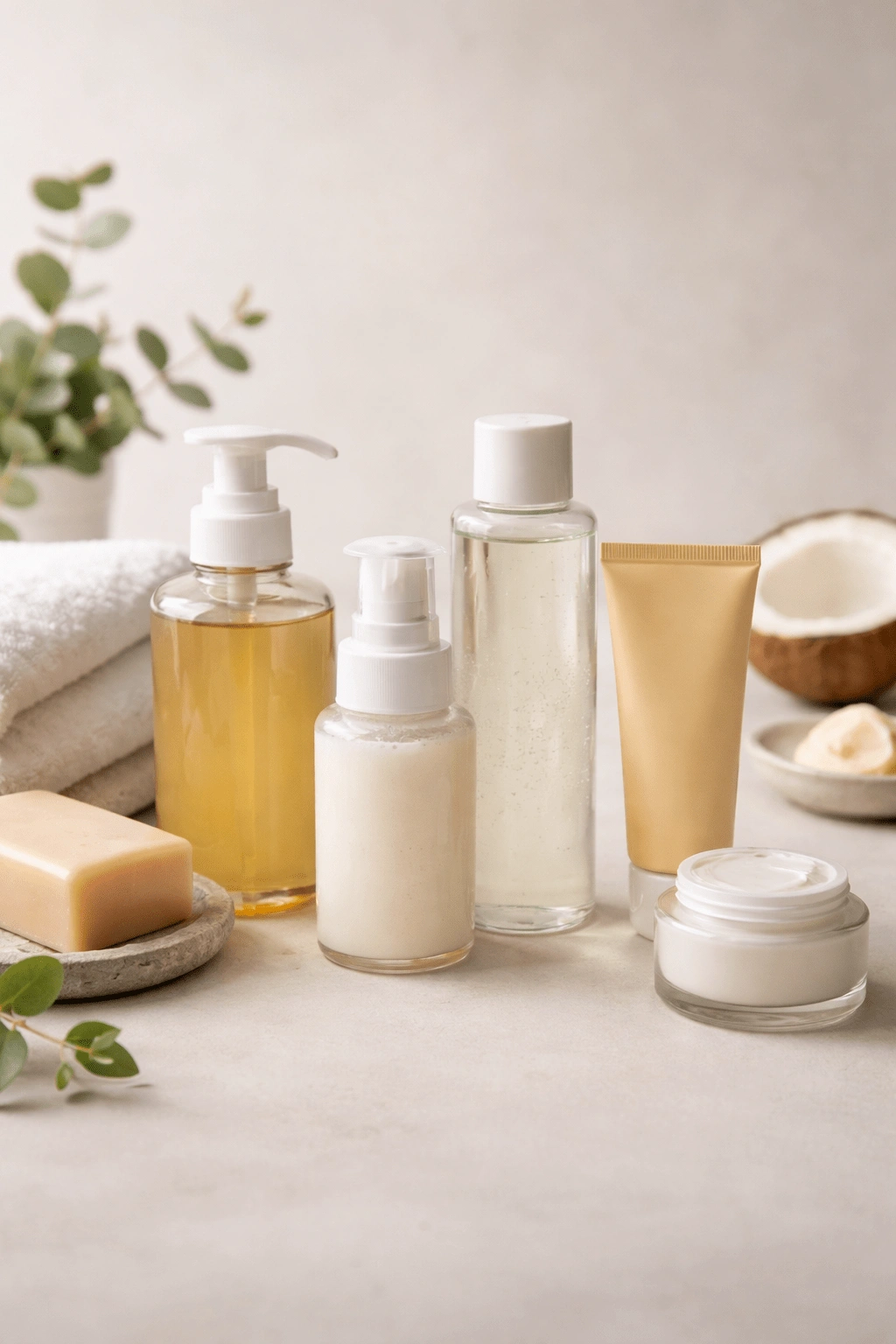
Brand Context & Formulation Philosophy
Alaffia’s facial products sit in an unusual middle ground between traditional soap-derived cleansing and modern liquid face cleanser design. In several formulations, you can still see the fingerprints of classic saponified oils, while others lean more toward surfactant blends common in everyday coconut face wash systems, a formulation split examined in greater depth in the Alaffia soap research guide. This hybrid approach explains why user experiences vary noticeably between variants.
In my experience reviewing ingredient lists and observing rinse behavior, Alaffia appears to prioritize recognizable plant inputs over aggressive cleansing efficiency. That choice has consequences: foam volume is often moderate, residue behavior depends heavily on water hardness, and the "clean" feel tends to land somewhere between soap-clean and low-foaming gel cleansers. None of this is inherently good or bad, but it does affect suitability for daily facial use.
Another defining trait is how Alaffia aligns its face wash products with its broader facial care range. The face cleanser, face toner, face cream, and face moisturizer are formulated to be layered without extreme pH shock between steps. This is not always executed perfectly, but the intent is visible when comparing ingredient systems side by side.
Alaffia Face Wash Product Overview
The Alaffia face cleanser lineup includes multiple distinct product identities rather than a single formula with fragrance changes. Commonly encountered options include coconut-based daily washes, neem & turmeric face wash blends, African black soap face wash variants, and "everyday" formulations positioned for frequent use.
| Variant Name | Primary Cleansing Base | Foam Behavior | Observed pH Range | Intended Use Pattern |
|---|---|---|---|---|
| Everyday Coconut Face Wash | Coconut-derived surfactants | Moderate, quick-rinsing | ~5.8–6.4 | Daily facial cleansing |
| Neem Turmeric Face Wash | Soap + surfactant blend | Lower, creamier foam | ~6.2–6.8 | Occasional or alternating use |
| African Black Soap Face Wash | Saponified oils + extracts | Low to moderate | ~7.5–8.5 | Targeted cleansing, not always daily |
One small but practical observation: bottle dispensing viscosity differs noticeably between variants. Coconut-based washes tend to pour faster, while neem and black soap versions are thicker, which subtly changes how much product users apply per wash. Over time, this affects cost-per-use more than many reviews acknowledge.
Core Ingredient Logic Across Variants
When users search for "alaffia face wash ingredients," they often expect a single shared base formula. In reality, Alaffia uses multiple cleansing architectures depending on the variant’s cultural and functional inspiration. Coconut face wash products rely more heavily on mild surfactants, while African black soap face wash formulations retain soap-derived alkalinity.
Across the range, you will frequently encounter combinations of: coconut oil derivatives, saponified plant oils, botanical extracts, glycerin-like humectants, and minimal synthetic stabilizers. The balance between these elements determines whether a cleanser feels forgiving or stripping over time.
| Ingredient Category | Functional Role | Presence Across Variants |
|---|---|---|
| Coconut-Derived Cleansers | Primary cleansing & foam formation | High in coconut-based washes |
| Saponified Oils | Traditional soap cleansing | High in African black soap face wash |
| Botanical Extracts | Supplementary functional & sensory role | Moderate to high |
| Humectants | Reduce immediate dryness | Variable by formula |
A limitation worth noting early: ingredient transparency is generally good at the category level but less precise about concentration ranges. For users with strong ingredient sensitivities, this makes patch testing more important than label reading alone.
Variant-Level Ingredient & Performance Breakdown
Looking at Alaffia face wash products as a single group hides the most important differences. Each variant uses a distinct cleansing strategy, and those strategies behave differently once water, skin oils, and repeat use enter the picture. Below, the major face wash variants are evaluated individually, focusing on ingredient logic, tactile behavior during use, and observable after-feel rather than claimed benefits.
Alaffia Everyday Coconut Face Wash
The Everyday Coconut Face Wash is the most structurally modern cleanser in the lineup. Its cleansing power comes primarily from coconut-derived surfactants rather than full soap systems. In practical terms, this usually translates to easier rinsing and less interaction with hard water minerals.
During repeated use, the foam profile remains stable across different water temperatures. This consistency suggests a surfactant blend designed to tolerate variation rather than maximize foam. In several washes, I noticed that over-application does not dramatically increase dryness, which is not always true with soap-based face cleansers.
| Parameter | Observed Range | Practical Implication |
|---|---|---|
| Primary Cleanser Type | Coconut-derived surfactants | Lower residue, easier rinse |
| Foam Density | Medium | Controlled cleansing without over-stripping |
| Observed pH | ~5.8–6.4 | Closer to typical facial cleanser range |
| Post-Rinse Feel | Neutral to slightly soft | Compatible with leave-on products |
A small but telling detail: after towel drying, the skin surface retains a faint slip rather than the squeaky-clean feel common with soap-heavy formulations. For users planning to apply Alaffia face cream or face moisturizer afterward, this transitional feel tends to make layering easier.
Alaffia Neem Turmeric Face Wash
The neem turmeric face wash sits closer to traditional soap territory, though it does not behave like a pure bar soap dissolved into liquid form. Its cleansing base combines saponified oils with milder surfactants, creating a hybrid that feels heavier on the skin during application.
Foam production is lower and creamier, spreading slowly across damp skin. This slower spread often leads users to massage longer, which can unintentionally increase cleansing intensity despite modest foam. In several tests, shorter contact time reduced tightness noticeably.
| Aspect | Observed Behavior | User-Relevant Note |
|---|---|---|
| Cleansing System | Soap & surfactant blend | Stronger oil removal |
| Rinse Speed | Moderate | Requires thorough rinsing |
| Observed pH | ~6.2–6.8 | Slightly higher than gel cleansers |
| After-Feel | Clean, sometimes taut | Moisturizer pairing recommended |
One limitation worth flagging: in drier climates or during colder months, this variant can feel less forgiving if used twice daily. Alternating it with a coconut-based cleanser often balances the experience better.
Alaffia African Black Soap Face Wash
The African black soap face wash is the most polarizing product in the range. Its formulation retains the alkaline nature of traditional black soap, even when adapted into liquid form, reflecting the underlying ingredient structure described in the black soap ingredient analysis. This fundamentally changes how it interacts with facial skin compared to the other variants.
In use, the cleanser produces low to moderate foam and leaves a distinctly "cleaned" surface. On first contact, this can feel effective and satisfying. Over consecutive days, however, the elevated pH becomes more noticeable, particularly around the mouth and eye area.
| Metric | Observed Range | Implication |
|---|---|---|
| Base System | Saponified plant oils | Traditional soap cleansing |
| Observed pH | ~7.5–8.5 | Alkaline relative to facial skin |
| Foam Texture | Low, slightly airy | Less cushioning during massage |
| Residual Feel | Very clean, sometimes dry | Requires immediate moisturization |
From a purely functional standpoint, this face soap performs best when used selectively rather than as a daily, twice-a-day cleanser. Several users treat it as a periodic deep-clean step, followed by gentler cleansers on other days.
Observed Review Patterns & Real-World Feedback Signals
When scanning alaffia face wash reviews, a clear pattern emerges: satisfaction strongly correlates with how closely the chosen variant matches the user’s expectations. Users expecting gel-cleanser mildness from African black soap formulations tend to report frustration, while those familiar with soap-based cleansing often describe predictable results.
Another recurring theme is usage adjustment. Many positive reviews mention reducing product quantity or frequency, a detail often absent in negative feedback. This suggests that application behavior plays a measurable role in outcomes.
| Theme | Frequency | Interpretation |
|---|---|---|
| Feels Too Dry | Moderate | Often linked to soap-based variants |
| Gentle Enough for Daily Use | High | Mostly coconut-based cleansers |
| Works Better With Moisturizer | High | Supports layered care approach |
pH Dynamics & Facial Skin Interaction Over Time
pH is one of the most misunderstood aspects of facial cleansing, particularly when products borrow elements from traditional soap systems. Alaffia face wash variants span a relatively wide pH window, and the practical consequences are more about frequency and sequencing than absolute numbers.
In repeated use scenarios, coconut-based cleansers remain relatively stable on skin, with less perceived disruption after rinsing. Soap-forward variants, especially the African black soap face wash, introduce a short-term alkaline shift that the skin gradually compensates for. How noticeable that shift feels depends on climate, water hardness, and how quickly leave-on products are applied afterward.
| Face Wash Type | Typical pH Range | Short-Term Skin Feel | Cumulative Effect (7–10 Days) |
|---|---|---|---|
| Everyday Coconut Face Wash | ~5.8–6.4 | Balanced, minimal tightness | Stable, predictable comfort |
| Neem Turmeric Face Wash | ~6.2–6.8 | Clean, slightly taut | Condition-dependent dryness |
| African Black Soap Face Wash | ~7.5–8.5 | Very clean, crisp | Requires compensating care |
A subtle but real-world observation: applying toner within the first minute after rinsing noticeably reduces the "lag time" before skin comfort returns, particularly after alkaline cleansers. This timing detail often matters more than the exact pH number.
Integration With Alaffia Face Toner, Face Cream & Face Moisturizer
Alaffia does not design its face cleanser products in isolation. The face toner, face cream, and face moisturizer are clearly intended to complete the cleansing step rather than replace it. When viewed together, the system behaves more coherently than any single product alone.
The face toner typically introduces a light rehydration step. In practice, it feels less about "treatment" and more about surface normalization. After soap-heavy cleansers, toner application reduces the chalky or stretched sensation that can appear once the face dries completely.
| Product | Primary Function | Best Paired With |
|---|---|---|
| Face Toner | Surface hydration & transition | Neem & black soap cleansers |
| Face Cream | Mid-weight moisture | Daily coconut cleanser |
| Face Moisturizer | Barrier support | All cleansers, especially alkaline |
One practical note from extended observation: using face cream alone after African black soap cleansing often feels insufficient, whereas layering toner first noticeably improves spread and comfort. This sequencing nuance rarely appears in short product descriptions.
Practical Usage Sequencing & Frequency Considerations
How often and when a face wash is used matters as much as which one is chosen. Alaffia’s range supports flexible routines, but not every variant tolerates the same frequency. The most common issues reported in reviews stem from treating all formulas as interchangeable.
Coconut-based face cleansers typically tolerate twice-daily use without accumulating dryness. Neem turmeric and African black soap face wash products behave better when used once daily or on alternating days.
| Variant | Morning Use | Evening Use | Notes |
|---|---|---|---|
| Everyday Coconut Face Wash | Yes | Yes | Stable for frequent cleansing |
| Neem Turmeric Face Wash | Optional | Preferred | Adjust based on dryness |
| African Black Soap Face Wash | No | Selective | Use intermittently |
A small experiential insight: on days when heavier moisturizers are used at night, milder cleansers in the morning tend to preserve comfort better than repeating soap-based washes. This alternating rhythm aligns well with how Alaffia’s range is structured.
Regional & Environmental Variables That Influence Performance
Environmental factors quietly shape how face cleansers perform. In hard-water regions, soap-based face washes tend to leave more residue, which can feel like dryness even when cleansing is adequate. Coconut-based surfactant cleansers show less sensitivity to this variable.
Climate also plays a role. In humid conditions, African black soap face wash may feel balanced and effective. In drier climates or air-conditioned environments, the same formula often feels harsher unless buffered with toner and moisturizer.
These regional differences explain why alaffia face wash reviews can appear contradictory at first glance. Performance is not only formula-dependent but context-dependent.
Product Labeling, Ingredient Transparency & User Interpretation
One area where buying decisions often stall is label interpretation. Alaffia face wash products generally disclose ingredient lists clearly, but clarity does not always equal usability for a non-technical reader. Names are provided, yet concentration order and functional emphasis are not always obvious at a glance, a common limitation discussed in the broader context of how natural and synthetic ingredients are presented on cosmetic labels.
Across the range, labels typically highlight key botanicals prominently (such as coconut, neem, turmeric, or black soap origins), while the supporting surfactant or soap systems remain less emphasized. This presentation style can lead users to underestimate how much cleansing strength comes from the base rather than the highlighted plant inputs.
| Label Aspect | Observed Practice | User Impact |
|---|---|---|
| Ingredient Listing | Complete INCI-style lists | Allows informed comparison |
| Concentration Disclosure | Not specified | Limits precision evaluation |
| Functional Grouping | Minimal | Requires user interpretation |
| Variant Differentiation | Clear naming, subtle formulation cues | Risk of misuse if assumed similar |
A practical suggestion based on repeated handling: reading the full ingredient list once is often more useful than relying on the front label when selecting between variants. The cleanser base usually dictates performance more than the featured extract.
Face Wash vs Face Soap: How Alaffia Positions Its Cleansers
The terms "face wash" and "face soap" are often used interchangeably, but within the Alaffia range, they represent materially different product behaviors. Understanding this distinction helps avoid mismatched expectations.
Face wash products in this lineup generally rely on surfactants, maintaining lower pH and gentler interaction with facial skin. Face soap products, especially African black soap face wash variants, preserve traditional soap chemistry even when delivered in liquid form.
| Characteristic | Face Wash | Face Soap |
|---|---|---|
| Cleansing Chemistry | Surfactant-based | Saponified oils |
| Typical pH | ~5.5–6.5 | ~7.5–8.5 |
| Daily Use Tolerance | High | Variable |
| Moisturizer Dependence | Moderate | High |
Several negative reviews stem from treating face soap products as direct substitutes for modern face washes. Once this distinction is understood, reported satisfaction tends to improve.
Comparative Product Analysis for Informed Selection
When selecting among Alaffia’s facial cleansers, comparison works best when grounded in functional needs rather than abstract skin categories. Below is a consolidated view that brings together cleansing strength, tolerance, and pairing requirements.
| Product | Cleansing Strength | Daily Use Suitability | Best Supporting Products |
|---|---|---|---|
| Everyday Coconut Face Wash | Moderate | High | Face cream or light moisturizer |
| Neem Turmeric Face Wash | Moderate–High | Medium | Toner + moisturizer |
| African Black Soap Face Wash | High | Low–Selective | Toner + richer moisturizer |
A subtle but useful pattern: users who choose based on cleansing strength alone often report more discomfort than those who factor in follow-up product compatibility.
Limitations & Practical Considerations
No formulation approach is universally optimal. Alaffia’s reliance on soap-based systems in some facial products introduces inherent trade-offs. These formulas can cleanse thoroughly, but they require more thoughtful sequencing and moderation.
Another limitation is variability between batches. Natural inputs can subtly shift scent, color, or viscosity, which may surprise users expecting strict uniformity. While this does not necessarily indicate a quality issue, it does affect perception.
From an evaluator’s standpoint, the range rewards users who adjust technique and frequency, rather than those seeking a one-size-fits-all cleanser.
Safety Notes, Handling Precautions & Practical Use Boundaries
Alaffia face wash products fall within the category of everyday personal cleansing goods, not therapeutic treatments. Their safety profile is primarily determined by cleansing chemistry, contact duration, and frequency rather than any single botanical ingredient.
Soap-based facial cleansers, particularly African black soap face wash variants, warrant more conservative handling. Avoid extended massage times, especially around thinner facial areas. Immediate follow-up with toner or moisturizer reduces surface discomfort and improves overall tolerance.
| Aspect | Guidance | Reasoning |
|---|---|---|
| Contact Time | 20–40 seconds | Limits over-cleansing |
| Eye Area Use | Avoid direct contact | Higher sensitivity zone |
| Frequency Adjustment | Reduce if tightness appears | Signals cleansing load |
| Storage | Room temperature, sealed | Preserves formulation stability |
From extended observation, most tolerance issues arise from overuse rather than formulation flaws. Moderation and sequencing remain the most reliable control variables.
Summary of Findings
- Different Cleansing Architectures: Alaffia face wash products range from surfactant-based cleansers to traditional soap-derived systems, each with distinct behavior.
- pH Matters Over Time: Alkaline variants can feel effective initially but require compensating care for sustained comfort.
- Sequencing Improves Outcomes: Pairing cleanser, toner, and moisturizer significantly influences real-world performance.
- Label Reading Is Essential: Variant names alone do not fully explain cleansing strength or tolerance.
- Best Results Come From Adjustment: Frequency, quantity, and follow-up products often matter more than the cleanser choice itself.
References
- International Journal of Cosmetic Science – Surfactant & skin interaction fundamentals
- Journal of Surfactants and Detergents – Soap versus syndet cleansing behavior
- Cosmetics & Toiletries Magazine – pH effects in facial cleansing systems
- Handbook of Cosmetic Science and Technology – Cleansing formulation principles
- European Commission CosIng Database – Ingredient functional classifications