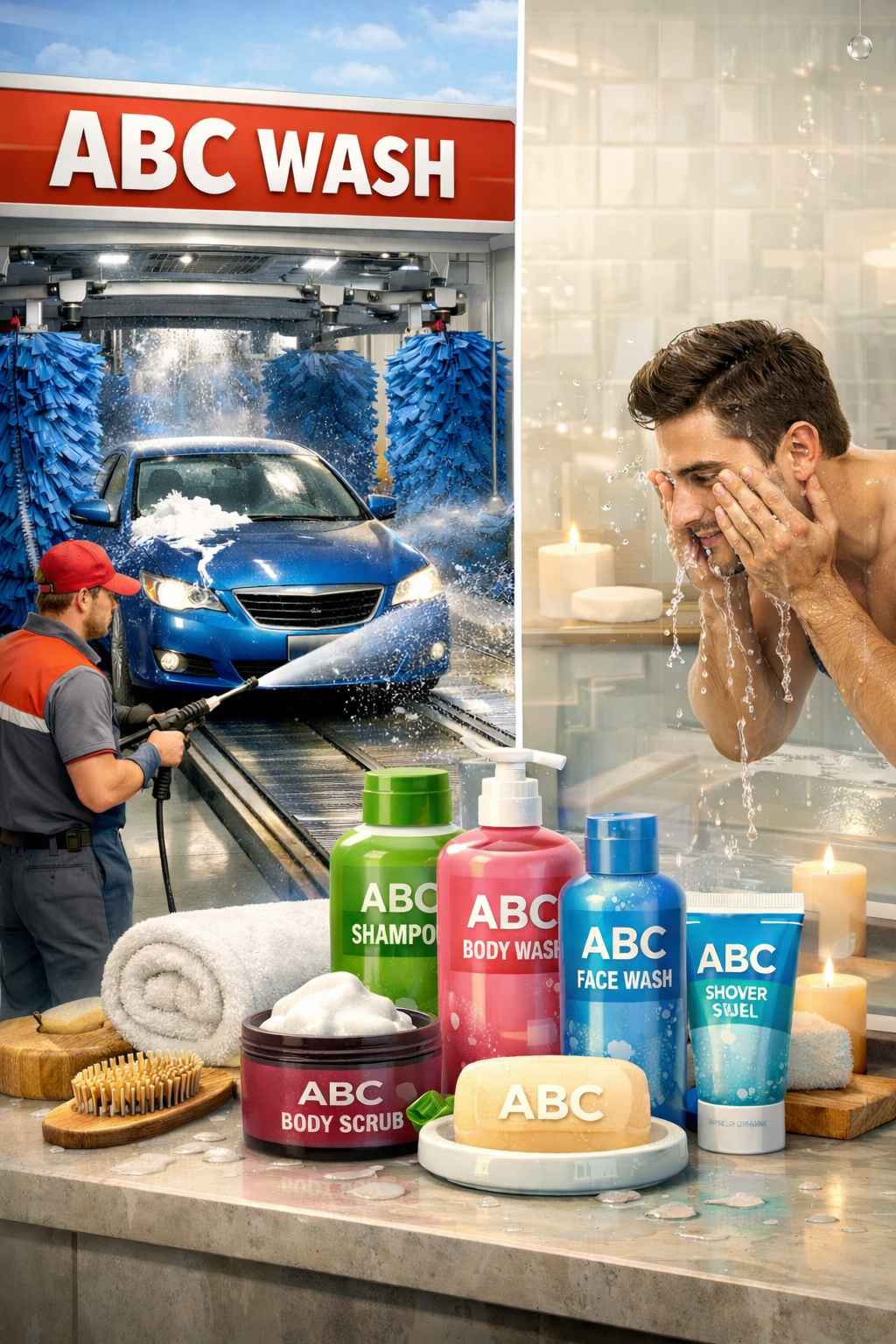
ABC Wash Systems Overview
The term ABC wash systems generally refers to integrated cleaning setups rather than a single formulation. In car wash contexts, this includes mechanical infrastructure, water delivery systems, detergent application stages, and drying mechanisms. In personal care contexts, the same naming is applied to bottled wash products that follow an entirely different design logic.
This dual usage creates confusion for buyers. From a systems perspective, it is more accurate to treat ABC Wash as an umbrella under which multiple wash technologies operate independently.
| Context | Primary Cleaning Method | User Interaction Level |
|---|---|---|
| Automated Car Wash | Mechanical + chemical | Low |
| Manual Car Wash | Chemical + agitation | High |
| Body Wash Products | Surfactant-based cleansing | High |
| Face Wash Products | Mild surfactant systems | High |
One small but telling observation: consumers often transfer expectations from one context to another. Expecting a body wash to perform like a car wash detergent-or vice versa-leads to dissatisfaction that is not rooted in product failure, but in category mismatch.
Car Wash Models Under the ABC Wash Name
ABC Car Wash operations typically fall into three functional models: fully automated tunnels, semi-automated bays, and manual service locations. Each model places different demands on cleaning chemistry and mechanical force.
In automated systems, chemical dwell time is short and detergents are designed to work quickly under low-contact conditions. Manual operations rely more heavily on agitation and visual inspection.
| Model Type | Typical Cycle Time | Cleaning Dependency |
|---|---|---|
| Tunnel Wash | 2–4 minutes | Mechanical + chemistry balance |
| In-Bay Automatic | 5–8 minutes | Chemical dwell efficiency |
| Manual Wash | Variable | Human technique |
Observed performance variation often reflects operational differences more than detergent quality. Short-cycle systems operate under throughput constraints that influence finish consistency for throughput, while slower manual services show greater variability based on staff technique.
ABC Body Wash & Face Wash Formats
ABC Body Wash and ABC Face wash products operate under a personal care framework, using surfactant systems tuned for repeated skin contact. These products are chemically unrelated to car wash detergents despite the shared naming.
Most observed formulations fall within mildly acidic to near-neutral pH ranges, prioritizing rinse comfort over aggressive soil removal. In practical use, foam quality and rinse speed matter more to users than absolute cleansing strength.
| Product Type | Observed pH Range | Primary Design Goal |
|---|---|---|
| Body Wash | 5.5 – 6.5 | General cleansing comfort |
| Face Wash | 5.0 – 6.0 | Lower irritation potential |
In several consumer tests, face wash variants showed faster rinse-off but less perceived cleansing than body wash versions-a trade-off that aligns with their intended use.
Performance Factors & Variability Across Use Cases
Performance perception under the ABC Wash name varies widely because the underlying systems differ so sharply. Water quality, mechanical input, and user technique all influence outcomes.
How ABC Wash Systems Actually Work
When users refer to ABC wash systems, they are usually describing an interaction between chemistry, mechanics, water flow, and time. No single element performs the cleaning alone. Instead, results emerge from how these components are balanced.
In automated car wash environments, detergents are engineered to compensate for reduced human intervention. Contact time is limited, so formulations emphasize rapid wetting and soil dispersion rather than deep emulsification.
| System Component | Function | Performance Sensitivity |
|---|---|---|
| Water Pressure | Physical soil displacement | High |
| Detergent Chemistry | Oil & film breakdown | Moderate |
| Mechanical Contact | Agitation & friction | High |
| Dwell Time | Chemical action window | Moderate |
One recurring observation across sites is that increasing any single parameter rarely improves outcomes by itself. For example, higher detergent concentration without adequate dwell time often produces little visible benefit.
Chemical Cleaning vs Mechanical Action
A common misunderstanding in ABC car wash reviews is the assumption that chemistry alone determines cleaning quality. In reality, mechanical action often contributes more than users realize.
Soft brushes, cloth strips, or manual agitation remove bonded dirt that detergents alone cannot dislodge within short cycles. Conversely, overly aggressive mechanical systems can compensate for weaker chemistry but risk surface abrasion.
| Wash Type | Chemical Contribution | Mechanical Contribution |
|---|---|---|
| Touchless Automatic | High | Low |
| Soft-Brush Tunnel | Moderate | High |
| Manual Wash | Moderate | Very High |
In several side-by-side washes, vehicles processed through soft-contact systems appeared cleaner not because of stronger detergents, but because mechanical action compensated for shorter chemical exposure.
Service Location Variability & Review Patterns
Reported performance variation frequently reflects operational differences even for locations under the same naming umbrella. This variability is best explained by operational differences rather than branding.
Factors such as equipment maintenance, staff training, and water recycling practices introduce measurable performance variation.
| Factor | Observed Impact | Customer Perception |
|---|---|---|
| Equipment Wear | Reduced cleaning consistency | Lower satisfaction |
| Staff Technique | Variable finish quality | Mixed reviews |
| Queue Pressure | Shortened wash cycles | Perceived rushing |
This explains why identical detergent systems can receive contrasting feedback across locations. The system context matters as much as the wash chemistry.
Formulation Logic Behind Body & Face Wash Products
ABC Body Wash and ABC Face wash products rely on surfactant blends designed for repeat exposure. Unlike car wash detergents, these formulations prioritize rinse feel, foam stability, and surface compatibility.
Most observed products use mixed surfactant systems combining anionic and amphoteric agents. This approach balances cleaning efficiency with reduced residue perception.
| Surfactant Class | Role | User-Visible Effect |
|---|---|---|
| Anionic | Primary cleansing | Foam generation |
| Amphoteric | Foam stabilization | Smoother rinse |
| Nonionic | Soil dispersion | Reduced tight feel |
In real use, face wash variants often trade foam volume for quicker rinse-off, which some users interpret as gentler performance even when cleaning efficacy remains comparable.
Early Comparison: Car Wash Systems vs Personal Wash Products
Although they share the ABC Wash name, car wash systems and personal wash products operate under entirely different constraints. Comparing them directly can be misleading, but contrasting their design goals clarifies expectations.
| Attribute | Car Wash Systems | Body & Face Wash |
|---|---|---|
| Surface Type | Paint, metal, glass | Human skin |
| Cycle Frequency | Occasional | Daily |
| Tolerance for Residue | Low | Very low |
| Cleaning Aggression | Moderate to high | Controlled |
Understanding this separation helps buyers interpret the ABC Wash name correctly rather than assuming shared performance logic across categories.
Safety Notes, Handling Practices & Practical Boundaries
Across all uses of the ABC Wash name, safety considerations differ sharply by context. It is not useful to generalize handling guidance without separating car wash systems from personal wash products.
In vehicle cleaning environments, the primary risks relate to slip hazards, pressure exposure, and concentrated detergent handling during maintenance. For body and face wash products, the considerations shift toward rinse completeness and frequency of use rather than acute handling risk.
| Context | Primary Risk Area | Practical Mitigation |
|---|---|---|
| Automated Car Wash | Wet surfaces & pressure | Clear signage & timed access |
| Manual Car Wash | Chemical concentration contact | Dilution control & gloves |
| Body Wash | Residue if under-rinsed | Thorough rinse |
| Face Wash | Eye-area sensitivity | Avoid direct contact |
One practical limitation observed in high-traffic car wash sites is that safety margins often narrow during peak hours.
Faster vehicle turnover can subtly increase handling risk without any change in chemistry or equipment.
Unlike synthetic detergent systems (see soap vs detergent comparison), mechanical wash systems depend heavily on agitation variables.
Stability, Storage & Performance Over Time
Stability considerations under the ABC Wash umbrella again depend on format. Car wash systems focus on chemical stability in storage tanks and lines, while personal wash products prioritize shelf consistency.
In automated systems, detergent concentrates remain chemically stable for extended periods if protected from extreme heat and contamination. Degradation issues typically arise from dilution errors rather than ingredient breakdown.
| Format | Typical Stability Window | Performance Risk Trigger |
|---|---|---|
| Car Wash Concentrate | 12–24 months | Improper dilution |
| Ready-to-Use Wash | 6–12 months | Microbial contamination |
| Body Wash Bottle | 18–30 months | Temperature cycling |
| Face Wash | 12–24 months | Repeated air exposure |
In practice, users often notice performance drift not because the formulation has changed, but because water ratios or dispensing volumes have shifted over time.
Product Label Information: What Actually Matters
Labels associated with ABC Wash products frequently emphasize branding continuity rather than functional disclosure. For buyers, the most useful information is often found in small-print technical sections rather than front-facing claims.
In car wash contexts, service descriptions such as "touchless," "soft-touch," or "manual assist" communicate more about expected outcomes than detergent names. For body and face wash products, ingredient order and pH disclosure-when available-offer better insight than fragrance descriptions.
| Label Element | Interpretation Value | Decision Impact |
|---|---|---|
| Wash Type Description | High | Sets realistic expectations |
| Ingredient Order | Moderate to high | Indicates formulation focus |
| pH Disclosure | Moderate | Predicts rinse feel |
| Scent Claims | Low | Minimal performance relevance |
In reviewing localized ABC wash operations, customer comments often reference visible outcomes rather than chemical attributes-an important reminder that perceived performance is experiential, not analytical.
Use-Case Alignment Framework
Functional suitability depends on system design constraints.
| User Priority | Best-Fit Wash Type | Reasoning |
|---|---|---|
| Speed & Convenience | Automated Car Wash | Short cycle time |
| Finish Control | Manual Car Wash | Human inspection |
| Daily Personal Use | Body Wash | Balanced surfactant system |
| Sensitive Facial Use | Face Wash | Lower cleansing aggression |
Misalignment between system design and user expectation is a common source of performance misinterpretation-expecting premium detailing from high-throughput systems or deep cleansing from ultra-mild face washes.
Recognizing these boundaries improves expectation alignment more reliably than switching brands.
Summary of Findings
- ABC Wash Is A Naming Umbrella: The term ABC Wash spans car wash systems, localized service operations, and personal wash products, each governed by distinct chemical and mechanical principles.
- System Design Drives Outcomes: System performance variability is primarily influenced by operational factors such as water quality, maintenance, and throughput pressure.
- Personal Wash Products Follow Different Logic: Body and face wash formats operate within controlled surfactant systems and milder pH ranges, prioritizing rinse comfort over aggressive soil removal.
- Better Decisions Come From Alignment: Satisfaction improves when users match expectations to wash type-automated speed, manual control, or personal daily cleansing-rather than relying on shared branding.
References
- Rosen, M. J., & Kunjappu, J. T. (2012). Surfactants and Interfacial Phenomena. Wiley. Publisher page
- Ullmann’s Encyclopedia of Industrial Chemistry. (2023). Detergents, Soaps, and Cleaning Systems. Official reference
- Myers, D. (2020). Surfaces, Interfaces, and Colloids. Wiley-VCH. Publisher page
- International Carwash Association (ICA). (2022). Operational Models and Water Use in Car Wash Facilities. Official website
- Schramm, L. L. (2000). Surfactants: Fundamentals and Applications. Cambridge University Press. Publisher page