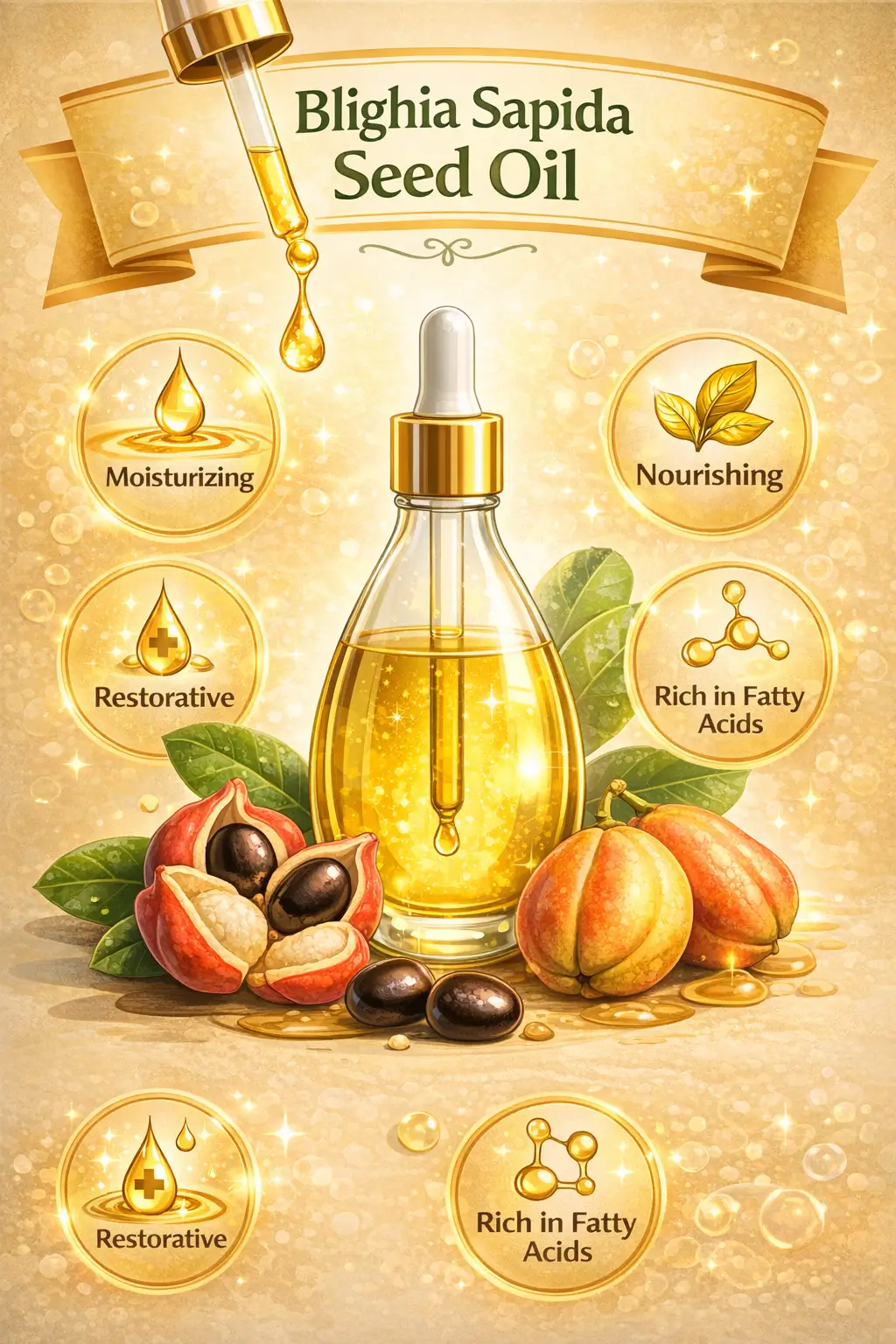
Chemical Identity
Blighia Sapida Seed Oil is a triglyceride rich vegetable oil composed primarily of fatty acids esterified to glycerol. Like most botanical oils used in cosmetics, its exact fatty acid profile may vary depending on cultivation conditions and extraction methods. It is not a synthetic emollient, nor is it a surfactant. Comparable triglyceride-based systems are examined in our Aleppo soap ingredient analysis.
Chemically, it belongs to the broader category of fixed oils. For contrast with detergent-based ingredients, see our Dawn dish soap ingredient review. These are non volatile lipids that remain on the skin surface after application rather than evaporating. Consumers sometimes assume that plant oils behave identically, but compositional differences influence texture, spreadability, and oxidative stability.
| Property | Description |
|---|---|
| INCI Name | Blighia Sapida Seed Oil |
| Ingredient Class | Vegetable oil - triglyceride based emollient |
| Solubility | Oil soluble, not water soluble |
| Primary Cosmetic Function | Emollient and skin conditioning |
It should not be confused with extracts derived from other parts of the plant. The seed oil is chemically distinct from aqueous fruit extracts or leaf extracts.
Source & Origin
The oil is derived from the seeds of the ackee fruit tree, a tropical plant cultivated in parts of West Africa and the Caribbean. In cosmetic labeling within the EU, the INCI name appears in Latin form rather than as "ackee oil."
Consumers occasionally associate plant origin with performance assumptions, such as expecting a fruit derived oil to behave like a fragrance component. In formulation terms, however, seed oils are primarily lipid carriers. They contribute to texture and occlusivity rather than scent.
Extraction methods may include cold pressing or solvent extraction. The chosen method can influence refinement level and odor neutrality, though such details are rarely visible on finished product packaging.
Formulation Role
In emulsions, balms, and conditioning products, Blighia Sapida Seed Oil acts as an emollient. Emollients help soften and smooth the skin surface by filling intercellular spaces in the outermost layer. They influence sensory feel more than cleansing ability. Emollient behavior differences are further discussed in our Dove shea butter ingredient analysis.
It may appear in creams, body lotions, hair conditioners, or leave in treatments where a lipid phase is required. In cleansing products such as facial washes, its presence is less common and typically limited to formulations positioned as lipid enriched.
One frequent misunderstanding is that plant oils provide hydration. From a formulation perspective, oils reduce transepidermal water loss indirectly by forming a film. They do not add water to the skin. The distinction between water binding humectants and lipid emollients is often blurred in marketing language.
Label Context In EU Products
On European cosmetic labels, the ingredient appears in descending concentration order according to INCI conventions. It is usually listed after water and primary emulsifiers if present in moderate amounts. In anhydrous balms, it may appear earlier in the list.
The name does not indicate processing grade or sustainability claims. Those aspects, when relevant, are communicated separately through certification logos or packaging text.
Consumers occasionally interpret unfamiliar botanical names as rare or exotic enhancements. In practical formulation terms, Blighia Sapida Seed Oil belongs to the same structural class as many other plant oils used for texture modification.
Functional Behavior & Limits
The oil contributes slip and a certain richness depending on concentration. Its oxidative stability depends on fatty acid composition, which may require the inclusion of antioxidants such as tocopherol in finished products. Oxidative stability considerations are also referenced in our Castile soap ingredient guide.
It does not act as a preservative, surfactant, or active treatment substance. Its primary function is structural within the lipid phase.
A limitation worth noting is variability. Botanical oils can differ slightly in composition from batch to batch. Formulators account for this variability during development, but the consumer label does not reflect those subtle shifts.
The presence of this oil does not inherently define the performance profile of a product. It interacts with emulsifiers, thickeners, and other lipids to create overall texture. Interpretation should remain contextual.
Summary of Findings
- Chemical Identity: Blighia Sapida Seed Oil is a triglyceride based vegetable oil used as an emollient.
- Formulation Role: It softens and conditions the skin surface rather than cleansing or preserving.
- Label Appearance: Listed under its Latin INCI name on EU ingredient lists.
- Limitations: Botanical variability and oxidative sensitivity influence formulation context.
References
-
European Commission – CosIng Database: Blighia Sapida Seed Oil.
EU CosIng Database -
Regulation (EC) No 1223/2009 on cosmetic products.
Official EU Regulation Text -
General formulation literature on vegetable oil emollients.
Wiley Online Library (Formulation Texts)